




Freedom of expression carries limits that public officials cannot ignore, a member of the House prosecution panel argued over the weekend, taking aim at the defense Vice President Sara Duterte has mounted ahead of her Senate impeachment trial.

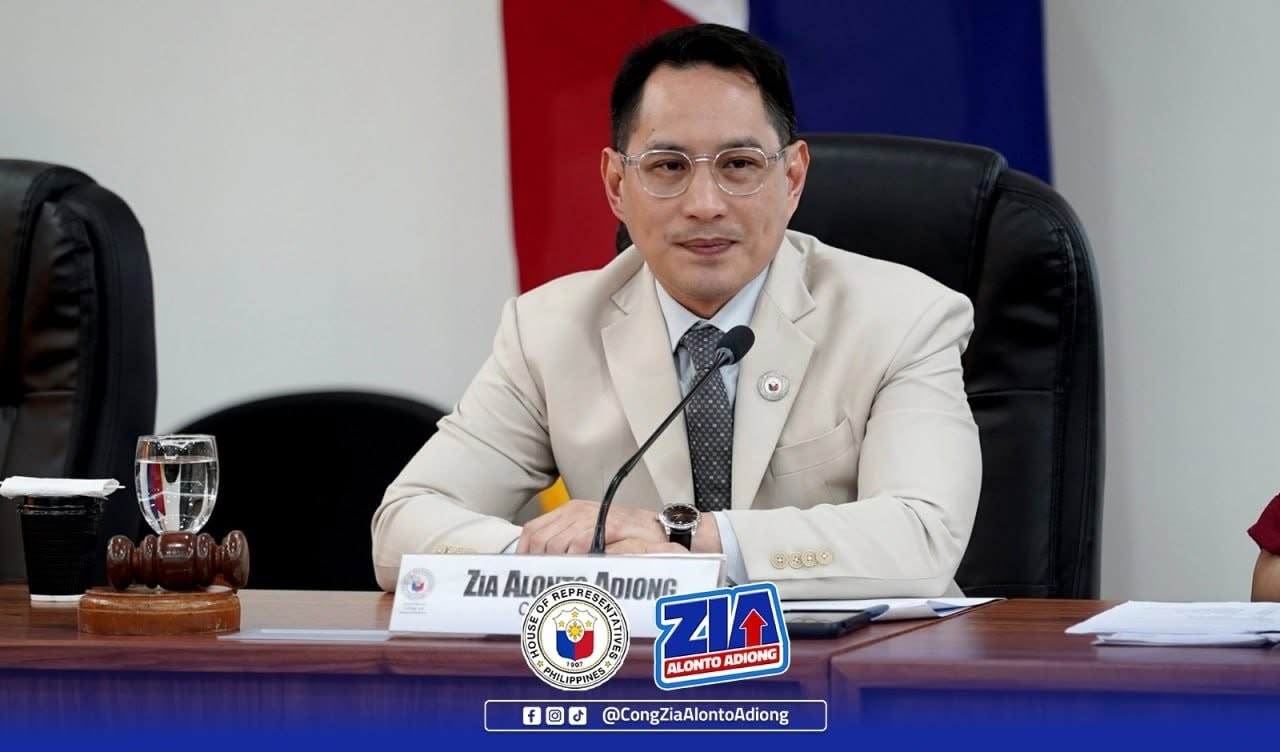
Lanao del Sur 1st district Rep. Zia Alonto Adiong, who serves as one of the panel’s designated communicators tasked with translating the trial’s legal complexities for a general audience, addressed the matter Saturday during a news forum held June 27 at Dapo Restaurant in Quezon City. He is not a lawyer, a point he acknowledged while making his case.
At the center of his remarks was the claim, raised in Duterte’s formal answer to the Senate impeachment court, that her statements targeting President Marcos amount to protected speech. Adiong dismissed that reasoning.
“You know, all lawyers would agree that there’s no such thing as absolute freedom. All freedom are also subject to some regulation,” he said. “One cannot go around the streets accusing anybody of something without the necessary consequence of that action, either verbally or acted upon.”
According to Adiong, the prosecution intends to frame the alleged threats around their effect on the people named rather than the setting in which Duterte spoke. “It’s not actually her utterance that should be focused on, it’s the effect of that utterance on the person that is being threatened,” he said.
He argued that Duterte’s own phrasing signals she meant to be taken at her word. “Even herself qualified the degree of threat actually saying these words. Siya mismo ang nagsabi, ‘no joke, no joke,'” Adiong said.

The remarks in question trace back to a November 2024 online press conference, where Duterte stated she had arranged for someone to kill the President, First Lady Liza Araneta-Marcos, and then-House Speaker Ferdinand Martin Romualdez should a supposed plot on her own life succeed. Punctuated with the phrase “no joke, no joke,” the comments have circulated widely online and now anchor one of the more serious articles filed against her.
Adiong said the burden of deciding whether those statements rise to betrayal of public trust and high crimes — both grounds for removal — now rests with the 24 senator-judges. “So it’s for the court’s appreciation. That’s why we have forwarded this to the Senate, so that the Senate, acting as impeachment court, can actually and finally settle whether our claim in our allegation that this is indeed constitute betrayal of public trust, this would constitute high crimes,” he said, adding that the panel is “confident that we have the evidence to present before the Senate.”
Turning to the substance of Duterte’s 51-page response, Adiong characterized it as a signal that her team intends to lean on procedural and constitutional challenges rather than dispute the allegations directly. The defense has contended that the proceedings are void, citing alleged bad faith and manifest partiality.
“It only confirms our initial observation that the defense could not provide particular counter-evidence or argument to challenge, even to contest the allegations contained under the articles of impeachment,” he said. “That from the very start, they’ve been harping about procedural objections, constitutional objections, which all of us know is already way, way past over that stage.”
The prosecution had anticipated specific counter-evidence in the answer and found none, he said, expressing hope that the defense would supply it in the pre-trial brief. “But then again, the summation of the case that they would like to bring forth, as indicated by that statement, only validates our earlier observation na kulang talaga ‘yung kanilang pwedeng mai-offer sa korte,” Adiong said.
He also warned that letting threats of this kind pass without consequence risks normalizing them across society, stressing that those in public office are held to a standard others look to.
