





There is a moment in every skydiving operation that the customers never see: the work on the ground. The manifesting, the gear checks, the weather calls, the choreography of getting dozens of bodies into the sky and back down safely. It is unglamorous, exacting, and entirely invisible to the person whose only job is to be terrified and exhilarated for sixty seconds. Adrian Paule Sabitsana built an entire career out of mastering that invisible work — and it started, fittingly, at the front desk.

In 2010, the Filipino skydiver arrived in Dubai with no jumps to his name and a job that had nothing to do with the sky. He was a receptionist at Skydive Dubai. “Through hard work, commitment, and a passion for learning, I gradually advanced within the organization and eventually became a skydiving instructor,” he recalls — a sentence that compresses years of unglamorous effort into a single line. The full distance of that climb is easy to miss. He went from greeting customers to jumping out of planes with them, from the lobby to 13,000 feet.
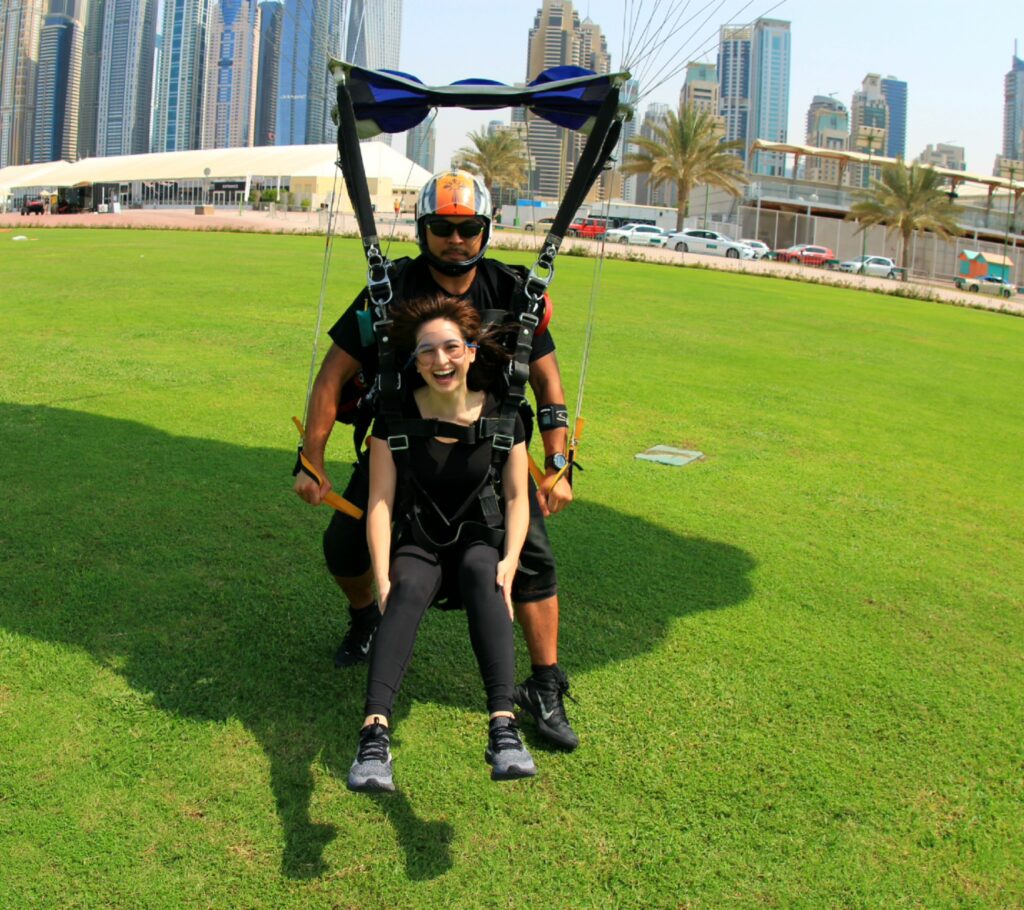
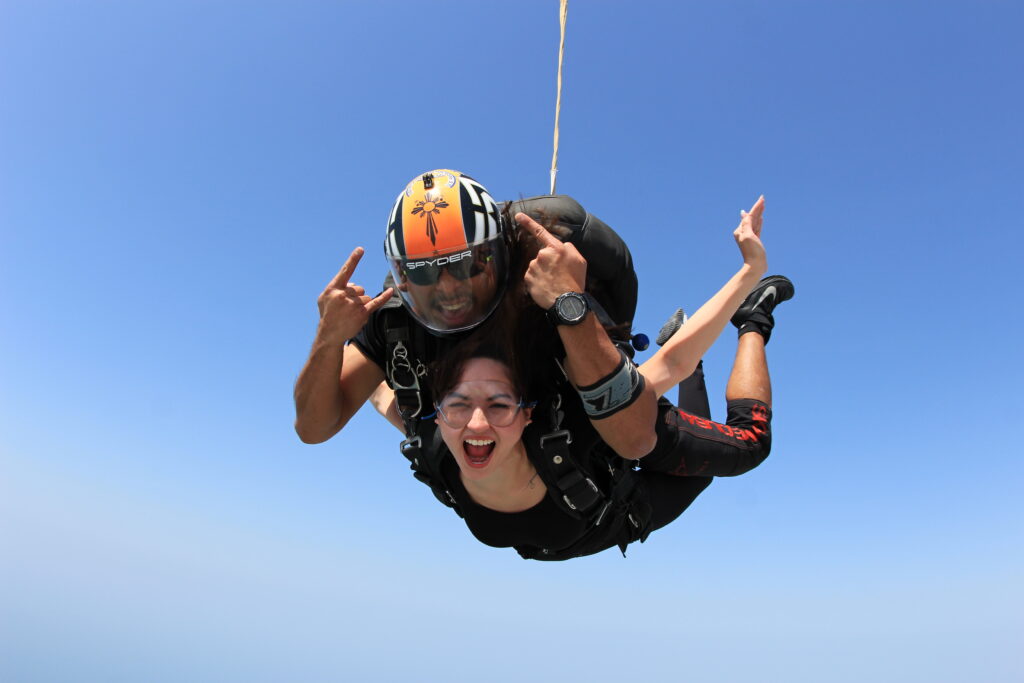
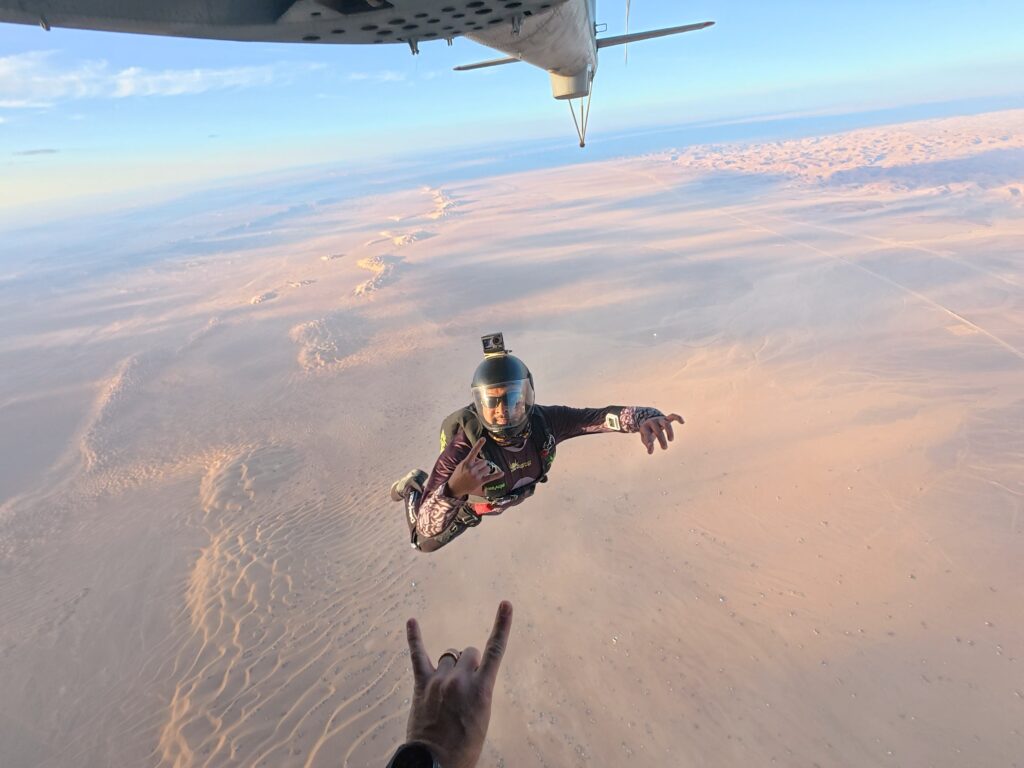
His first jump came in 2011. “From that moment, my journey and passion for skydiving truly began,” he says. Fifteen years and more than 4,000 jumps later, the front desk is a long way behind him.
Why a man chases the sky
Adrian did not leave the Philippines on a whim. The reasons were the same ones that move millions of Filipinos abroad every year — better pay, a better life, the chance to support family. But layered underneath was something less common: a specific, almost audacious ambition. “Another important reason was my ambition to become one of the best skydivers in the world,” he says. He understood early that the goal was not something he could reach at home. “I recognized that achieving this goal would require access to world-class training, facilities, and mentorship.”
Dubai, when he found it, looked like the place that could make the ambition real. He calls the decision to leave one of the most important of his life, and he does not say it lightly — the move cost him proximity to family and the comfort of the familiar. What it bought him was access: to the best people in his industry, to facilities he could not have trained in otherwise, and to a version of his career that simply did not exist within the borders of the Philippines.
That trade-off — distance from home in exchange for a shot at the top of a field — is one every overseas Filipino worker negotiates in some form. Few of them get to make it doing the thing they love most.
The part that still moves him
Ask him what keeps him in the harness after 4,000 jumps, and the answer is not the records or the celebrities, though there have been both. During his Dubai years he jumped alongside local and Hollywood names, the kind of access that comes with working at one of the sport’s most visible operations. He mentions it almost in passing.

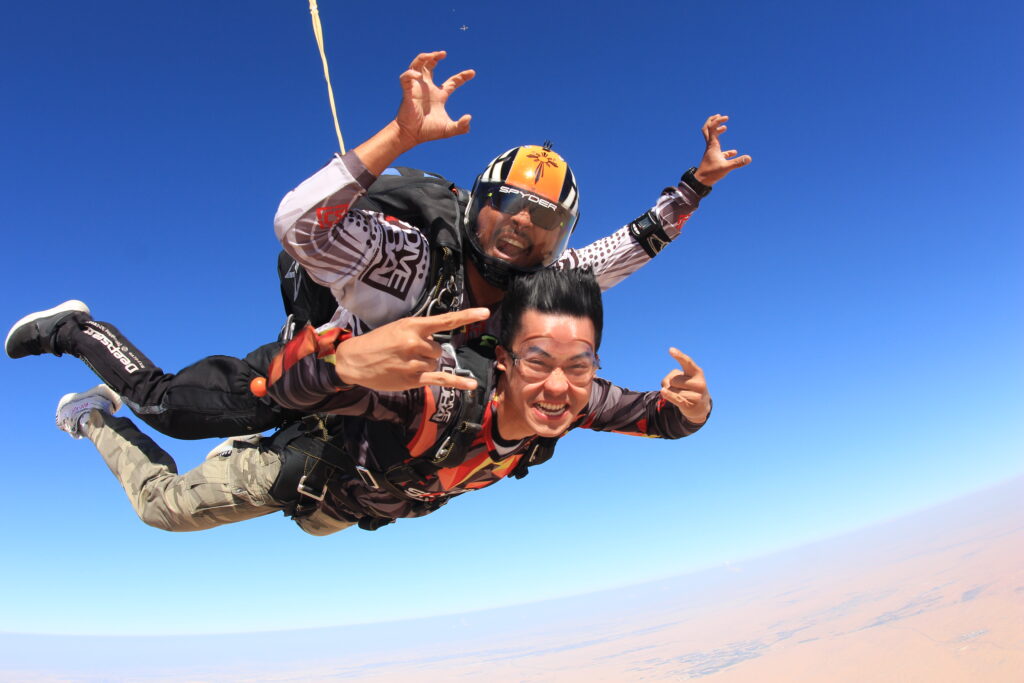
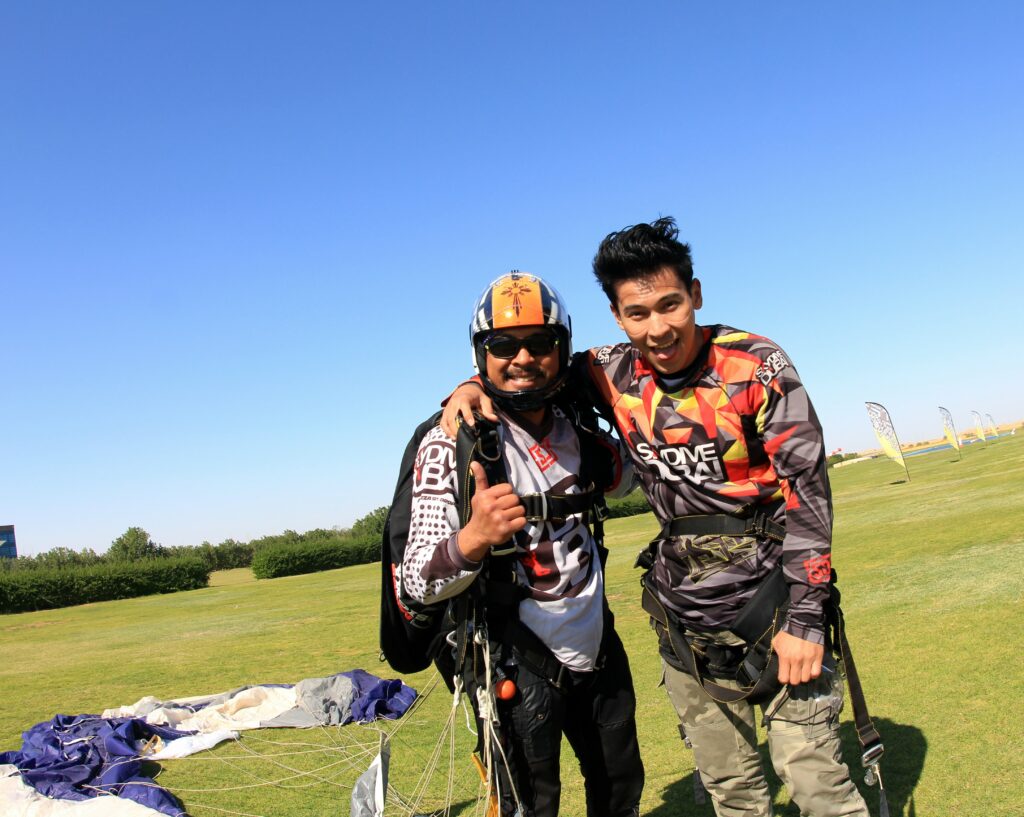
What he returns to instead is the face of a frightened student after a successful jump. “The most satisfying aspect of my work is helping students overcome their fears and achieve something they once thought was impossible,” he says. “Seeing the excitement and sense of accomplishment on their faces after a successful jump is incredibly rewarding.”

For him, skydiving was never only a job. “Skydiving is more than just a profession for me—it is a lifestyle and a lifelong passion,” he says. The sport gave him a framework he now applies on the ground as much as in the air: focus, discipline, and a respect for preparation that borders on reverence. “One small mistake can have serious consequences, so attention to detail has become a core value in everything I do.” It is the kind of thing a person says easily until you remember the stakes attached to it at altitude.
From the front desk to the record books
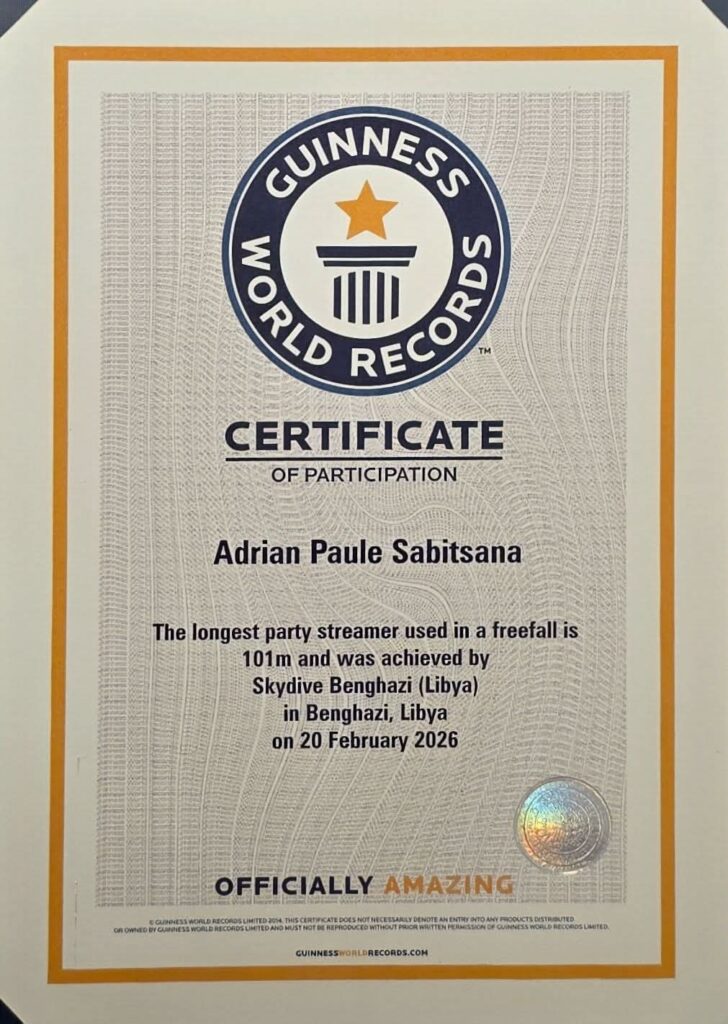
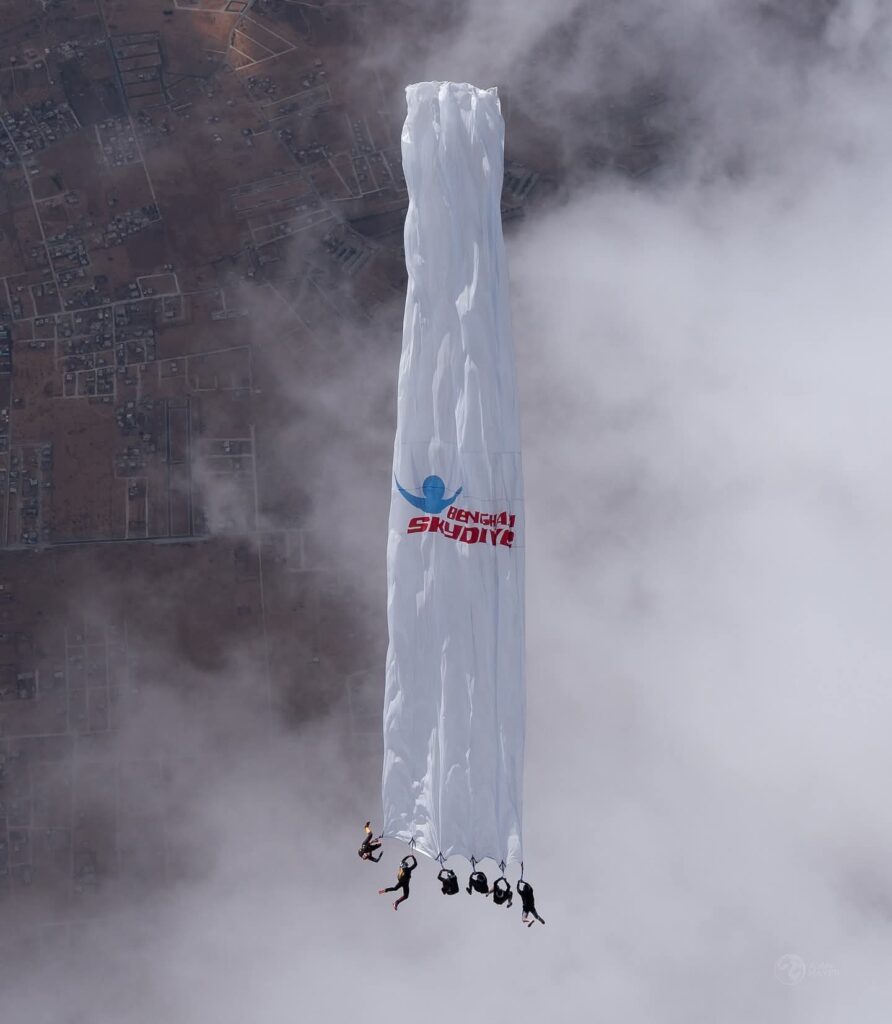
The arc of his career bent again when he moved to Benghazi, Libya, where he now serves as Skydiving Instructor and Head of Ground Control for Special Projects at Skydive Benghazi. The “special projects” are not modest. His primary responsibility, he says, is coordinating initiatives aimed at breaking Guinness World Records.
He counts his role in three record-breaking skydiving events in Benghazi as the proudest achievements of his career. “Being part of these historic accomplishments has been both professionally rewarding and personally fulfilling,” he says, “and it continues to inspire me to push the boundaries of what can be achieved in the sport of skydiving.” There is a quiet symmetry in it — the man who once organized the ground operations he wasn’t allowed to fly is now orchestrating record attempts from that same ground.
Getting there was not frictionless. He talks candidly about the early difficulty of adapting to a new country and a high-pressure, safety-critical field. Language barriers, cultural differences, and distance from family stacked on top of the technical demands of learning world-class operational procedures. His way through was unremarkable in the best sense: patience, discipline, and a refusal to stop asking experienced colleagues for help. “I never hesitated to ask experienced colleagues for guidance when needed,” he says — an admission that the path up was built on humility as much as nerve.
What he wants to leave behind
The former receptionist is now thinking about what comes after the jumps. His ambitions have shifted from breaking records to building the people who might break the next ones. He wants to return to the Philippines and the wider region to strengthen training programs, raise safety standards, and mentor a generation of young athletes drawn to aviation and extreme sports. “I want to create opportunities for young athletes who are passionate about aviation and extreme sports, guiding them through proper training and helping them reach international standards,” he says.
Safety education sits at the center of that vision — fitting for someone whose entire career has rested on the principle that nothing in the sky is improvised. He frames the goal not as personal legacy but as obligation: “Giving back is a crucial part of personal success.”
His advice to other Filipinos abroad carries the weight of someone who has lived every line of it. Stay focused on your purpose. Manage your money. Choose the people you trust carefully. Protect your mental and emotional health. “Remember that the sacrifices you make today are for a better future for yourself and your loved ones,” he says.
He keeps a mantra, four words long, that explains the whole improbable trajectory better than any career summary could: live a life you will remember. From a reception desk in Dubai to three world records over Benghazi, he has, by any measure, done exactly that.
