



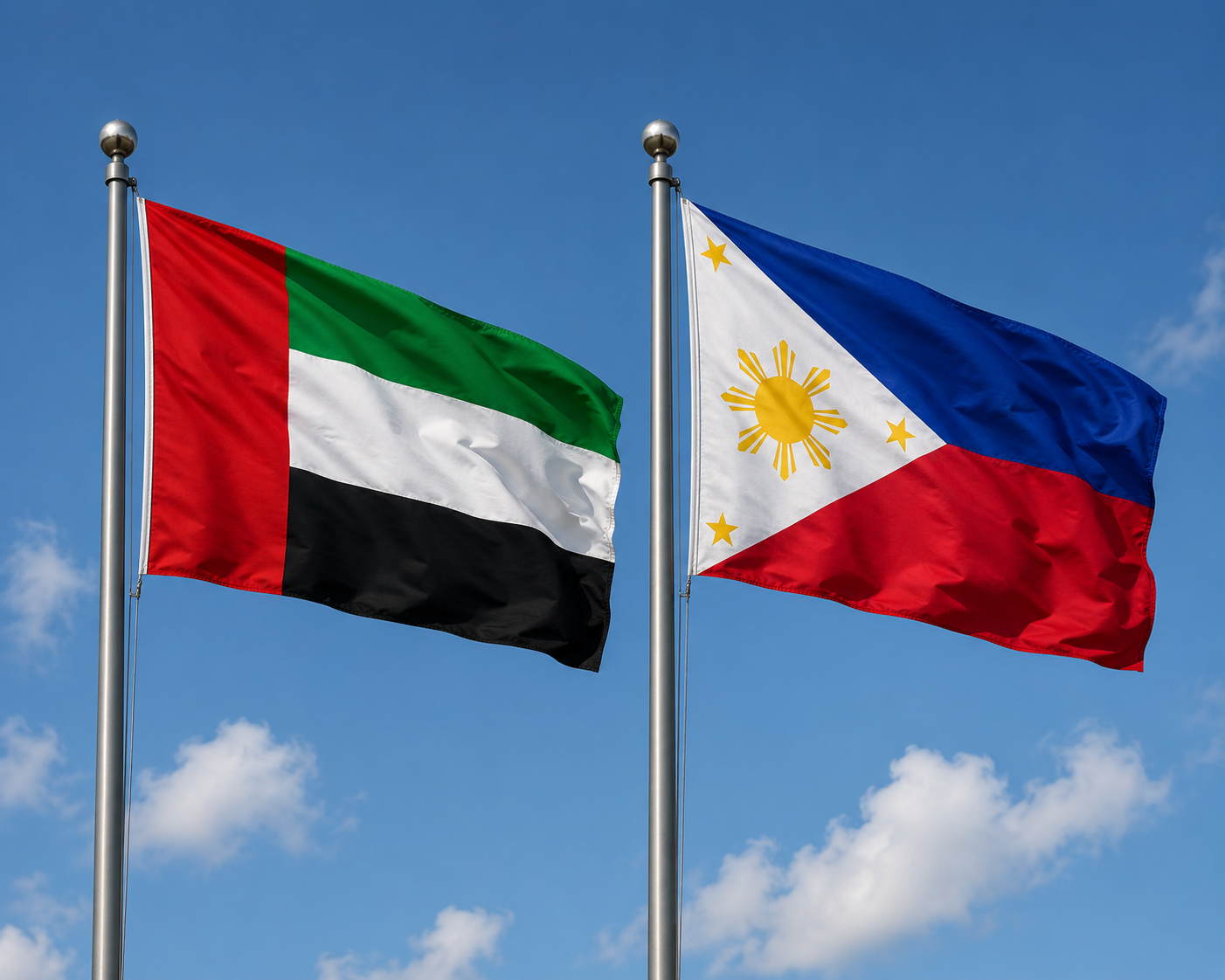

Emergency crews were still combing through collapsed buildings in southern Mindanao on Monday when the United Arab Emirates added its voice to a growing list of governments offering support to the Philippines after one of the deadliest earthquakes the country has recorded in years.

The Ministry of Foreign Affairs in Abu Dhabi issued a statement, carried by state news agency WAM, conveying the country’s sympathy to the families of those who died and wishing a full recovery for everyone hurt in the disaster. The ministry directed its condolences to the Philippine government and its citizens, and said the UAE stood with the country as it dealt with the aftermath.
The magnitude 7.8 tremor struck at 7:37 a.m. local time, with its epicentre offshore about 32 kilometres south-southwest of Maasim in Sarangani province, at a depth of roughly 33 kilometres, according to the Philippine Institute of Volcanology and Seismology (PHIVOLCS). The agency first logged the event at magnitude 7.0 before revising the figure upward. PHIVOLCS director Teresito Bacolcol described it bluntly: “It’s a major earthquake,” cautioning residents against re-entering damaged structures that could give way under aftershocks.
Casualty counts shifted through the day as reports filtered in from cut-off communities. The Inquirer reported at least 35 dead, more than 200 hurt and a dozen people unaccounted for, while wire services including Reuters placed the confirmed toll at 32 by Monday afternoon. Power failures hampered the flow of information from the worst-hit areas. Office of Civil Defense regional director Rod Sosmeña, who was in General Santos City when the ground began to move, told The Associated Press, “The shaking was very strong and people dashed out of houses into the streets.”

Destructive Intensity VII shaking was felt in General Santos City, where the structural damage was concentrated. A commercial building housing a Jollibee outlet and the Love Radio station came down, portions of SM City GenSan gave way, and a building at Notre Dame of Dadiangas University crumbled, according to SunStar. Infrastructure took a heavy hit as well: a bridge in Tapon, Glan, in Sarangani was wrecked, and a stretch of national highway in Tantangan, South Cotabato, cracked open.
PHIVOLCS issued a tsunami warning covering coastal zones across nine southern provinces, among them Sarangani, Davao Occidental, Sulu, Basilan and South Cotabato, urging people in those areas to move inland or to higher ground. Waves of around one metre were later measured at monitoring stations in Kiamba and Maasim in Sarangani and in Kalamansig, Sultan Kudarat, with smaller waves recorded as far north as Zamboanga City. Warnings were also raised in Indonesia, Palau, Taiwan and Papua New Guinea before the Pacific Tsunami Warning Center reported about five hours later that the threat had largely passed.
The UAE’s message was one of many from abroad. Rappler reported that Japanese Prime Minister Sanae Takaichi extended condolences and signalled Tokyo’s readiness to help, while the United States, Canadian, Australian, British and European Union missions in Manila all issued statements of solidarity, several noting they were prepared to assist relief work.
By late morning, PHIVOLCS had logged 138 aftershocks ranging from magnitude 1.3 to 6.7, and warned that further tremors could continue for days or weeks. The agency noted that Sarangani sits near the Cotabato Trench, a major fault structure capable of generating powerful earthquakes, alongside other local faults in the area.
