



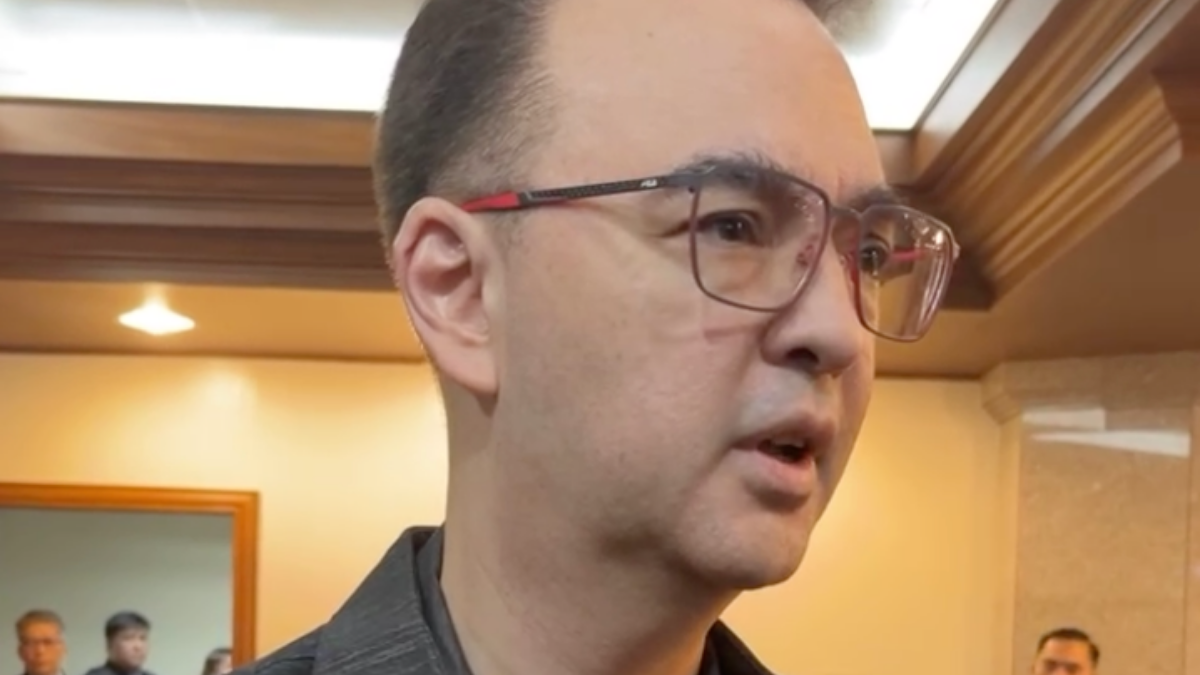

Allies of Senate President Alan Peter Cayetano have floated a “dual-signatory or joint-certification” mechanism for Senate finances and personnel actions, an apparent bid to keep both the chamber and the impeachment court functioning while two rival blocs claim control of the institution.

The proposal is contained in correspondence dated June 7 and June 8, 2026, in which Cayetano directs Atty. Jose Luis Montales — the Senate Secretary his bloc recognizes — to open discussions with Atty. Renato Bantug Jr. on “a workable interim administrative arrangement.” Under the scheme, documents covering vouchers, checks, disbursements, contracts and personnel actions would carry the signatures of officials “presently exercising the relevant functions and those asserting authority to perform the same functions.” The stated aim, according to the letters, is not to recognize or validate any side’s authority but to “ensure continuity of operations” and shield Senate staff from conflicting directives.
The maneuver underscores how deeply the leadership dispute has fractured the Senate’s administrative machinery. As GMA News Online reported, the crisis erupted on June 3, when 12 senators declared the chamber’s leadership posts vacant and installed Senator Sherwin Gatchalian as acting Senate president — a move Cayetano rejected as illegal, arguing that electing a new Senate leader requires at least 13 of the chamber’s 24 members. Cayetano has insisted he remains Senate president, citing the 1987 Constitution and Senate rules.
The competing claims extend to the secretariat itself. The Philippine Daily Inquirer reported that the new majority re-elected Bantug as Senate Secretary, restoring the long-serving official who had retired in January after more than three decades in the chamber. Cayetano’s bloc, however, continues to treat Montales — who was elected secretary on May 18 and concurrently serves as Clerk of Court of the impeachment court — as the legitimate office-holder. The dueling appointments mean two men now claim the same signing authority over Senate documents, the precise problem the dual-signatory plan seeks to manage.

In his directive, Cayetano framed the arrangement as a safeguard rather than a concession, stating that nothing in it should be read as a “waiver, abandonment, concession, recognition, or prejudice” of any legal position relating to the June 3 session. He maintained that the constitutional and procedural defects of that session were “substantial and unmistakable,” while acknowledging that the Supreme Court would ultimately decide the matter.
The timing reflects looming deadlines in the impeachment of Vice President Sara Duterte. The June 8 letter notes that the impeachment court was scheduled to issue its pre-trial conference order on June 9, with the trial proper widely reported to begin July 6. Cayetano’s camp argued that administrative paralysis must not be allowed to derail those proceedings.
The legality of the June 3 session remains contested. The Integrated Bar of the Philippines and a group of law deans, as reported by SunStar, have argued the session was valid under the Supreme Court’s 1949 ruling in Avelino v. Cuenco, which permits quorum to be reckoned from senators available to take part — a count that would exclude the absent Senators Ronald dela Rosa and Jinggoy Estrada. A private petition has separately been brought before the Supreme Court, the Manila Times reported, asking the tribunal to rule definitively on whether the session was constitutional.
