



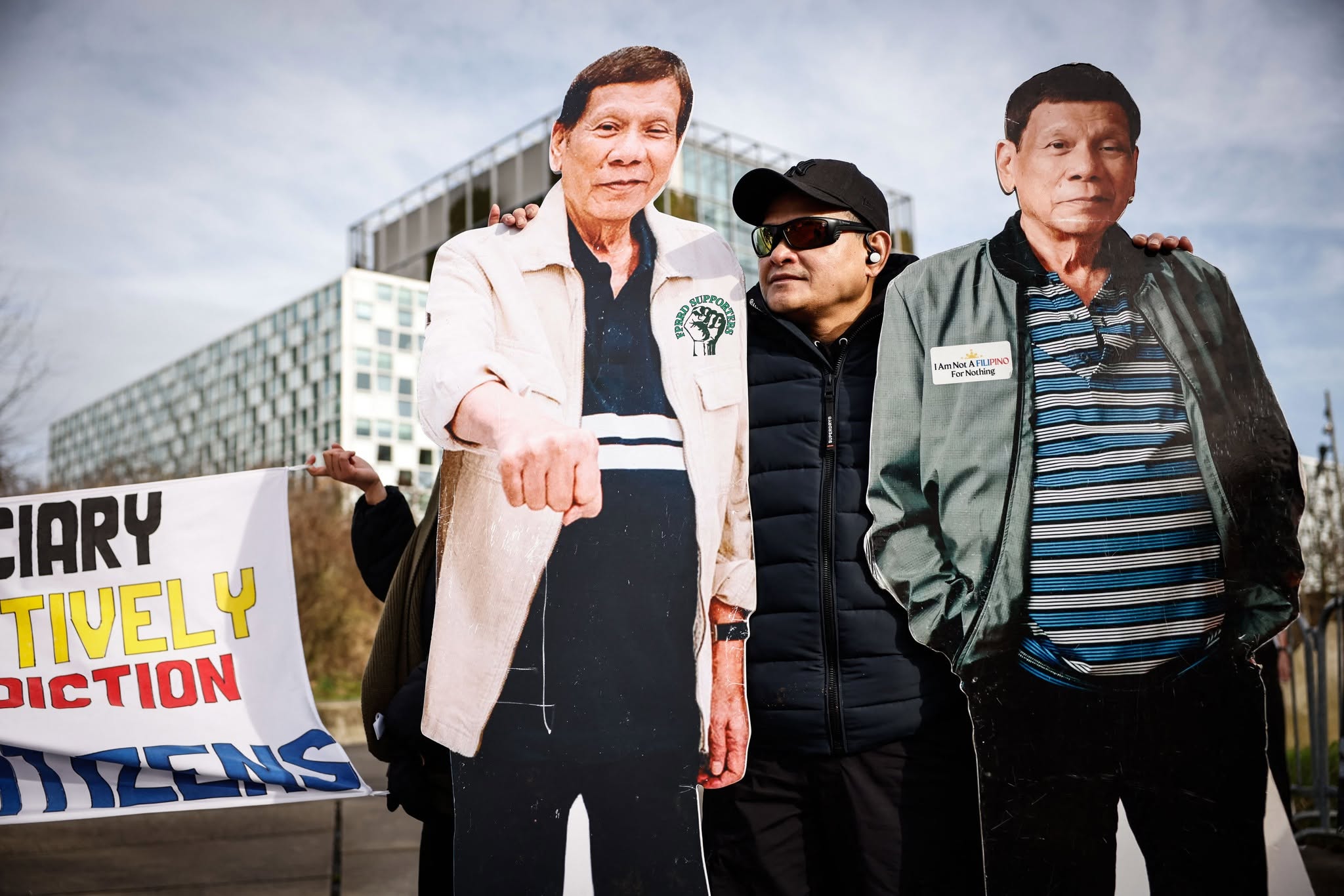

Lawyers for Rodrigo Duterte are pressing the International Criminal Court to draw firmer lines around how evidence enters his crimes against humanity trial, warning that without tighter controls the case record could swell with material that has little bearing on the charges tied to the former president’s anti-drug campaign.

The push came through filings submitted June 5, 2026 to Trial Chamber III by Peter Haynes, the British attorney recently brought onto Duterte’s legal team. Haynes asked the judges to revise their draft “Directions on the Conduct of Proceedings,” arguing the changes would keep “unnecessary and irrelevant evidence” from flooding the proceedings.
The defense wants judges to rule on whether major pieces of evidence are admissible while they are still being presented, rather than deferring those calls. The chamber has signaled it will model its approach on the Al-Rahman case, an earlier ICC trial against Sudanese militia commander Ali Muhammad Ali Abd-Al-Rahman, but Duterte’s counsel wants the new directions to diverge from that template.

“The Defence submits that the Directions should depart from the AlRahman Directions in this respect to reflect a balance between the admission and the submission regimes. This balance would assist the Chamber in safeguarding the integrity of the case record, and also in assessing whether the burden of proof has been discharged by the Prosecution at the close of the presentation of its case,” the filing stated.
The team also wants prosecutors to provide detailed topic breakdowns for every witness whose testimony comes from long transcribed interviews, not just the “five witnesses especially” prosecutors had offered. It pushed to limit bulky documentary exhibits to the portions a witness actually addresses, citing cases where “a witness had only spoken as to one page” of a much larger document, and sought similar limits on Rule 68 material and an overhaul of how the ICC Registry tracks evidence metadata.
Trial Chamber III, composed of Presiding Judge Joanna Korner, Judge Keebong Paek and Judge Nicolas Guillou, is finalizing its rules after indicating it would broadly follow the Al-Rahman framework while allowing adjustments. The trial is set to open Nov. 30, 2026, with status conferences on June 23 and July 14. At the first conference on May 27, Korner said the chamber would also order a fresh assessment of whether Duterte is fit to stand trial.
