



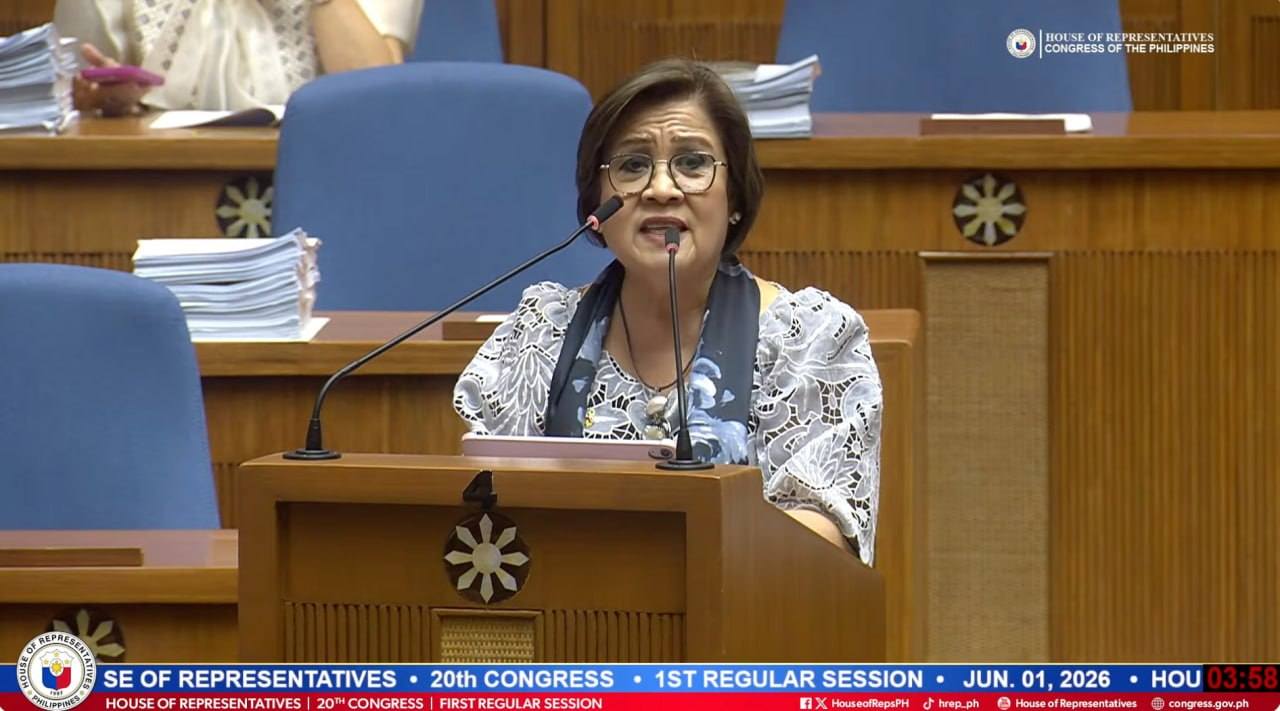

Restoring the country’s place within the International Criminal Court would close gaps left when domestic courts fall short, Mamamayang Liberal Rep. Leila de Lima argued in a newly filed measure at the House of Representatives.

The resolution, designated House Resolution No. 1056, directs its appeal at President Ferdinand Marcos Jr. and the Department of Foreign Affairs. De Lima wants both to set in motion the formal steps required for the Philippines to regain its standing as an ICC member state.
At the heart of her argument is accountability. De Lima frames re-accession to the Rome Statute as a way to firm up the country’s record against impunity and atrocity crimes, tying the membership question to broader commitments around human dignity and the rule of law.
The treaty in question created the ICC and took effect internationally in July 2002. The Philippines became a signatory in 2011 but formally pulled out in 2018. That exit, ordered during Rodrigo Duterte’s presidency, became effective in 2019 after the tribunal opened scrutiny of the drug war.

The push is not occurring in isolation. Other opposition legislators have advanced their own versions of the same idea. Makabayan bloc Reps. Renee Co, Antonio Tinio and Sarah Jane Elago authored House Resolution 809, while Akbayan Reps. Perci Cendaña, Chel Diokno, Dadah Kiram Ismula and Dinagat Island Rep. Kaka Bag-ao introduced HR 811. Those filings landed in February 2026, coinciding with developments in the ICC’s own proceedings.
Whether such measures gain traction rests largely with the executive. As recently as March 2026, the Palace signaled no shift in position. Palace Press Officer Claire Castro told reporters the Philippines won’t be rejoining the ICC anytime soon, saying “Hindi nagbabago ‘yung stance ng pangulo. Hindi pa rin po tayo magrerejoin sa ICC (The president’s stance has not changed. We will still not rejoin the ICC).”
There is debate, too, over how heavy a lift re-entry would actually be. Some legal voices contend the President holds the authority to act alone. Former Senate President Franklin Drilon has argued that rejoining is “purely an executive action, given the Senate’s prior ratification of the treaty,” pointing to the 2011 Senate resolution that concurred in the original ratification.
