



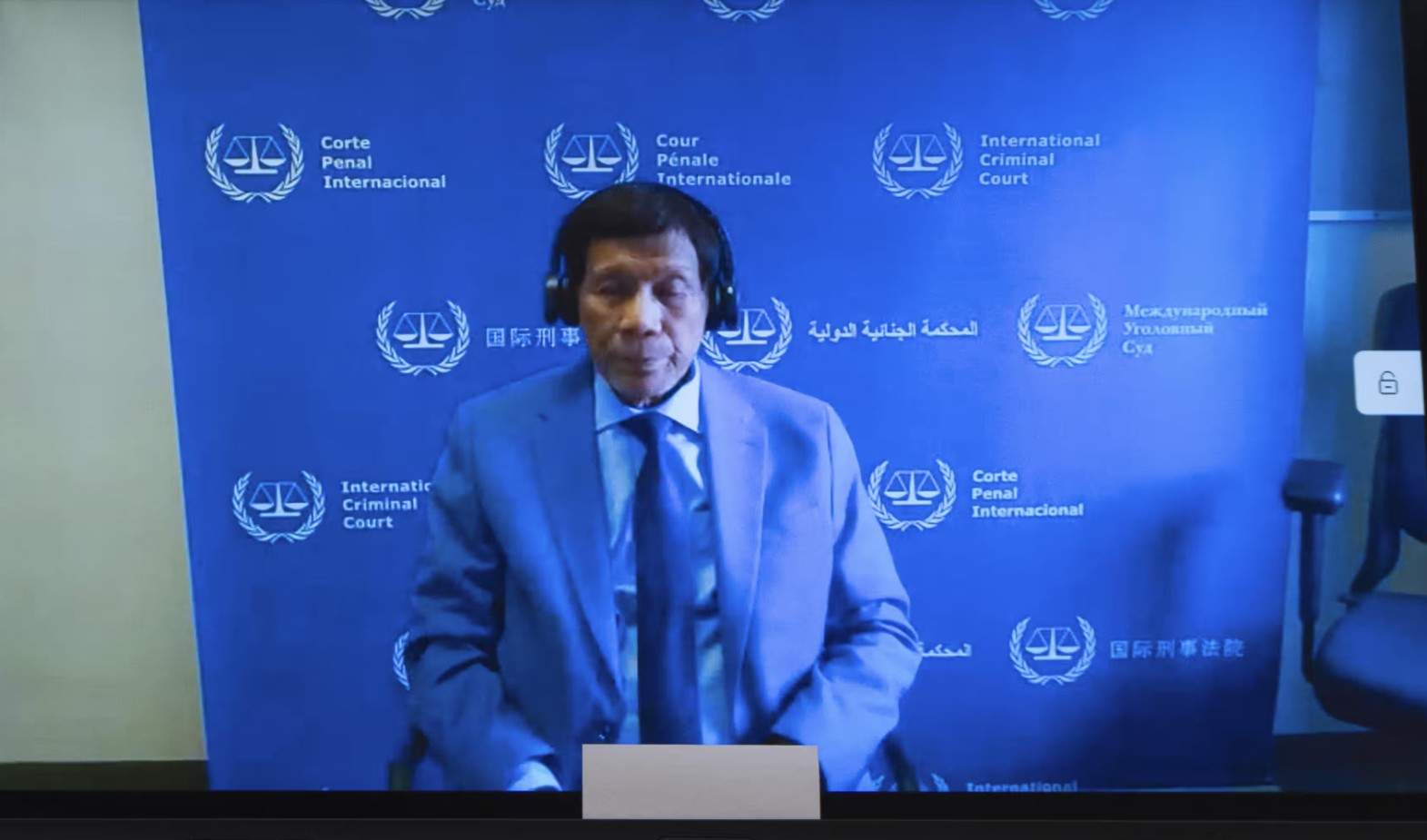

A November 30 trial date has been confirmed for former Philippine president Rodrigo Duterte at the International Criminal Court, with presiding judge Joanna Korner granting the prosecution’s requested schedule while also ordering an independent assessment of the 81-year-old’s fitness to stand trial before proceedings begin.

Duterte faces three counts of crimes against humanity tied to an alleged campaign of killings between 2013 and 2018 — first as mayor of Davao City, then as president of the Philippines. Prosecutors allege his direct involvement in at least 76 murders during the campaign. If the trial proceeds, he will become the first Asian former head of state to stand before the ICC.
The prosecution expects to call between 60 and 70 witnesses. During February’s confirmation of charges hearings, prosecutor Julian Nicholls laid out the case in blunt terms. “Decades of murdering his own people, murdering the children of the Philippines, and he claims that he did it all for his country. He doesn’t deny it,” Nicholls told the court. “He ran a death squad in Davao (city) that he created. He ran it for over 20 years before he became president. His promise was to kill thousands and he did.”
His defence team, now led by British barrister Peter Haynes following a reshuffle, had pushed back against setting any trial date at all, arguing Duterte’s health situation must first be resolved. “It would be inappropriate to attempt to set a date… the defence position is that a commencement is contingent upon a determination… of Duterte’s fitness to stand trial,” the defence submitted. The team has also noted that his condition is worsening: “His condition continues to deteriorate and will need more fully to be reviewed before any trial may commence.”
Duterte was previously cleared fit for the February hearings, though he did not appear in person — his legal team citing concerns he was not mentally sharp enough to follow the proceedings. Under Article 63 of the Rome Statute, an accused person must be present in the courtroom during trial. Duterte last appeared before an ICC chamber on March 14, 2025 — two days after his arrest at the Ninoy Aquino International Airport — when he joined via video link from his detention facility at The Hague.
His former defence lawyer Nicolas Kaufman maintained in February that Duterte “absolutely” denies guilt. Kaufman characterised the evidence as “wholly insufficient” and the charges themselves as “grievously misplaced and politically motivated,” arguing that Duterte’s inflammatory public statements amounted to “bluster and hyperbole” rather than directives to kill, and that he had repeatedly instructed authorities to fire only in self-defence.
ICC judges have authorised 539 victims of the drug war to participate in the proceedings. Lawyers representing victim families have said a full trial could bring more families forward. The court has ruled it retains jurisdiction over crimes allegedly committed in the Philippines between 2011 and 2019, despite Manila’s withdrawal from the ICC in 2019 under Duterte’s own orders.
The ICC is currently conducting status conferences with both sides to finalise procedural arrangements, including evidence disclosure timelines and the mechanisms that will govern the conduct of the trial.
