



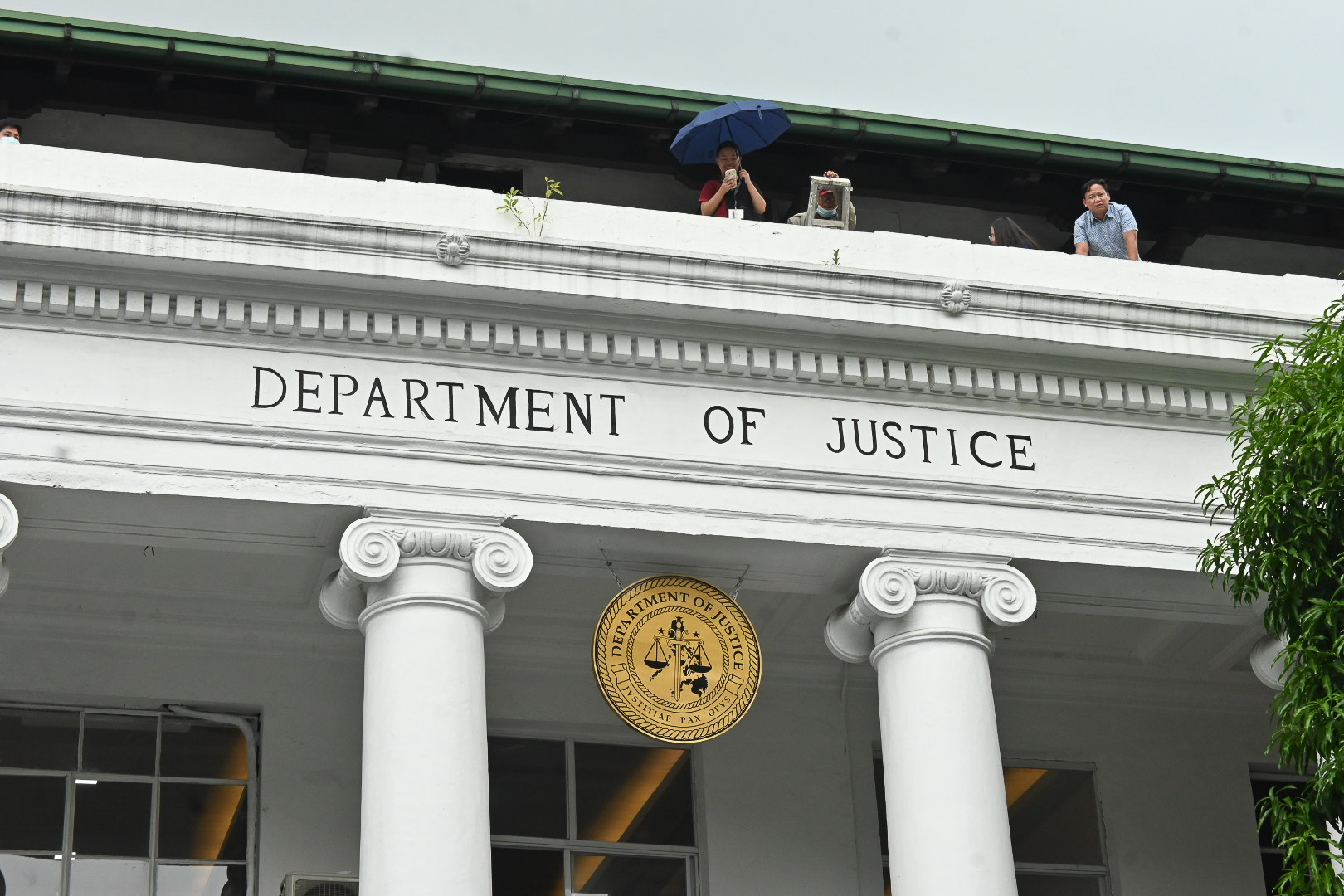

Republic Act 9851 gives the Philippine government legal ground to hand over individuals to an international court or tribunal, the Department of Justice confirmed, as agencies grapple with how to proceed on the confirmed ICC arrest warrant against Sen. Ronald “Bato” dela Rosa.

RA 9851, or the Philippine Act on Crimes Against International Humanitarian Law, Genocide, and Other Crimes Against Humanity, provides the government with the legal framework to either extradite or surrender individuals accused of international crimes.
DOJ spokesperson Atty. Polo Martinez spelled out the two available pathways when asked by reporters. “Yes, same position. Under RA 9851, we may surrender a suspected or arrested person in the Philippines to the appropriate international court or tribunal. The other mode is extradition,” Martinez said.
Legal experts noted that the direct surrender route under RA 9851 is the same mechanism used when former President Rodrigo Duterte was transferred to the ICC’s custody in The Hague immediately after his arrest in March 2025. Unlike extradition, which requires a court order and DOJ-guided hearings, surrender under the law can be carried out more directly once the appropriate agencies are activated.
The ICC’s Pre-Trial Chamber I found reasonable grounds to believe dela Rosa was criminally responsible for crimes against humanity linked to killings during Duterte’s anti-drug campaign. The warrant, originally issued under seal on November 6, 2025, was unsealed by the chamber on May 11, 2026. Dela Rosa is alleged to have committed the crime against humanity of murder as an indirect co-perpetrator, covering at least 32 killings between July 3, 2016 and the end of April 2018.

NBI Director Melvin Matibag said the agency would coordinate with the DOJ on how to implement the warrant, as no specific directive had yet been issued to enforcement units on which approach — extradition or direct surrender — would be followed.
Among the agencies expected to convene under the process are the Philippine National Police, NBI, DOJ, and the Department of Foreign Affairs, coordinated through the National Central Bureau-Philippine Center on Transnational Crime, the local Interpol counterpart.
The NBI acknowledged the Senate’s decision to place dela Rosa under protective custody following the failed arrest attempt inside the Senate premises, with Matibag saying dela Rosa would not be arrested for the time being but was expected to respond to ongoing investigations.
Dela Rosa’s legal team, meanwhile, has filed an urgent motion before the Supreme Court seeking a temporary restraining order against any arrest or transfer to a foreign tribunal without prior judicial authorization. The DOJ’s Prosecutor General Richard Fadullon earlier said the department was inclined to wait for the Supreme Court’s resolution on a separate petition filed by Dela Rosa’s lawyer challenging the proceedings, noting that the senator himself was the petitioner in that case.
