



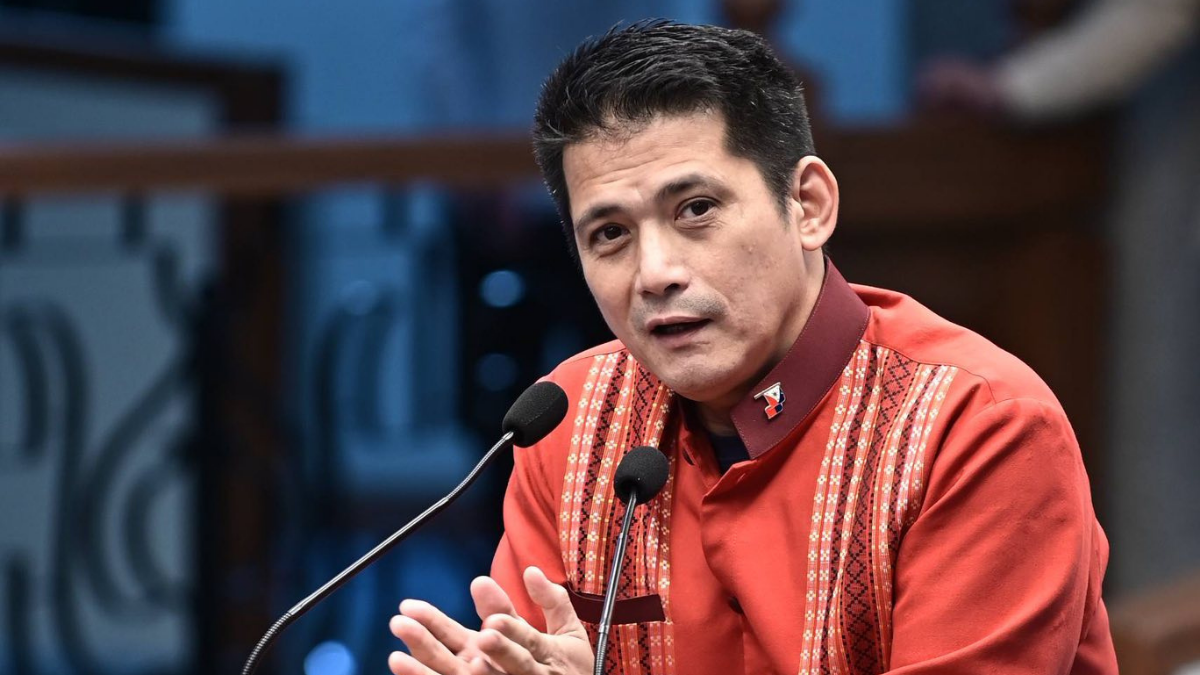

Sen. Robinhood Padilla set off an internal rift within the Senate minority bloc after publicly declaring that opposing the convening of a Senate impeachment court is part of the minority’s parliamentary duty — a position his own colleagues quickly distanced themselves from.

Speaking to reporters on Monday, Padilla framed the expected resistance as standard legislative practice, not partisan maneuvering. “Isn’t it the role of the minority is to oppose? Not just the impeachment. Everything here — our task is to oppose,” he said, appealing to the public not to interpret such a stance as bias. He described the move as consistent with parliamentary norms. “It’s natural. That’s a parliamentary behavior,” he said when pressed specifically on whether the minority would object to the court’s convening.
But the nine-member minority bloc — composed of Senate Minority Leader Alan Peter Cayetano and Senators Ronald dela Rosa, Francis Escudero, Jinggoy Estrada, Bong Go, Imee Marcos, Rodante Marcoleta, Joel Villanueva, and Padilla himself — was not speaking with one voice. Sen. Imee Marcos acknowledged that the articles of impeachment reaching the Senate was a near-certainty, but flatly dismissed Padilla’s characterization of a bloc-wide stance. “We haven’t discussed that yet. But Robin has been very vocal,” she said. Estrada was more blunt: “Walang ganun,” he said, denying any such agreement existed. Cayetano, for his part, indicated the bloc would defer to the law. “We will follow all rules and procedures. There are many lawyers in the minority. We will follow what is right. We will follow the law,” he said.
The minority’s fractures were already visible days earlier. When Senate President Vicente Sotto III convened a closed-door all-senators caucus on Thursday to discuss preparations for a possible trial, only Padilla attended on the minority’s behalf. The other eight members were absent, offering no explanation despite being formally invited, according to Sotto. Padilla was subsequently asked to relay the proceedings to his bloc.

Sotto made clear that blocking the convening of the impeachment court was not a viable option once the articles crossed over from the House. “Follow the Constitution — it’s that simple, which is to convene. Once we receive the articles of impeachment, we must convene as Senate Impeachment Court. That is part of our work. That is part of our job as senators,” he said, adding that any debate on the matter should end there. He indicated the Senate could convene the court as early as the day after receiving the articles.
Sotto also signaled that the trial itself would not begin immediately upon convening. Drawing from the drawn-out Corona impeachment in 2012, he said the Senate intended to conduct a pre-trial phase first, requiring both sides to lay out their evidence before the trial proper begins. “What I’ll do, based on experience, is pre-trial first before the trial proper. That’s in our rules,” he said.
The House plenary vote on the articles of impeachment is expected no earlier than May 11. At least 106 votes — one-third of the full House membership — are required to transmit the case to the Senate. The constitutional threshold for conviction at trial remains 16 of 24 senators, a bar that former Senate president Franklin Drilon has already flagged as the steeper climb, given the current alignment of forces in the upper chamber.
