



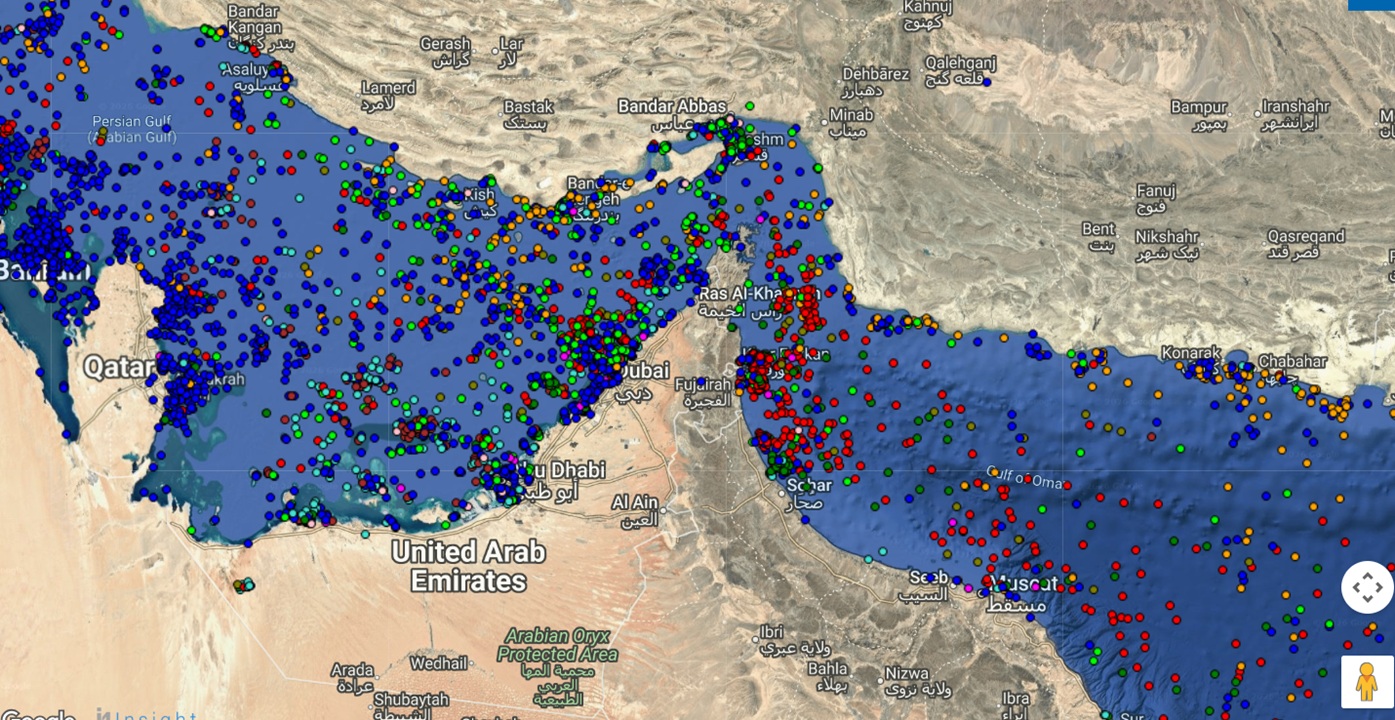

Iranian officials pushed back sharply on Saturday against what they described as an ongoing American blockade of Iranian ports, warning that the Strait of Hormuz — only recently reopened following a Lebanon ceasefire — could be sealed off again if US warships continue intercepting vessels from Iranian waters.

Parliamentary speaker Mohammad Bagher Ghalibaf made the threat explicit on X, writing: “With the continuation of the blockade, the Strait of Hormuz will not remain open,” and adding that passage through the waterway would require authorization from Iran.
Iranian foreign ministry spokesman Esmaeil Baqaei echoed the warning: “The opening and closing of the Strait of Hormuz, does not take place on internet, it is determined in the field, and our armed forces certainly know how to behave in response to any action by the other side.”
He added: “What they call a naval blockade will definitely be met with an appropriate response from Iran. A naval blockade is a violation of the ceasefire and Iran will definitely take the necessary measures.”
The warnings arrive at a moment of cautious diplomatic momentum. Resumption of traffic through the strait — a chokepoint through which roughly a fifth of global crude oil and liquefied natural gas typically moves — had buoyed stock markets on Friday and drawn optimism from Washington.
US President Donald Trump, speaking to AFP by phone, said a broader deal was “very close” and described no remaining sticking points with Tehran. “Looks like it’s going to be very good for everybody,” he said. At a Turning Point USA gathering in Phoenix, Arizona, Trump also claimed Iran had agreed to transfer its enriched uranium stockpile, saying the US would retrieve it “with lots of excavators.” Iran flatly denied that any such agreement was in place, saying its stockpile was not going anywhere.

Trump had declared the day “GREAT AND BRILLIANT” in a series of social media posts, praising talks mediator Pakistan and Gulf allies while telling NATO to “STAY AWAY” and rejecting the alliance’s offer to help secure the strait.
On Friday, the US issued a waiver permitting the sale of Russian oil and petroleum products already at sea — a move expected to add to supply pressures and further soften oil prices that had already been falling on expectations of a negotiated settlement.
The Lebanon ceasefire, which Tehran had set as a prerequisite for broader nuclear negotiations, gave displaced residents in bomb-damaged south Beirut and the south of the country a chance to return home during the 10-day truce. “Our feelings are indescribable, pride and victory,” said Amani Atrash, 37, who told AFP she hoped the ceasefire would hold.
Trump said Israel had been “prohibited” by Washington from carrying out further strikes. “Enough is enough!” he said, adding that the US would work with Lebanon to handle “the Hezbollah situation in an appropriate manner.”
The truce faces its own pressures. The Lebanon fighting began on March 2, when Hezbollah fired rockets at Israel in retaliation for the killing of Iran’s supreme leader Ali Khamenei, days after the broader regional war broke out. Israeli Prime Minister Benjamin Netanyahu, while announcing a lifting of some wartime restrictions, cautioned that the campaign was unfinished. “We have not yet finished the job,” he said, identifying the “dismantling of Hezbollah” as a key objective. Israel warned that military action could resume if the area between its security zone and the Litani River is not cleared of Hezbollah fighters. Lebanese President Joseph Aoun said his country would no longer serve as an arena for outside conflicts. Hezbollah said it remained prepared to respond to any Israeli violations.
