




Every overseas Filipino worker evacuated or yet to be evacuated from conflict zones in the Middle East will receive a scholarship voucher under a commitment made by Technical Education and Skills Development Authority Secretary Jose Francisco Benitez, according to a report by Punto.

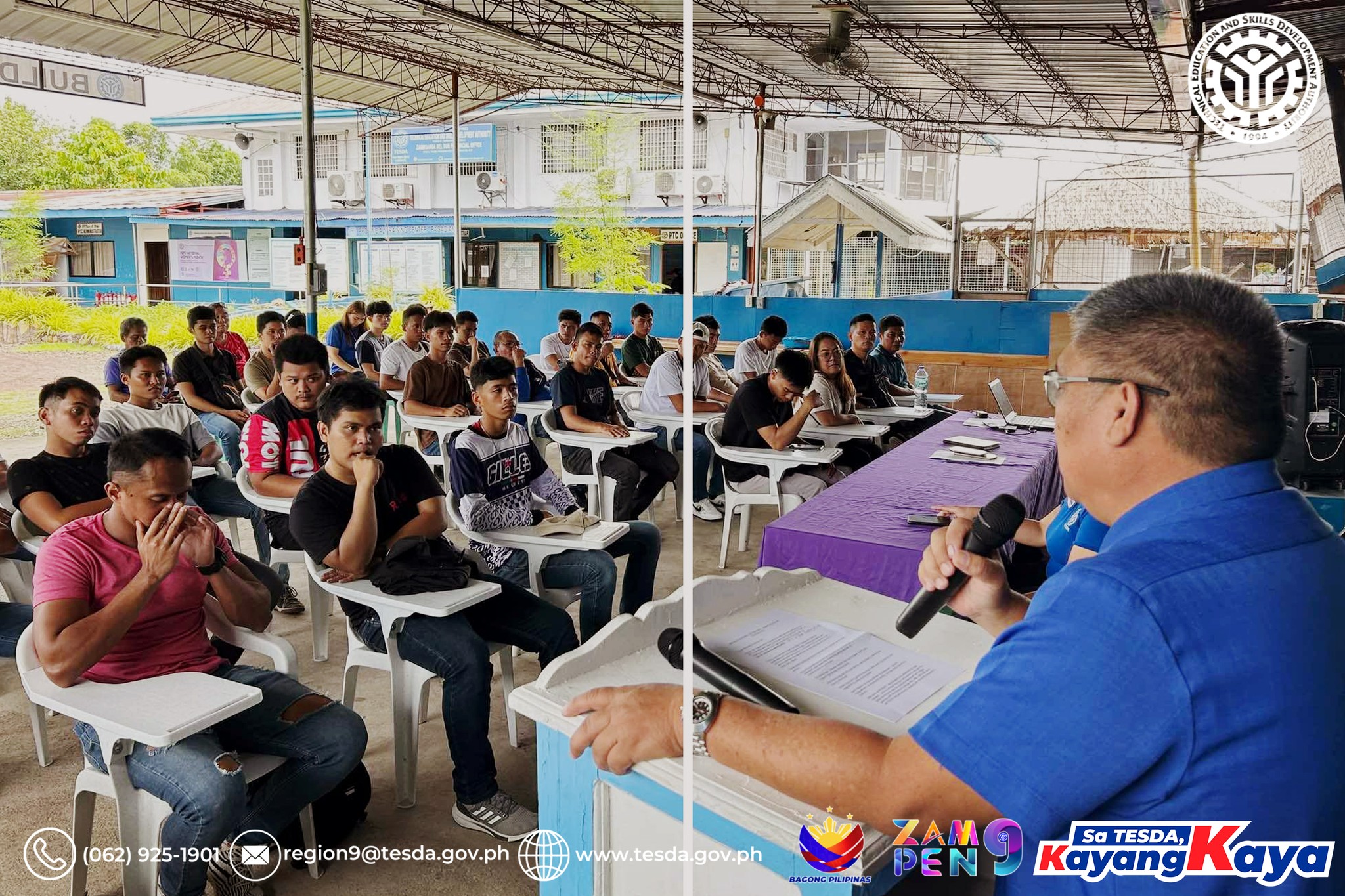
Benitez made the pledge during an inspection visit to ongoing skills training sessions at the TESDA Regional Training Center in Guiguinto, Bulacan, where he observed several programs already running for repatriated workers.
The guarantee is rooted in a standing directive from President Ferdinand R. Marcos Jr. to track and support displaced OFWs until each one either secures new employment or establishes a business of their own.
Funding for the effort comes from TESDA’s P19 billion allocation in the 2026 national budget — the largest in the agency’s history, Benitez noted, and one that exceeds the four-percent-of-GDP benchmark set by UNESCO. The budget covers the Training for Work Scholarship Program, the Special Training for Employment Program, the Tulong Trabaho Fund, and other skills initiatives.
At the Guiguinto facility, Benitez observed the initial batch of 25 OFWs enrolled under the Enterprise-Based Education and Training Program, where coursework includes e-commerce operations and digital marketing. Alongside them, 25 OFWs from Bocaue and Guiguinto are undergoing Photovoltaic Systems Installation NC II training and bag-and-lei making under Community-Based Training Program tracks. Another 25 beneficiaries of the DSWD’s Pantawid Pamilyang Pilipino Program from Paombong are taking Shielded Metal Arc Welding NC I. An additional 15 scholars are enrolled in Dressmaking NC II under the Training for Work Scholarship Program.
At the Korea-Philippines Information Technology Training Center within the same complex, separate batches of 25 OFWs each are simultaneously undergoing Cyber Security training and Trainers Methodology Level I, while 12 others are taking up Events Management Services NC III, Agroentrepreneurship NC II, and Heavy Equipment Operator-Forklift NC II.

Among those training is Wilson Tuquero, a 63-year-old former OFW from Saudi Arabia who said his return to the Philippines also marked the right moment to retire from overseas work and convert his background as an electrical and instrumentation technician into a business.
To inspire OFWs considering the same path, Benitez presented successful Community-Based Training Program outcomes involving persons deprived of liberty, agri-entrepreneurs, and micro, small, and medium enterprises as proof of what the programs can produce.
The intensified activity, Benitez explained, is the agency’s operational response to an existing agreement between TESDA and the Department of Migrant Workers committing to livelihood or reemployment outcomes for every evacuated OFW.
The broader strategic frame is the Philippine Skills Framework, which maps what competencies are needed and who they are suited for. Benitez cited DOLE and Philippine Statistics Authority data indicating eight to nine million job vacancies currently exist in the country — enough, he said, to absorb the estimated two to three million unemployed Filipinos — but that job mismatch remains a persistent barrier to filling them. Priority sectors under the framework include engineering and semiconductors, tourism and hospitality, healthcare, information technology, construction, and renewable energy.
TESDA is also moving to deepen convergence arrangements with other agencies, targeting alignment with DOLE’s Integrated Livelihood Program, DSWD’s Sustainable Livelihood Program, DTI programs for MSMEs, Department of Tourism programs, and Department of Agriculture initiatives for farmers.
