



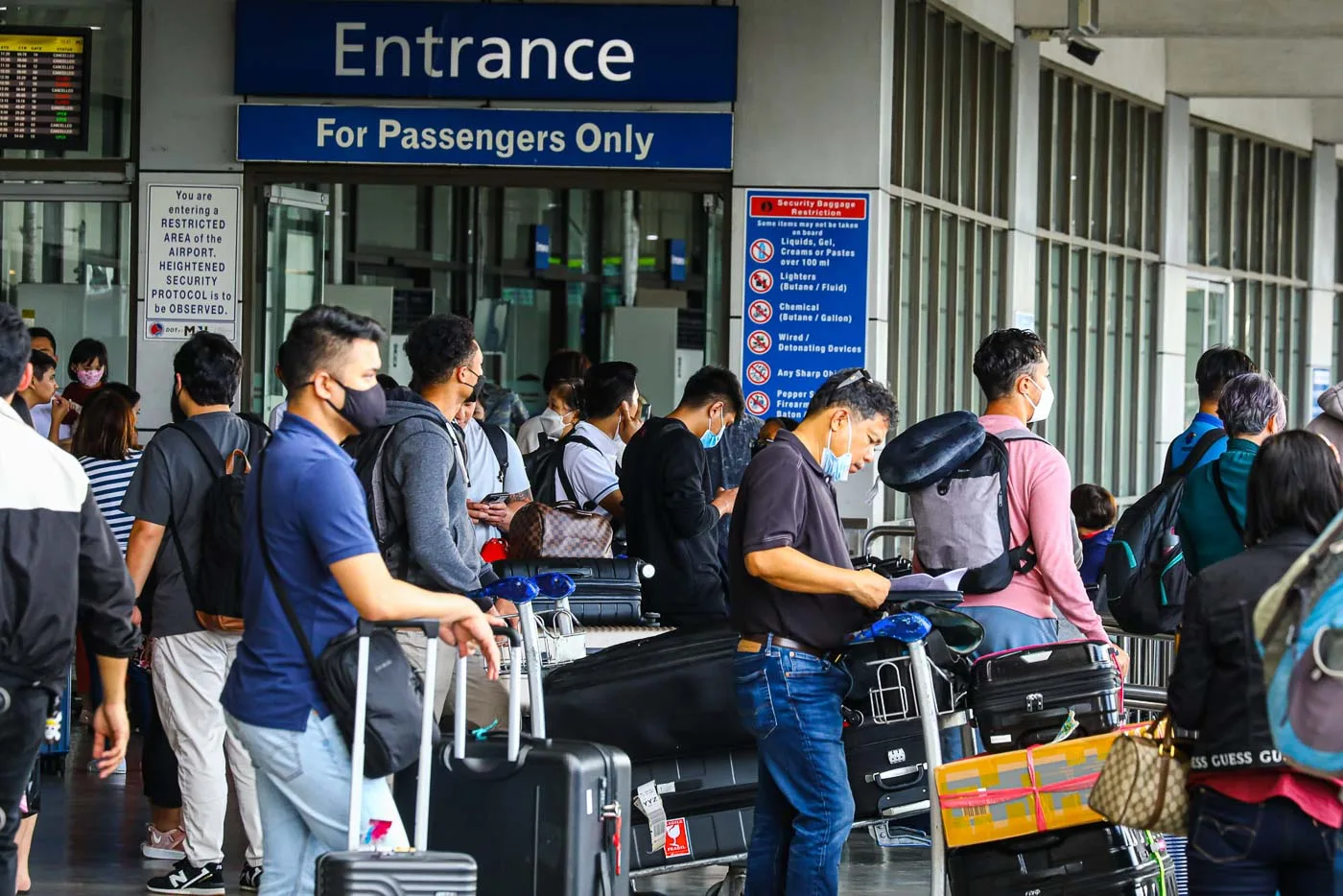

Terminal and navigation charges at state-run airports will be reduced beginning April 1, with the Department of Transportation citing the sharp rise in jet fuel costs as the primary driver of the measure.

Transport Secretary Giovanni Lopez said the discounts apply to airports under the Civil Aviation Authority of the Philippines and are intended to keep airfares from climbing further. Under the adjustment, terminal fees will be cut by as much as P200 per passenger, with the reduction passed directly to ticket prices.
“There will be a reduction [terminal fee] up to P200 per passenger. This will directly take effect. For example, the ticket is worth P2,000, but because of the reduction of the terminal fee, the ticket will be P1,800,” Lopez said at a press conference, speaking in a mix of Filipino and English.
Jet fuel, which Lopez said was trading at around 89 dollars per barrel before the Middle East conflict escalated, has since risen to 200 dollars per barrel. CAAP has also been directed to discount navigation charges, including take-off and landing fees, with airline companies potentially saving up to P5,000 per landing and takeoff.

Lopez said the airport fee discounts are initially set for three months and will be reviewed at the end of that period.
Separate relief measures are also in the pipeline for maritime freight. The Philippine Ports Authority has recommended a P1 roll-on/roll-off terminal fee for Class 3 and 4 vehicles carrying agricultural goods. Lopez said the PPA board was scheduled to hold a hearing Tuesday afternoon to take up the proposal, with implementation targeted for April 15 and a review period of six months.
On land transport, a 50% fare discount on MRT-3 and LRT-2 took effect Monday, March 23. Lopez said the DOTr is in ongoing talks with the Light Rail Manila Corporation to extend the same discount to LRT-1, which operates under a private management arrangement. Toll fee discounts covering a two-month period have also been announced for Class 1 public utility vehicles, Class 2 public utility buses, and Class 3 freight vehicles using the North Luzon Expressway, South Luzon Expressway, and the Southern Tagalog Arterial Road.
