




Late at night in the Philippines—when most homes are settling into silence and the last lights begin to dim—another kind of vigilance quietly begins.

In a small room illuminated by a monitor’s glow, a nurse observes a patient thousands of miles away. The patient is in a hospital in the United States, restless and disoriented, attempting to sit up without assistance. The nurse leans closer to the screen, watching carefully for the slightest sign of danger—a sudden movement, a change in breathing, the subtle signals that something is wrong.
Across the ocean, the patient may never know her name. But the nurse is there.
She is listening, observing, documenting, and ready to alert the bedside team if the moment demands it.
This is not the image many people imagine when they think of nursing. There is no hospital corridor, no rolling IV stand, no stethoscope pressed against the chest. And yet, the essence of nursing—watchfulness, responsibility, compassion—remains unmistakably present.
This is the evolving world of virtual nursing, and Filipino nurses are helping define its future.
At Genfinity Philippines, a growing number of nurses are discovering a new way to practice their profession—one that merges healthcare expertise with technology and connects them to patients across the world while remaining physically at home.
It is a quiet transformation, but one with profound implications not only for nursing, but for the global healthcare workforce itself.
Expanding the Boundaries of Nursing
For generations, nursing has been closely associated with physical presence: the bedside assessment, the reassuring touch, the quiet conversation with a patient during a long night shift.
But as healthcare systems evolve and technology becomes deeply integrated into patient care, the definition of nursing is expanding.
For Ashley Villavicencio, RN, working in a virtual care environment revealed just how adaptable the profession can be.
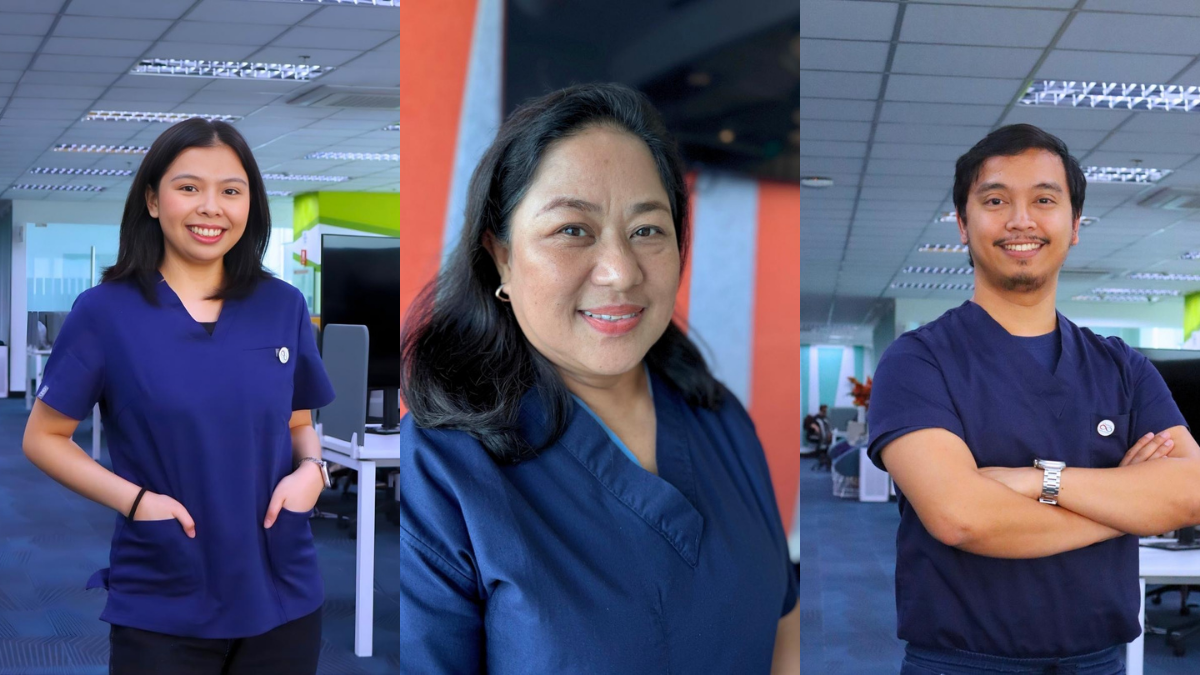
Ashley Jane Villavicencio brings diverse clinical experience, including professional nursing work in Doha, Qatar. Although she had no prior exposure to US healthcare systems before joining Genfinity, she quickly adapted and leveraged her clinical background to support healthcare operations, demonstrating the versatility and global readiness of Filipino nurses.
“This strengthened my confidence in my ability to remain effective even outside the traditional clinical setting,” she said. “It also helped me further develop my therapeutic communication and clinical judgment skills.”
Ashley’s reflection challenges an assumption that many nurses have quietly carried throughout their careers—that meaningful care must always happen face-to-face.
Virtual nursing suggests something different: that the heart of nursing lies not in location, but in judgment, vigilance, and empathy.
For Antonnette De Mesa, RN, the experience broadened her understanding of the profession.
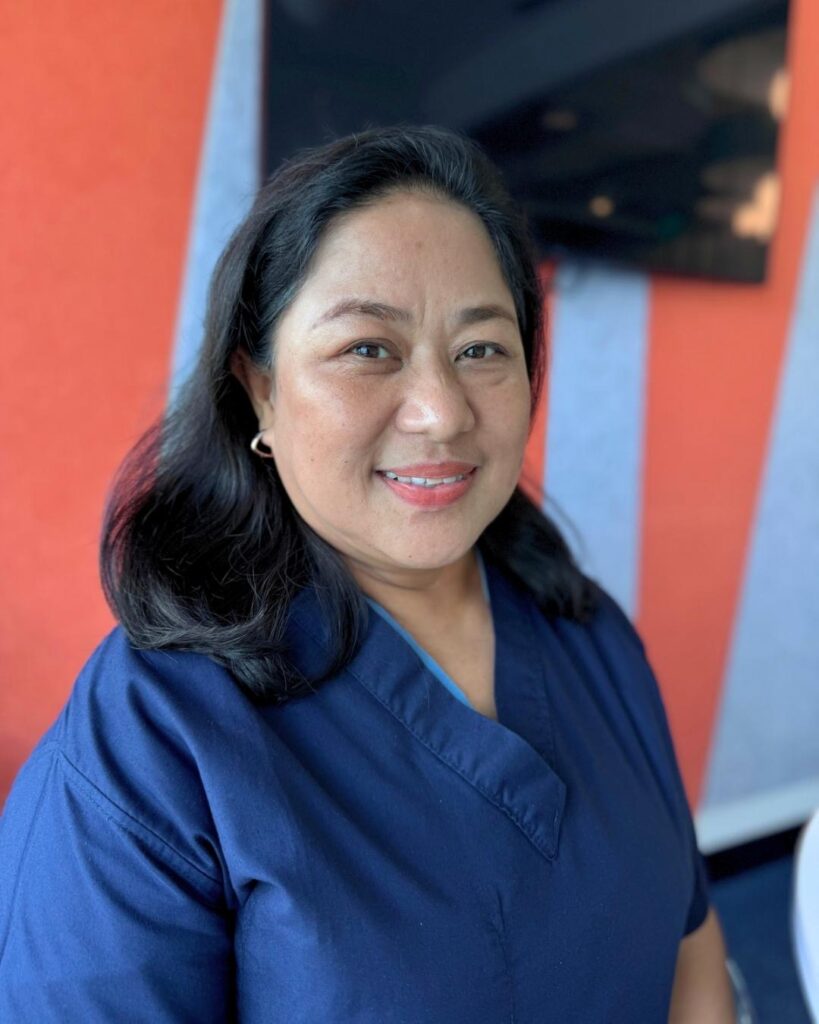
Antonette De Mesa, 53, is a former OFW nurse who spent years working in Saudi Arabia before transitioning to the BPO industry. With a blend of clinical and healthcare support experience, she brings deep patient care knowledge and operational expertise, contributing valuable insights to
healthcare services delivered through the IT-BPM sector.
“Virtual work broadened my understanding of nursing beyond bedside care,” she explained. “Communication, critical thinking, patient advocacy, and compassionate presence still apply even without face-to-face interaction.”
That phrase—compassionate presence—captures something essential about this new form of care.
Presence, after all, is not merely physical. It can also be conveyed through attention, tone of voice, careful listening, and the steady reassurance that someone is watching out for you—even from far away.
A Global Role Without Leaving Home
The emergence of virtual nursing holds particular significance for Filipino nurses.
For decades, the Philippines has been one of the world’s most important sources of nursing talent. Filipino nurses have long served in hospitals across the United States, the Middle East, Europe, and beyond—often leaving behind families and communities in pursuit of opportunity abroad.
Their work has saved lives, strengthened healthcare systems, and supported countless households through remittances.
But it has also come with personal sacrifice.
Virtual care introduces a new possibility: participating in global healthcare without leaving home.
For Angelica Garcia, RN, this shift has been deeply meaningful.
Angelica Garcia gained international caregiving experience in Melbourne, Australia, working as a Disability Support Worker and Personal Care Assistant. Her hands-on experience supporting
patients with daily living needs shaped her compassionate approach to healthcare services, which she now applies in the healthcare outsourcing sector to support quality patient outcomes.
“Working virtually has shaped me into a more independent, resilient, and intentional Filipino nurse,” she said. “It pushed me to rely on my clinical judgment and communicate clearly to ensure patient safety and quality care—even from a distance.”
Her experience working night shifts revealed another unexpected benefit.
“While it requires discipline, it allows me to be present for my family,” she explained. “That balance reminded me why I chose nursing—not just to care for others, but also to build a life where I can care for the people I love.”
In a profession where many nurses spend years away from their families, that balance carries powerful significance.
It represents a subtle but important shift in how professional success can be defined.
The Science of Watching Carefully
Virtual nursing demands a unique form of clinical discipline.
Without the ability to perform physical assessments, nurses must rely on observation, pattern recognition, and precise communication. Every movement, every behavioral change, every environmental cue becomes a potential piece of clinical information.
Ashley Villavicencio describes the patients they monitor as some of the most vulnerable in hospital settings.
“We provide care for patients who are at high risk for falls, those experiencing confusion or dementia, as well as individuals with suicidal ideations or impulsive behaviors,” she explained.
Because hands-on assessment is not possible, nurses must sharpen their observational skills.
“I learned to focus on things like facial expressions, behavior changes, movements, and what’s happening in the room,” she said. “And I learned when an issue needed to be escalated to the bedside nurse for direct assessment.”
In this environment, vigilance becomes an art form.

The nurse may not physically intervene, but her observations can prevent falls, injuries, and other serious events before they occur.
Leadership in a Digital Care Environment
For Ma. Kryzel Dawn Jumig, RN, a Team Lead Virtual Safety Companion at Genfinity, the experience has expanded her role far beyond traditional bedside practice.
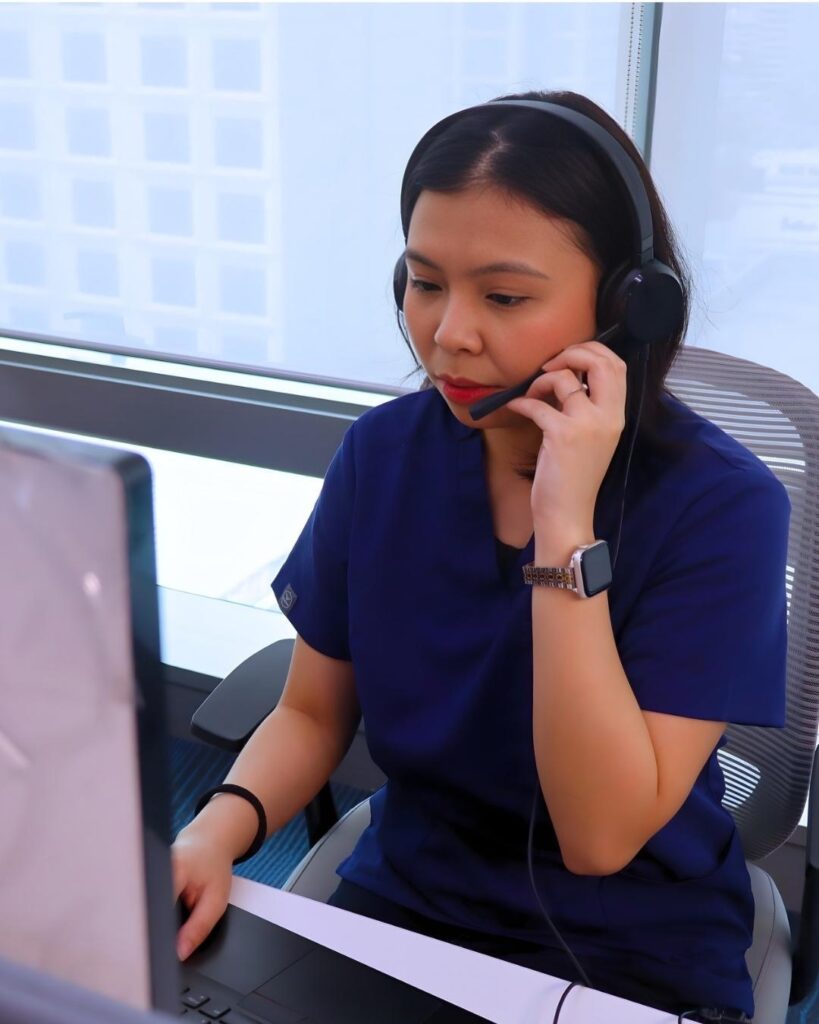
Ma. Kryzel Daw Jumig is one of the youngest nurses at Genfinity and quickly rose through the ranks, earning a promotion to Team Lead after just one year of service. Her rapid growth reflects strong leadership potential, clinical insight, and a commitment to delivering high-quality
healthcare support services.
“Working virtually has transformed how I see myself as a Filipino nurse,” she shared. “For so long, we’ve been associated mainly with bedside care abroad, but roles like Virtual Safety Companion have shown our adaptability.”
Her team remotely monitors patients within the U.S. healthcare system, focusing particularly on individuals who are at risk of injury or medical complications.
“We focus on patients who may be confused, attempting to remove medical devices, getting out of bed unassisted, or showing escalating agitation,” she explained. “When these risks appear, we coordinate immediately with bedside nurses to prevent injuries.”
The work contributes directly to improved patient safety by strengthening fall prevention and reducing hospital-acquired harm.
But the role also requires a diverse set of professional competencies. Clinical judgment.
Technological proficiency.
Communication across international care teams. Cultural sensitivity and adaptability.
For Kryzel, stepping into a leadership role has also reshaped her career ambitions.
“Serving as Team Lead expanded my identity beyond bedside nursing to healthcare leadership in a virtual environment,” she said. “It strengthened my skills in coordination, strategic thinking, and patient safety.”
Bridging Healthcare Across Cultures
Providing care across international borders inevitably introduces challenges.
For Gerard Esmao, RN, the most immediate difference was the absence of physical presence.
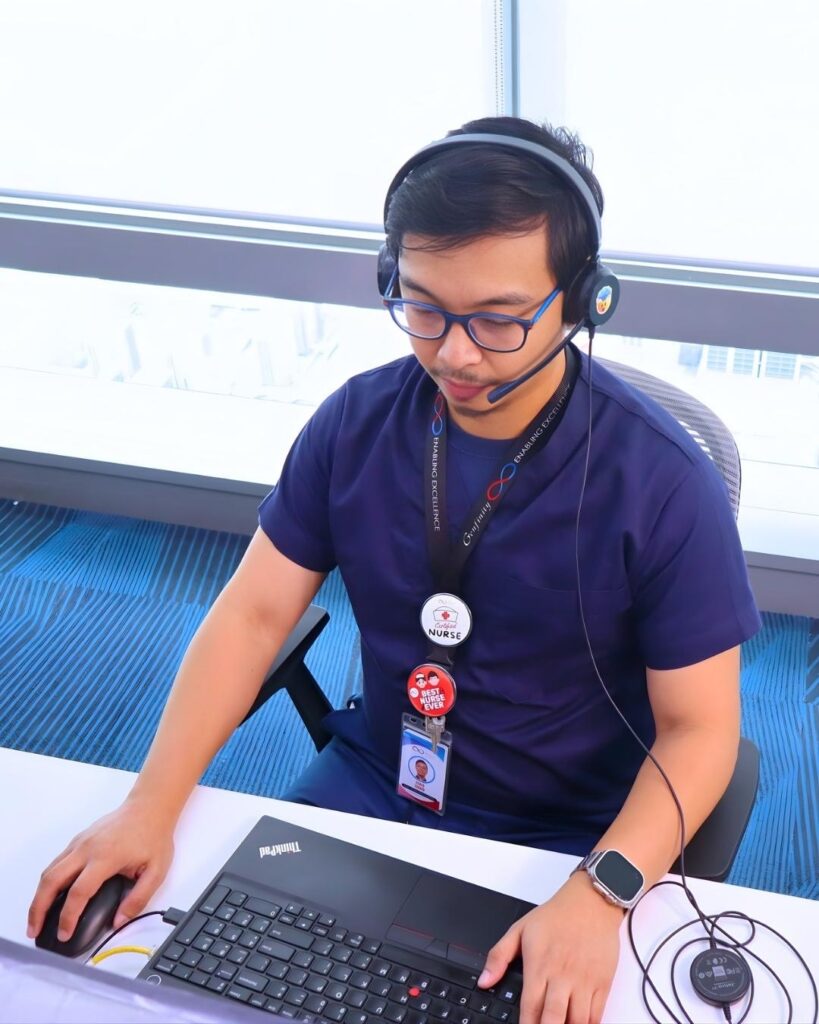
Gerard Esmao combines solid clinical experience with in-depth knowledge of US healthcare systems. Currently serving as a Team Lead, he plays a key role in guiding healthcare support
teams while ensuring service quality. His dual background allows him to bridge clinical expertise with operational excellence in the healthcare outsourcing environment.
“There’s a big difference without the sense of touch and physical presence at the patient’s bedside,” he reflected.
There are also cultural adjustments.
“Culture differences require clear and concise communication,” he explained. “You learn by continuously studying, adapting, and focusing on patient safety across the screen.”
Working with healthcare systems in another country requires nurses to familiarize themselves with new protocols, workflows, and documentation standards.
But it also highlights a remarkable aspect of modern healthcare: care can now travel across continents through technology.
Each shift becomes a kind of invisible border crossing.
Advice for Nurses Considering Virtual Care
For Filipino nurses curious about virtual or remote roles, the professionals at Genfinity offer a message grounded in both realism and encouragement.
Gerard Esmao puts it simply:
“Don’t be attached to the traditional idea of nursing that people are used to. Expand your horizons. It doesn’t diminish your value as a nurse.”
Angelica Garcia echoes the sentiment with practical advice.
“It’s a different kind of nursing, but it still requires the same level of compassion, clinical judgment, and accountability,” she said. “You must strengthen your communication skills, become comfortable with technology, and trust your clinical judgment.”
For Kryzel Jumig, adaptability remains the defining strength of Filipino nurses.
“Remote nursing may look different from bedside practice, but it is no less noble and no less
vital,” she said. “Virtual nursing is not a shortcut—it is a proud specialization that demands skill, resilience, and heart.”
The Future of Filipino Nursing
For decades, Filipino nurses became global professionals through migration—traveling across the world to serve healthcare systems in need.
Today, technology is reshaping that story.
Through virtual care, nurses in the Philippines can now contribute to international healthcare while remaining physically present in their own communities.
They are still serving across borders.
They are still supporting patients in distant hospitals.
But some are doing so while sleeping under the same roof as their families, raising their children at home, and building their lives in the country they love.
Late at night, while hospitals thousands of miles away depend on attentive eyes watching carefully from afar, these nurses represent a new frontier in healthcare.
They may not be standing at the bedside.
But they remain exactly where nursing has always belonged:
at the heart of care.
