



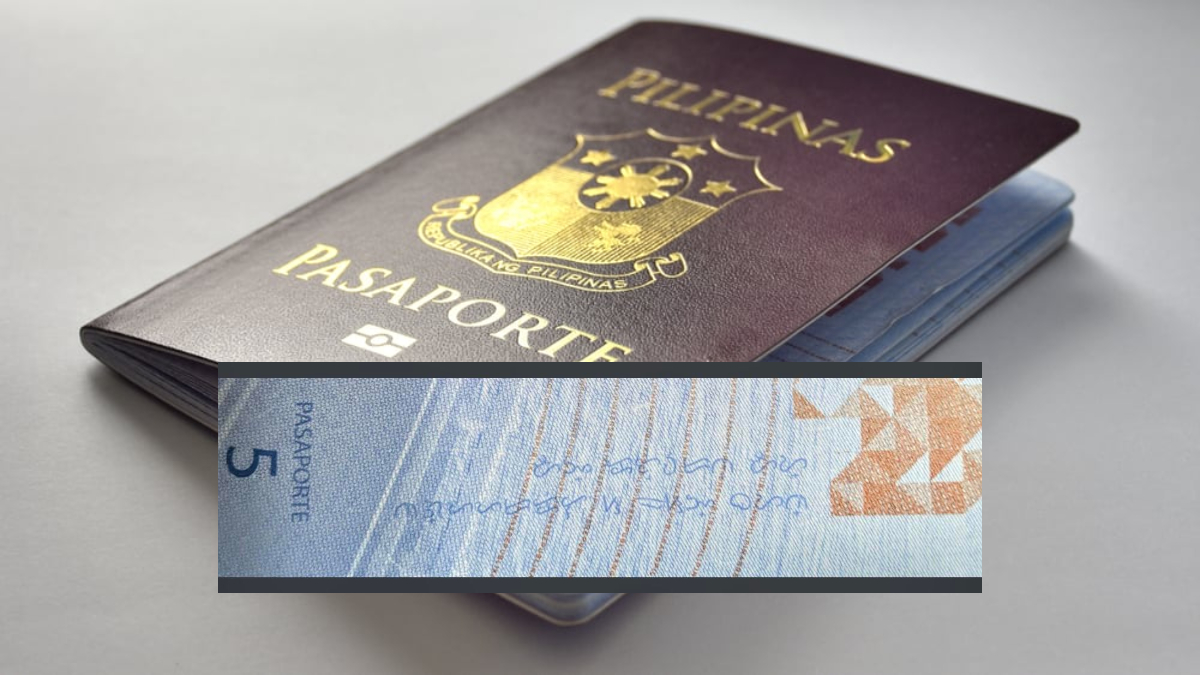

Veteran journalist and documentarist Howie Severino recently turned his curious eye to an overlooked feature of the Philippine passport — the faint Baybayin script printed across its pages — and what it reveals about national identity, reason, and pride.

In a Facebook post, Severino shared a close-up photo of the script that many Filipino travelers have likely missed. “If you can’t read Baybayin, it’s easy to overlook it as so much gibberish,” he wrote. The mysterious text, he discovered, reads:
ᜀᜅ͓ ᜃᜆ͓ᜏᜒᜇ̢ᜈ͓ ᜀᜌ͓ ᜈᜄ͓ ᜉᜉᜇᜃᜒᜎ ᜐ ᜁᜐᜅ͓ ᜊᜌᜈ͓
“Ang katuwiran ay nagpapadakila sa isang bayan.”
The line is commonly translated as “Righteousness exalts a nation” from Proverbs 14:34, but Severino offered a compelling reinterpretation:
“My personal translation: Reason is what elevates a nation.”
For Severino, the nuance in the word “katuwiran” — which can mean both reason and righteousness — underscores a deeper reflection on how José Rizal’s philosophy of enlightenment and reason continues to shape Filipino identity.
“The power of human reason was José Rizal’s main argument when he defied the church’s demand that he retract and submit,” Severino explained. “Rizal trusted that our capacity for reason — and not blind obedience to religious authority — would lead us to righteousness and, ultimately, justice.”

Despite searching the Department of Foreign Affairs (DFA) website and other sources, Severino noted that no one seems to know who decided to include the Baybayin text in the passport or what its intended meaning was. He described it as “a long riff on that line in our passports” — one that feels both mysterious and profound.
“It feels a bit like performative nationalism, a way to show the world that, like many Asian cultures, we too have our own writing system, even if most of us weren’t taught how to use it,” he wrote.
Still, Severino saw beauty and irony in how a near-forgotten script carries a timeless message about the Filipino spirit — even if hidden “behind what’s essentially a secret code.”
“Reason over blind obedience can be dangerous in any era,” he reflected. “Put it in the passport but hide it behind what’s essentially a secret code. But now that we know, we can own it.”
His post, which has sparked widespread discussion among travelers and language advocates, ends with an empowering reminder for every Filipino who carries the country’s passport:
“You’ll know what to say when an immigration officer or anyone else asks about that strange writing in your passport: ‘Reason is what elevates a nation.’ Then hold your head high as they wave you through.”
