



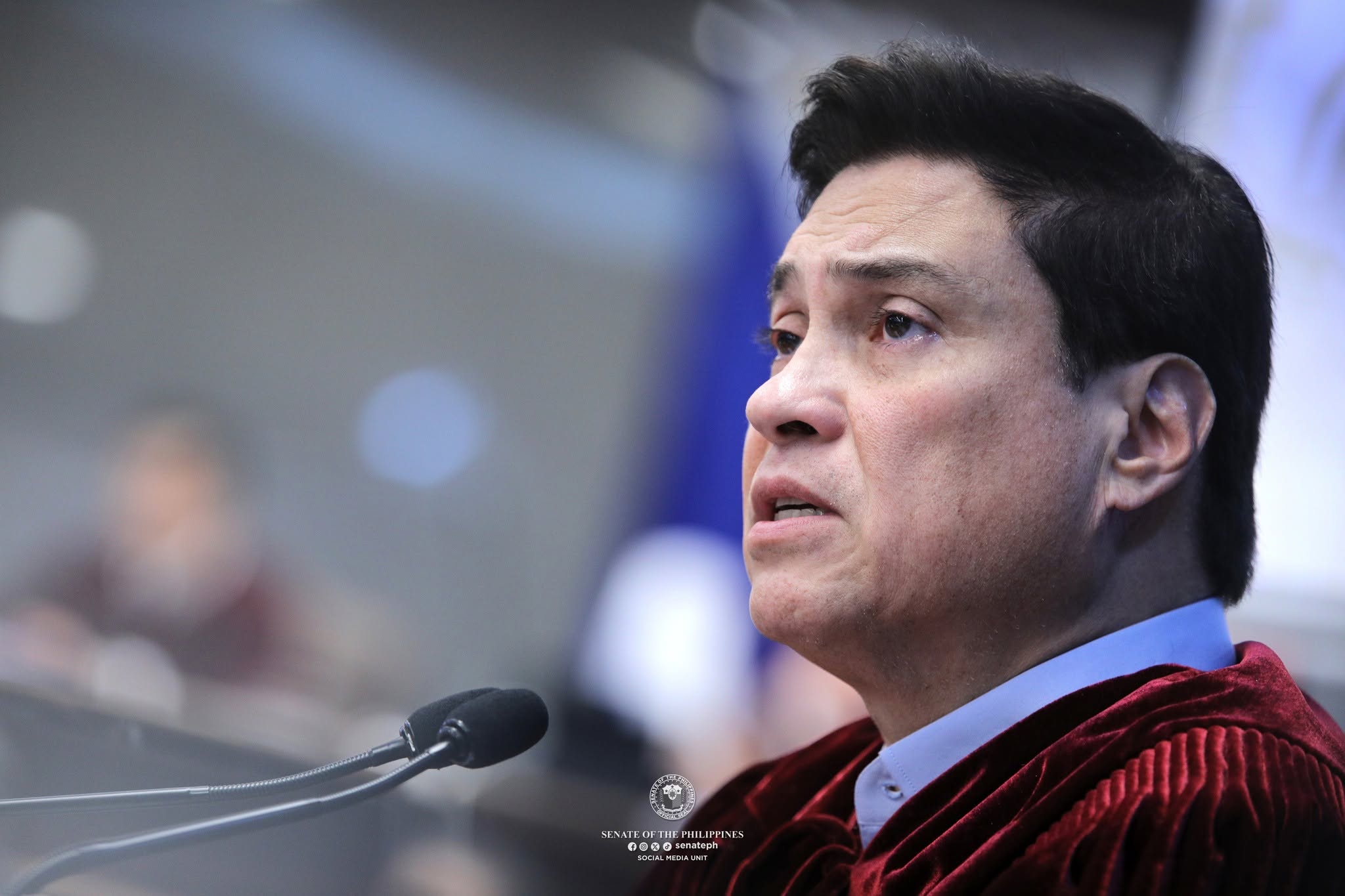

Senator-Judge Migz Zubiri on Wednesday floated the idea of passing a law that would specifically criminalize threats against the President, Vice President, and other officials in the constitutional line of succession, saying current legislation may not adequately address such cases.

The proposal came during the third day of Vice President Sara Duterte’s impeachment trial as the Senate, sitting as an impeachment court, continued hearing evidence under Article IV of the complaint. That article accuses Duterte of making grave threats against President Ferdinand Marcos Jr., First Lady Liza Araneta-Marcos, and former House Speaker Martin Romualdez.
While questioning National Bureau of Investigation (NBI) Senior Agent John Mark Calilung, Zubiri asked whether Philippine law contains a statute that specifically covers threats directed at the country’s highest officials or whether such incidents are prosecuted under the general provision on grave threats.
“In our country, is there a specific law that deals with threats against the President, the Vice President, and their successors? Or are such cases simply covered by the general law on grave threats, which applies to everyone?”
Calilung replied that existing cases of that nature are handled under the general law on grave threats.

The NBI official also told the impeachment court that, under the bureau’s charter, the agency has authority to investigate threats involving the President, Vice President, Senate President, and Chief Justice of the Supreme Court.
Referring to Section 871 of Title 18 of the United States Code, which penalizes threats against the U.S. president, vice president, and officials in the line of presidential succession, Zubiri suggested Congress study whether a similar measure should be enacted in the Philippines.
“This is just food for thought because we are not only senator-judges, we are also legislators,” Zubiri said.
“Perhaps it is time for us to craft a law that specifically penalizes threats against the President, the Vice President, and the constitutional successors to the presidency, such as the Senate President, the Speaker of the House, and the Chief Justice of the Supreme Court,” he said.
