



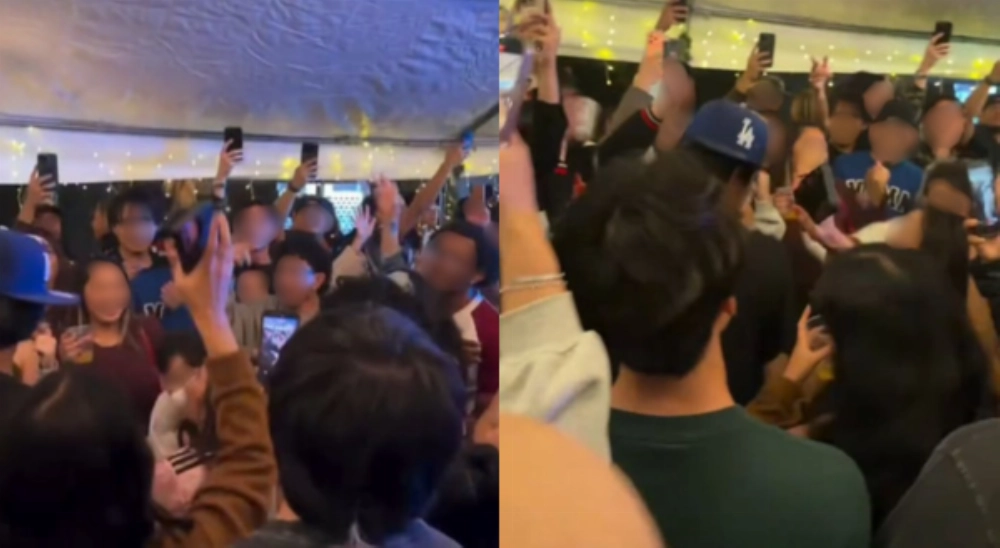

A TikTok video showing a group of people dancing cheerfully to a remixed version of the Philippine national anthem has ignited criticism online, with many Filipino netizens questioning whether the clip crosses a legal line.

The footage, posted by a user identified as Rice Cube, features what appears to be an upbeat, altered rendition of Lupang Hinirang — stripped of the solemnity the anthem traditionally carries. The account holder addressed the controversy directly, framing the post as culturally intentional rather than offensive.
“No disrespect to Lupang Hinirang or the Philippines…This was shared in a space for Filipinos and Filipino Americans as a form of creative expression. With respect always,” the user wrote.
The explanation did little to soften the response. Comment sections filled quickly with criticism, ranging from concern to outright alarm.
“Saya now kaso later,” one user wrote, alluding to potential legal consequences. Others were more pointed: “May kaso yan if I’m not mistaken,” and “this is so alarming.”

Some questioned the group’s awareness of basic civic norms. “na para bang line of 5 sila sa gmrc,” one commenter wrote. Another added: “Seryoso na kung seryoso. tulad ng ibang comments na seryoso kuno. pero d tlga nakakatuwa.”
The backlash reflects broader public awareness of Republic Act 8491, or the Code of the National Flag, Anthem, Motto, Coat-of-Arms and other Heraldic Items and Devices of the Philippines, which sets out explicit conduct rules when the national anthem is performed.
Under Section 43 of the law, playing or singing the anthem for recreation, amusement, or entertainment is prohibited except in specific circumstances — among them international and local competitions involving Philippine representatives, broadcast station sign-ons and sign-offs, film screenings, theater openings, and civic or cultural presentations.
The law also prescribes the proper manner of conduct during the anthem’s performance. “As a sign of respect, all persons shall stand at attention and face the National Flag, if there is one displayed, and if there is none, they shall face the band or the conductor. At the first note, all persons shall execute a salute by placing their right palms over their chests,” the statute reads.
As of this writing, the National Historical Commission of the Philippines, which oversees enforcement of the flag and anthem code, has yet to issue any statement on the matter.
