



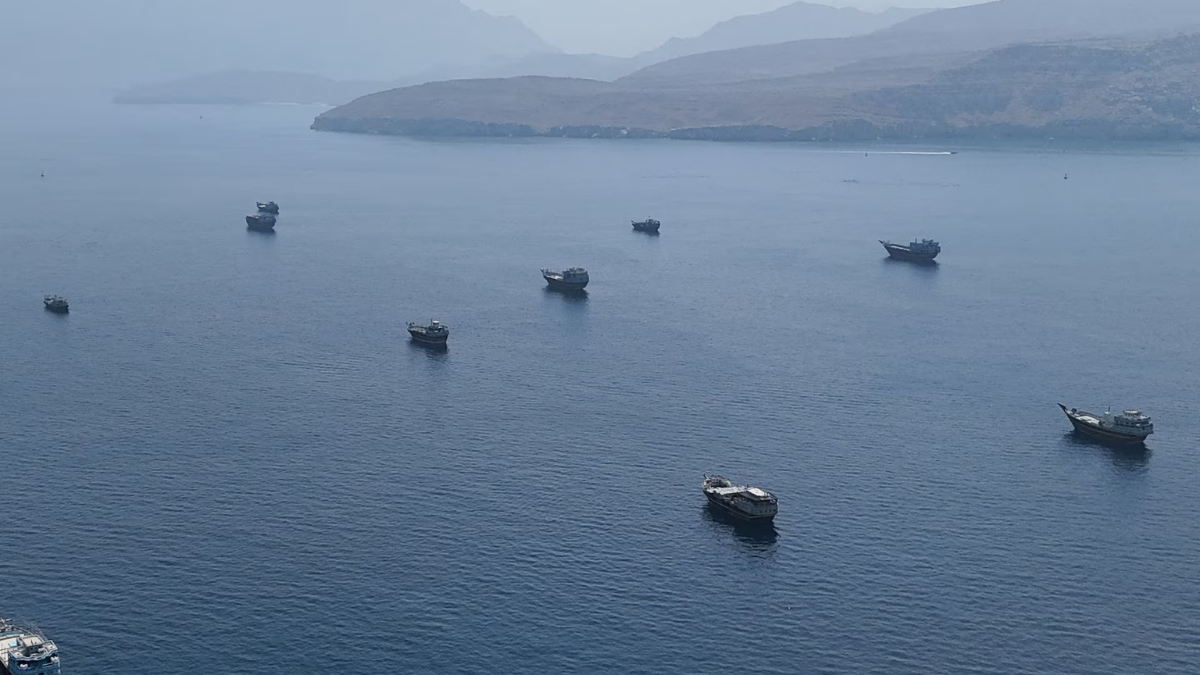

Two Filipino crew members died aboard the crude carrier Sidr after a security incident in the Strait of Hormuz on August 31, the vessel’s operator, Saudi Arabia’s national shipping line Bahri, confirmed in a statement on Wednesday. The company identified the ship as its very large crude carrier and said the deaths occurred as the vessel was moving through the waterway that links the Persian Gulf to open sea.

Bahri’s confirmation of the fatalities came days after the first maritime reports of the episode. The Athens-based maritime security firm Marisks had placed the strike on the Sidr at roughly 16.6 nautical miles northeast of Khasab, Oman, at about 7:52 p.m. UTC, describing the vessel as hit by unknown projectiles. In those initial accounts, Marisks reported all crew aboard as safe — an assessment that Bahri’s later statement, disclosing two deaths, revised.
The Sidr was not the only ship affected that evening. Marisks said a second very large crude carrier, the Liberian-flagged Senegal Prosperity, was struck minutes afterward by three unknown projectiles roughly 17 nautical miles east of Khasab. That vessel is operated by South Korea’s Sinokor Group. One account attributed to Vanguard Tech described rockets hitting the Senegal Prosperity’s port side, engine room and ballast tank, causing a loss of communications, while reporting its crew as unharmed.

Responsibility for what happened to the two tankers remains unestablished. No party claimed the strikes, which followed a renewed exchange of attacks between the United States and Iran over control of the strait earlier that day; Washington said it targeted Iranian rocket launchers being prepared to lay mines in the passage, and Tehran responded with strikes on the United Arab Emirates and Jordan.
Iran offered a markedly different version of events. The country’s Islamic Revolutionary Guards said two oil tankers struck sea mines and were disabled while trying to move through the strait, asserting the ships had been forced to offload their crews and were handed to US operatives to cross what the Guards called an “illegal route,” despite prior warnings from their navy about the mined passage.
The Strait of Hormuz is one of the busiest routes for seaborne crude, carrying a large share of the oil shipped from Gulf producers to buyers worldwide, which is why disruptions there draw immediate attention from governments, insurers and energy markets. Ship-tracking data cited in reporting showed the Sidr anchored near the Omani coast in the middle of the strait, having sailed without transmitting its position since August 20, when it was last seen off Fujairah on the UAE’s eastern coast.
