



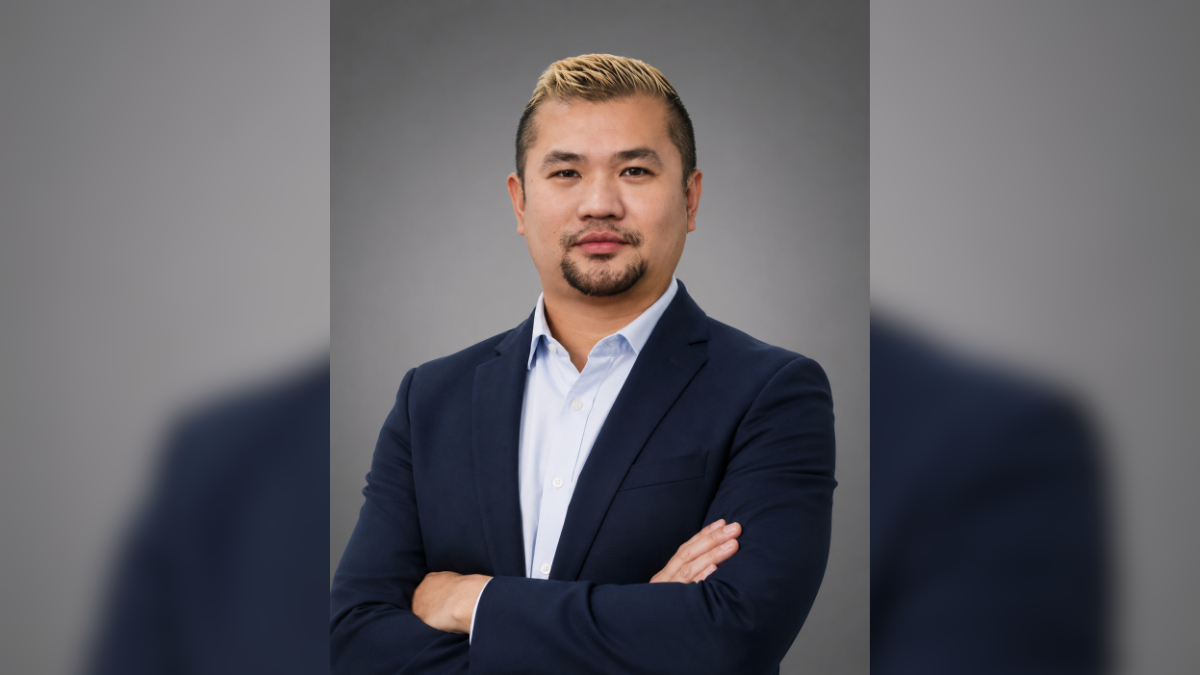

Some doors don’t just close. They lock, swallow the key, and dare you to try again. For most people, one failed attempt at working abroad is enough to file the dream away under “not meant to be.” Leideke Jonas Cantaros collected three of those closed doors before one finally opened—and the last obstacle standing between him and a flight out of the Philippines wasn’t money, or paperwork, or timing. It was his name.

Today, at 36, he is the Marketing Manager at Starlink Qatar, responsible for the way one of the country’s leading technology retailers presents itself to the world. His campaigns have lit up some of Doha’s most prominent addresses—the Villaggio Torch, West Walk, The Pearl, Gewan Island. But the road to those big screens ran through two crushing rejections and a year and a half of wondering whether the dream had quietly expired.
“Even my own name is stopping me from going abroad,” he told his mother over the phone, crying, roughly a week before a flight to Saudi Arabia that would never happen. That was 2013 or thereabouts—one of the lowest points in a story he now tells without bitterness, because he understands where it eventually led.
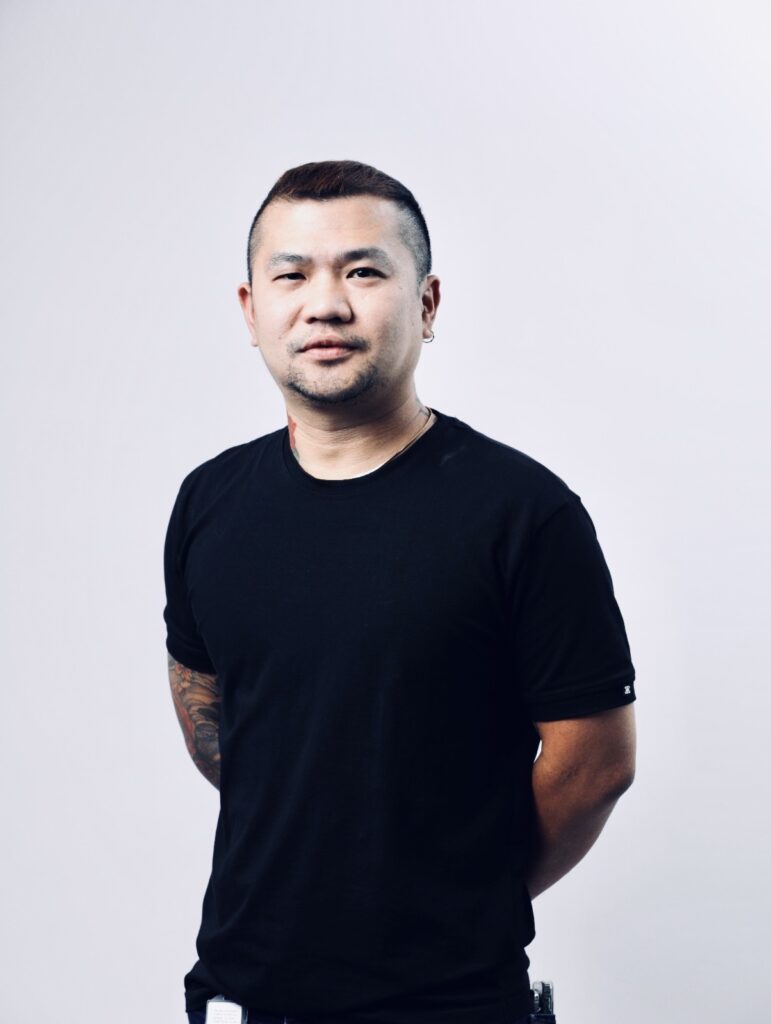
The years the dream almost died
The first attempt came in 2012. A close family friend put their faith in a fellow Filipino who seemed capable of processing overseas jobs, and Leideke, along with others, followed that faith straight into a scam.
They did everything right, or thought they did. “We spent money. We completed medical requirements. We attended training. We prepared ourselves emotionally for the possibility of leaving the Philippines,” he shares with TGFM. There were assurances that an agency was handling the applications, that positions were waiting. Then came the truth: no jobs existed, and the person they trusted had never been authorized to process anything. “It was painful—not only because of the financial loss, but because hope had been built around something that was never real.”
Most people would have stopped there. He applied again, through a different agency, and this time everything looked legitimate—requirements, briefings, orientation, a signed contract, a nearly scheduled flight to Saudi Arabia. “Finally, this is it,” he remember thinking.
Then the agency called him back to the office about a week before departure. There was a problem with his documents, something tied to his name and his family records. Because he had no middle name connecting him to his biological father, and because of complications around his family circumstances, he was told the deployment could not proceed.
“It felt like cold water had suddenly been poured over me,” he says. “After everything I had completed, everything stopped because of something I had never imagined would become an obstacle.”
That is a particular kind of cruelty—to be turned away not by a lack of effort or ability, but by an accident of family history you never chose. When rejection comes once, he explains, you can talk yourself into trying again. “But when disappointment happens repeatedly, it becomes much harder. You begin questioning whether maybe the dream is simply not meant for you.”
For about a year and a half, the marketer-to-be lived with that question hanging over him. The dream didn’t die, exactly, but it went quiet.
What ten years abroad actually teaches you
When he finally made his third attempt, he set a condition for himself: he would not let fear, past failure, or anyone else’s actions decide his future. In 2015, he landed in Qatar.
The job that greeted him was Visual Merchandiser for Emax under Landmark Group—not marketing in the full sense he wanted, but a foundation. He already had a background to build on. Before leaving the Philippines, he had worked for SM, one of the country’s largest retail organizations, as a Graphic Designer and Visual Merchandiser, involved in the opening of more than 15 SM and Savemore stores across the country. Store openings are brutal, deadline-driven affairs, and his managers eventually trusted him enough to send him to different locations alone, as the department’s representative. “That trust meant a lot to me,” he says. It taught him to solve problems on-site and make decisions early, long before anyone handed him a manager’s title.
Qatar demanded a different education. What sells in Manila doesn’t necessarily sell in Doha. “Customers are different. Cultures are different. Buying behaviour is different,” he says. Even colors, layouts, and messaging shift with culture. Merchandising in an international market forced him to become a sharper observer of the people he was trying to reach.
He’s clear-eyed about what a decade overseas costs and what it gives back. The early days, he admits, come loaded with fear, homesickness, financial pressure, and self-doubt. “There are times when you wonder whether you made the right decision.” But something shifts. “You realize that you are capable of adapting. You learn how to communicate with people from different cultures. You become independent. You become more disciplined.”
There’s a line he returns to that captures the gap between how success looks and how it’s built: “Many people see someone’s success but not the struggles that came before it. They see the position, but not the years of learning. They see the achievements, but not the rejection. They see confidence, but not the fear that had to be overcome.”
From arranging shelves to shaping a brand
The leap from visual merchandising into full marketing didn’t come without nerves. When he joined Starlink Qatar, it was as a Marketing Associate—a much wider brief in a completely new environment. “There were moments when I questioned whether I was ready,” he says. He decided fear wasn’t a good enough reason to walk away. “I have always believed that growth rarely happens when we remain comfortable.”
So he treated the unfamiliar as a syllabus. Retail marketing, events, campaigns, partnerships, public relations, branding, content, sponsorships, customer experience, business strategy—he set out to learn all of it rather than stay boxed into the one discipline he already knew. That appetite is what eventually carried him to Marketing Manager.

The role now runs wide. He handles offline marketing across public relations and press, events and sponsorships, corporate functions, employee engagement, retail marketing, influencer collaborations, agency management, social media coordination, visual merchandising, and brand governance. One thread ties all of it together: making sure that however Starlink shows up—an event, a store, a campaign, an outdoor ad, a customer interaction—it stays true to the brand and the business behind it.
He pushes back, gently, on a common misreading of what marketers do. “For me, marketing is not simply about creating beautiful advertisements. It is about understanding people, understanding the market, connecting different teams, solving problems, creating meaningful experiences, and ensuring that every campaign contributes to the wider business objective.”
Ask him for the single best day of his career and he refuses the premise. It isn’t one campaign or one promotion. “It is the entire journey. It is seeing myself evolve from a Visual Merchandiser into someone entrusted to manage major marketing projects, represent the brand, work with senior leaders, agencies, partners, global brands, and different stakeholders.”
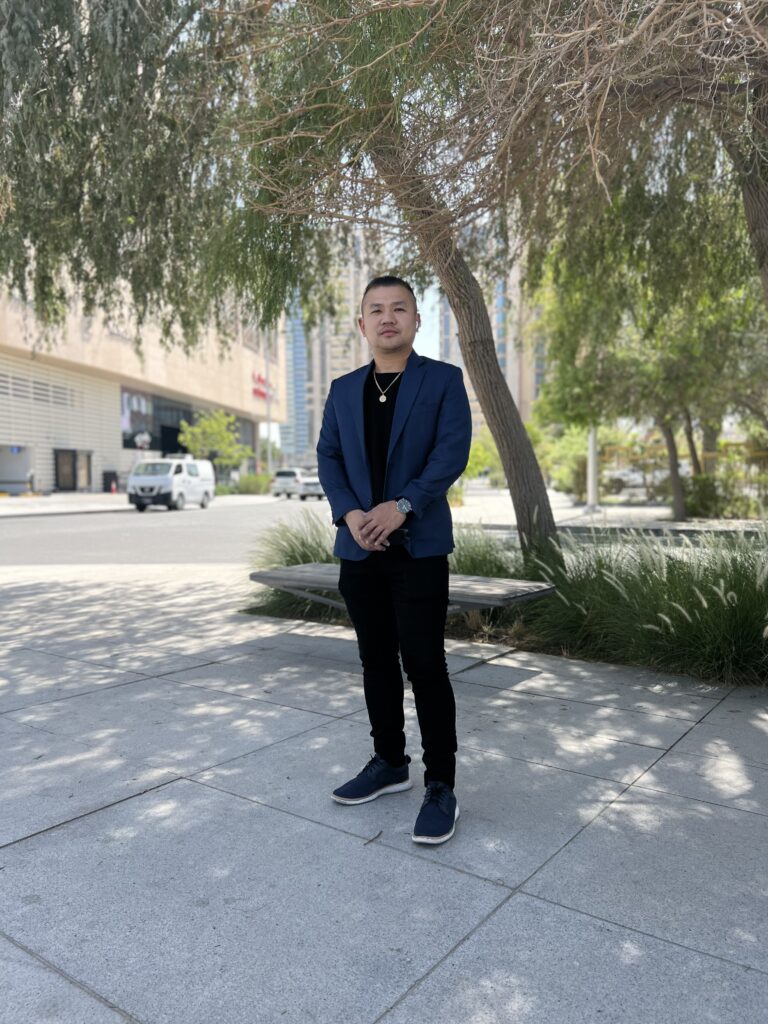
He doesn’t discard the earlier jobs the way some professionals bury their beginnings. He calls them layers. “My graphic design background taught me creativity. Visual merchandising taught me customer behaviour and commercial presentation. Retail taught me execution. Events taught me pressure management. Marketing taught me strategy.”
Those events, in particular, have put him on some large stages. He has managed or supported end-to-end coordination for Starlink’s presence at platforms like Milipol Qatar, Web Summit Qatar, and MENA 360. And he’s quick to note that the part the public sees—the finished screen, the polished activation—is the smallest sliver of the work. “Behind every finished campaign are weeks—sometimes months—of meetings, revisions, negotiations, coordination, pressure, problem-solving, decision-making, and teamwork.”
What keeps him in it is that no two days repeat. He might open the morning on a product launch, spend the afternoon on an event concept, review campaign artwork with an agency, meet a partner, untangle a retail execution problem, and close the day drafting a proposal for senior management. Demanding, yes. But he credits Starlink’s culture—leadership that listens, and a CEO who actively pushes a positive company environment—for making the grind feel like growth. “Having leaders who are willing to listen, guide, trust, and provide opportunities makes a significant difference,” especially, he adds, for someone who started abroad from a junior post.
Why he left, and why it was never just about money
Strip the story down and two forces explain the whole thing: family and ambition.
The first is the one most overseas Filipino workers will recognize instantly. As parents age, their old sacrifices come into sharper focus. “You remember the years when they worked hard simply to put food on the table, send you to school, and provide whatever they could even when resources were limited,” he says. He wanted to reach a point where his family no longer had to worry about money—and he understood that getting there meant looking past what was comfortable.
His support system through the hard years had a specific shape: his mother, Bhabie, and his stepfather, Papa Eddie. He’s careful about that word, stepfather, because it never felt true to the relationship. “Not even once did he make me feel that I was anything less than his own child.” Their sacrifices, he says, shaped how he thinks about responsibility now. “As long as I am alive and capable, I want to be there for them.”
The second force was simpler curiosity. He grew up watching stories of Filipinos who had become managers, entrepreneurs, and executives overseas, and a question would surface: “Why can’t I become one of them someday?” Working abroad, for him, was never mainly about a bigger paycheck. “It was about creating opportunities. It was about providing a better life for the people I love while also giving myself the chance to grow professionally and personally.”
He’s also learned to hold the OFW experience with some honesty about its emotional weight. Filipinos abroad, he notes, often feel they have to look unbreakable because so many people back home depend on them. “We become the provider. We become the person others call when they need help.” But he rejects the idea that strength means silence. “Even strong people need someone to talk to. There is no weakness in asking for help.” And he offers a warning aimed squarely at his fellow workers: don’t pour everything into supporting others and leave nothing for yourself. “Do not allow your entire overseas journey to become only about surviving from one salary to another. Give to your family, but also invest in the person who is making those sacrifices—you.”
The name that once stopped him now belongs on bigger doors
There’s a neat symmetry to where he wants to go next. The document detail that once disqualified him is now attached to a person aiming for one of the biggest titles in his field. He says it plainly: he wants to become a Chief Marketing Officer. And he refuses to soften the ambition into a maybe. “There was once a time when simply working abroad seemed difficult. There was once a time when becoming a Marketing Manager seemed far away. So when I think about becoming a CMO, I do not say, ‘Maybe someday.’ I tell myself: ‘I will get there.'”
But he frames leadership as more than a nameplate—as the ability to influence people well, develop others, make responsible decisions, and leave something behind. That instinct extends to a wider hope for Filipinos in general. He wants to see more of them at leadership tables around the world, “not simply because they are Filipino, but because their competence, character, experience, professionalism, and leadership have earned them those positions.” Whenever he can mentor a Filipino colleague, he does—sometimes with career advice, sometimes just by encouraging someone to build confidence or take ownership of their work.
His parting counsel to younger Filipinos circles back to his own beginnings, and it’s the one thing he seems most eager for them to hear: don’t be ashamed of where you started. “I started as a Graphic Designer and Visual Merchandiser. I experienced failed overseas applications. I experienced rejection. I experienced uncertainty.” None of it, he insists, was wasted. “Your first position does not determine your final position. Your current salary does not determine your future value. Your failures do not determine your future success.”
And when the corporate chapter finally closes, he already knows where he’s headed—not to a bigger city, but a smaller one. He dreams of returning to his hometown of Culion, Palawan, trading deadlines and traffic for nature, family, and quiet. Even then, he wants to keep contributing, to share what he’s learned with younger generations, “and perhaps inspire someone from a small hometown like mine to believe that they can also build a successful career anywhere in the world.”
It all comes back to the line he lives by, the one that stopped being a nice quotation somewhere between the second rejection and the third attempt: “Fall down seven times, get up eight.” He doesn’t pretend it’s about talent. “Sometimes success is not about being the most talented person in the room. Sometimes it is simply about being the person who refuses to stop trying.”
For a man once turned away by his own name, that has turned out to be more than enough.
