



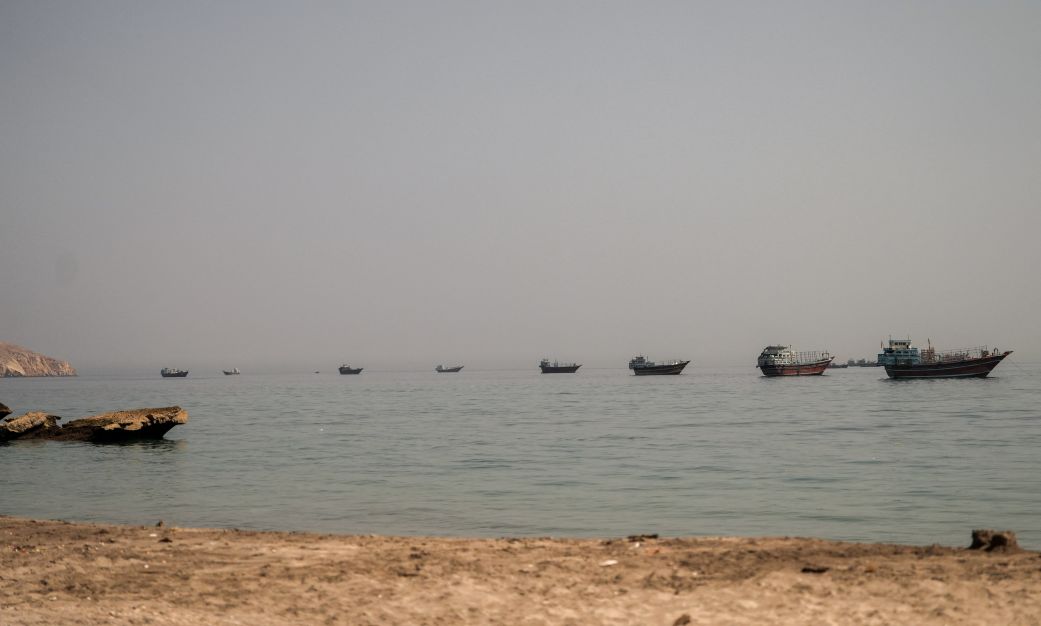

The dispute over who controls one of the world’s busiest oil corridors broke into the open on Saturday, June 20, 2026, as Iran’s military told vessels to keep clear of the Strait of Hormuz while American commanders flatly rejected the notion that the passage had been sealed.

Tehran’s order originated with the Khatam al-Anbiya Central Headquarters, which declared the waterway shut and accused Washington of a “clear breach” of the truce framework signed days earlier. Iran’s state broadcaster Press TV reported that the IRGC Navy was warning all vessels to “absolutely refrain from any movement in the Strait of Hormuz until further notice.” The IRGC tied the move to renewed Israeli operations in southern Lebanon and what it cast as American failure to honor the first article of the post-war memorandum.
US Central Command pushed back hard against that account. “Iran does not control the Strait of Hormuz,” U.S. Central Command spokesperson Navy Captain Tim Hawkins told Reuters. “Traffic continues to flow, and U.S. forces are monitoring the situation to ensure this remains the case.” The command put hard numbers behind the assertion, reporting that 55 merchant ships had crossed during the day hauling more than 17 million barrels of oil, and that safe passage remained intact while American forces stayed on watch.
Trump used a Truth Social post to reframe the standoff around money rather than military control, suggesting the United States itself might levy charges on transiting vessels should diplomacy collapse. “There will be NO TOLLS in the Hormuz Strait for 60 days during the Cease Fire Period, and there will be NO TOLLS after the 60 day period has expired, unless they are imposed by and for the United States of America, should the deal not be completed, for services rendered as the Guardian Angel to the countries of the Middle East for purposes of both past, present, and future reimbursement of costs,” the president wrote. The Hill reported he posted the message from Camp David, where he was spending the weekend.

The timing carried weight because negotiators from both governments were preparing to convene in Switzerland on Sunday for technical-level discussions. The U.S. delegation consists of Vance, special envoy Steve Witkoff and Trump’s son-in-law Jared Kushner. Iran confirmed it was still sending representatives despite the friction. Foreign Ministry spokesperson Esmail Baghaei said substantive talks toward a final accord would only begin once core commitments were met, warning otherwise that the entire memorandum could unravel.
Vice President JD Vance, speaking ahead of the Swiss meetings, claimed shipping volumes had actually surged. “We actually got 16 million barrels of oil out of the Strait of Hormuz yesterday,” Vance said. “That is a record going back to even before the conflict started.” He framed the broader American goal as locking down Iran’s enriched uranium so that rebuilding its nuclear program would become effectively impossible.
Roughly a fifth of the world’s seaborne oil moves through the channel, along with a substantial share of global LNG and fertilizer shipments, which is why repeated closures since late February have rattled energy and commodity markets worldwide. The interim agreement gives the two sides a 60-day window to convert the ceasefire into a full nuclear deal, a deadline that can be extended.
What kept the immediate crisis burning was Lebanon. A ceasefire announced Friday between Israel and Hezbollah barely held before both sides traded heavy fire on Saturday. The Lebanese National News Agency reported that strikes on the southern town of Nabatiyeh and surrounding villages killed at least 16 people, with civilians among the dead — the same violence Tehran cited as its justification for ordering the strait closed.
