



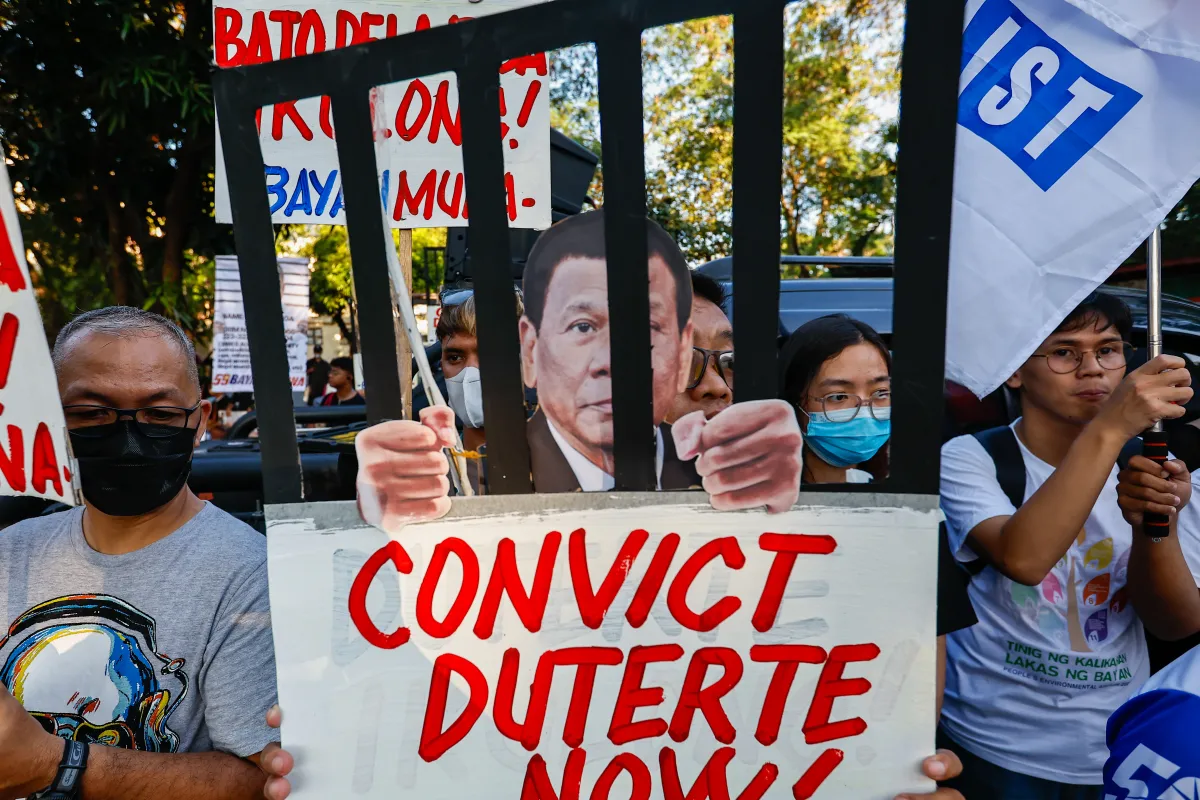

Trial Chamber III of the International Criminal Court has ruled that former Philippine president Rodrigo Duterte must remain behind bars in The Hague, rejecting arguments from his defense that conditions had changed enough to justify his temporary release.

The three-judge panel — presided over by Judge Joanna Korner and joined by Judges Keebong Paek and Nicolas Guillou — issued its decision on May 22, finding no basis to revisit the detention orders that have been upheld at every prior stage of review. Under ICC rules, interim release requires the defense to demonstrate a concrete change in the accused’s circumstances. The Chamber found Duterte’s legal team failed to meet that threshold.
The ruling builds on a chain of prior decisions: Pre-Trial Chamber I denied temporary release on January 26, a ruling the Appeals Chamber confirmed on March 6. Trial Chamber III’s latest decision closes another avenue for Duterte’s freedom ahead of trial.
Central to the Chamber’s reasoning is the question of flight risk — one the judges determined has grown more acute, not less. The confirmation of three counts of murder as crimes against humanity has raised the stakes for the accused, which the panel said increases the likelihood he may attempt to abscond. The Chamber also pointed to Duterte’s family as an active factor, citing “the will of his close family to help him elude detention and prosecution,” alongside his international connections, domestic support base, and access to financial resources.
Judges further noted prior findings of interference risk, referencing Duterte’s and his associates’ capacity to obstruct proceedings, as well as documented violations of contact restrictions.

The defense’s health arguments drew pointed scrutiny. Duterte’s legal counsel had raised concerns about his physical stability — including what they described as frequent falls caused by loss of balance — and his short-term memory. The Chamber, however, recalled findings from three court-appointed medical experts who each characterized Duterte as “an unreliable historian” when it came to his own condition. The experts concluded he retains sufficient mental capacity to understand the proceedings, a conclusion supported by his demonstrated ability to give instructions to his attorneys.
Duterte’s own words also factored into the ruling. The Chamber cited his refusal to attend his confirmation hearing and his on-record declaration: “I do not recognise the jurisdiction of the International Criminal Court over my person.”
Judges said that statement alone signals non-compliance with any future release conditions. “Such statement demonstrates at its lowest that the Accused will not comply with any orders that might be made in respect of a release from custody,” the Chamber wrote.
The panel concluded: “The Chamber finds that, notwithstanding the Defence’s submissions regarding the Accused’s health condition, there is a real and substantial risk that the Accused could nonetheless abscond or obstruct justice either on his own or through his associates.”
