





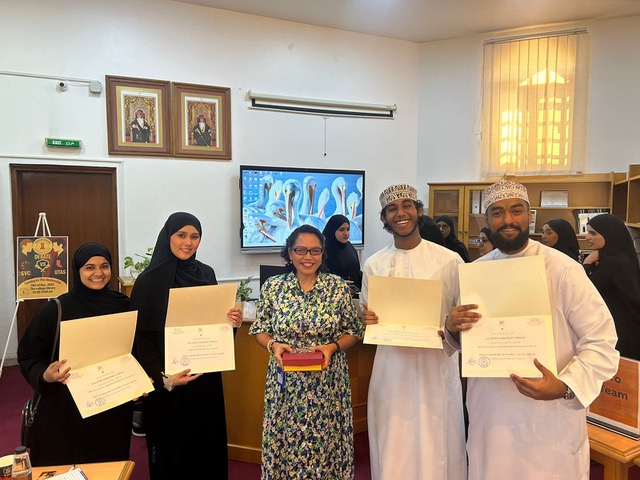
Leaving everything behind to work in a foreign country is one of the toughest choices a person can make. For Dr. Lorna Layantes Beduya, that leap began a journey that has now lasted more than two decades. Today, Dr. Lorna serves as Senior Lecturer and General English Level 3 Coordinator at PSC UTAS–Salalah in Oman. She has not forgotten where it started: 16 years teaching at a public high school in Mandaue City, Cebu.

She is honest about why she left.
“As a former public-school teacher, I also experienced financial difficulties just like any DepEd teachers,” Dr. Lorna shared with TGFM. “Another main reason why I pursued employment abroad is to augment my family’s income and be debt-free.”
But money was never the whole of it. She had also concluded that she could contribute more, and reach further, from outside the country than within it. Teaching abroad would widen her professional network and, eventually, allow her to bring what she learned back to fellow teachers in the Philippines.
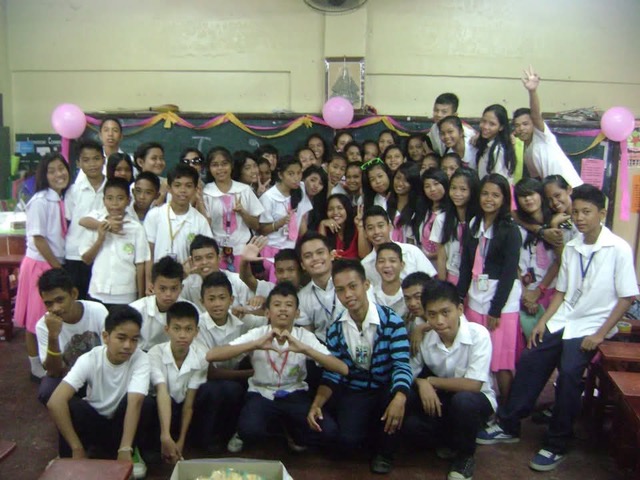
Following a mother’s dream
Teaching was never Dr. Lorna’s own plan. She wanted to be a journalist. She enrolled in education instead, out of respect for what her mother wanted for her.
The classroom claimed her anyway.
Her first break came in 2002, when Mandaue City and Zibo, in China’s Shandong province, ran a teacher exchange under their sister-cities program. Three teachers were selected. Dr. Lorna was one of them.
The years that followed carried her across continents. South Korea. Ukraine. Japan, where she served as academic coordinator and senior lecturer at Hiroshima Bunkyo University. Then Oman. Along the way she earned her Ph.D. in English Language from the University of San Jose–Recoletos, added TESOL and CELTA certifications, and secured teaching licenses in the Philippines and through American Teaching Licensing International in Las Vegas, Nevada.
The credentials did not make the distance any easier.
The weight of being away
Dr. Lorna went through what many overseas Filipino workers know intimately: homesickness that arrives without warning, stretches of isolation, and the slow work of learning unfamiliar languages, workplace expectations, and social norms. Nothing about the transition was automatic.
She managed it by staying prayerful, keeping close contact with her family, and holding her professional goals in view. She treated obstacles as instruction rather than interruption. Her faith, her family, her friends, and supportive colleagues carried the rest.
Above all of them stands her mother.
“I have always looked up to my mother, whose sacrifices, perseverance, and unwavering belief in education inspired me to pursue this path,” Dr. Lorna says. “Her example taught me the value of hard work, humility, and resilience.”
Sixteen years in Mandaue
Before any of the international work, there was Mandaue City Comprehensive National High School, where Dr. Lorna served as English High School Teacher III from August 1996 to April 2013.
The load ran to roughly 30 hours a week. She taught English as a Second Language and built ICT-based strategies into her lessons long before that became standard practice, developing both language proficiency and digital skills in students who needed each.
The work extended well past the schedule. She designed intervention materials and ran remedial classes for students who were falling behind. When academic problems had emotional or cognitive roots, she sat down with parents and worked through them together. She collaborated with stakeholders and non-government organizations on school programs and on professional development for her colleagues, and she demonstrated teaching strategies at school-based and regional workshops.
Leading from Hiroshima
Her most remarkable act of service happened while she was thousands of miles from the people it served.
During the pandemic, Dr. Lorna served as Federation PTA President in Mandaue City. She was living in Hiroshima at the time, working as a senior lecturer. Between the academic years of 2020 and 2022, working across the distance, she brought parents and teachers together to write the FPTA By-Laws.

That document became the foundation for the federation’s activities. In her own assessment, it made both parents and teachers uphold the value of altruism.
What keeps her
Thirty years in, what sustains Dr. Lorna is not the titles.
“Helping students develop their communication skills, gain confidence, and achieve their goals gives me an immense sense of fulfillment,” she says. “There is no greater reward than witnessing the success of my students and knowing that I have contributed, even in a small way, to their personal and professional growth.”
Nearly as rewarding is the company she keeps. Across her career Dr. Lorna has built a personal and professional learning network that spans countries and continents, a web of colleagues who keep her learning even as she teaches.
Working overseas, she says, has been one of the most enriching experiences of her life. It exposed her to different educational systems and made her more adaptable and culturally responsive than she would have been had she stayed. It opened doors to international research collaborations and global conferences. It strengthened her resilience and her independence.
Recognition, and a look forward
Dr. Lorna has become a recognized voice in the integration of artificial intelligence and digital technologies into English language teaching, work she pairs with research-informed pedagogy rather than treating technology as an end in itself. Her scholarly interests run to educational technology, sociolinguistics, and the well-being of teachers and learners alike.
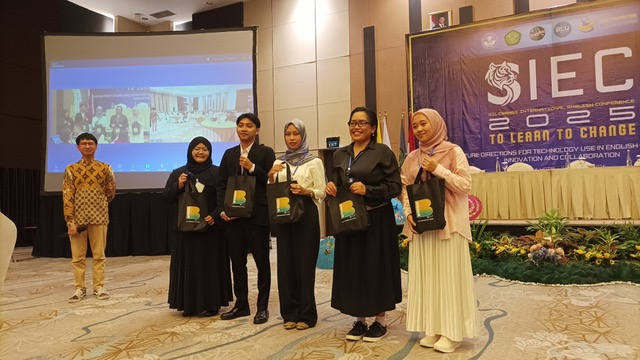
In 2025 she was named Best Presenter at the University of Siliwangi International Conference. Her curriculum design, quality assurance, and academic writing work continues at PSC UTAS–Salalah.
She does not intend to stay abroad indefinitely.
When her overseas career closes, Dr. Lorna plans to return to mentoring, training, research, and community service in the Philippines. She wants to run workshops and professional development programs for Filipino educators, particularly on integrating technology and artificial intelligence into teaching. She wants to keep supporting language education, teacher empowerment, lifelong learning, and student well-being.
“Ultimately, I would like to leave a legacy of service by helping create educational opportunities that empower future generations to succeed in an increasingly interconnected world,” she says.
Advice for Kababayans
To Filipinos working through hard stretches abroad, Dr. Lorna offers guidance shaped by two decades of her own.
Stay resilient, patient, and grounded in your values. Remember your purpose and the sacrifices behind it.
On money: practice discipline in spending, and prioritize savings and investments.
On relationships: communication, honesty, and trust are essential. Avoid impulsive decisions driven by emotion or temporary circumstance. Surround yourself with people who genuinely support and respect you.
On work: keep learning, uphold professionalism, and hold a positive attitude even when the days are difficult.
And on everything else: stay connected to your family, cherish your cultural identity, and never lose hope.
“Challenges may come and go,” she says, “but perseverance, faith, and integrity will help you overcome them and thrive wherever you are in the world.”
She measures none of it in money.
“We cannot measure success through financial gains, but only through the lives we have touched, the lessons we learned, and the person we became to be throughout the journey.”
