




In a training room in Jeddah, a manikin lies still beneath bright clinical lights. Around it, nurses lean forward, waiting for the next instruction. The scene is controlled, but the lesson is urgent. A hesitation of seconds, a compression too shallow, a missed rhythm—these small details can decide whether a patient is given another chance at life.

At the front is Glenn Mendoza, PhD, MAN, MSEd, RN, LPT, a Filipino nurse educator whose career has moved from bedside care to academe and now to life support education at Dr. Sulaiman Al Habib Medical Group, Al Fayhaa Hospital in Jeddah. Nearly 15 years into nursing, he is a Certified American Heart Association resuscitation trainer for BLS, ACLS, PALS, and NRP, a Training Center Faculty member, and a peer reviewer in nursing science.
For Glenn, teaching CPR is not merely technical instruction. It is service multiplied.
“What I enjoy most about my work is knowing that through teaching life support programs, I am helping all healthcare professionals gain and enhance their skills and confidence to save lives,” he says. “Bringing compassion into my training allows learners to feel supported as they practice critical techniques, and it’s incredibly fulfilling to know that what they learn can make a real difference in emergency situations and give someone a second chance at life.”
His words reveal a less visible but powerful face of Filipino nursing abroad: not only the nurse at the bedside, but the nurse who teaches, supervises, improves systems, builds quality, and shapes future practitioners.
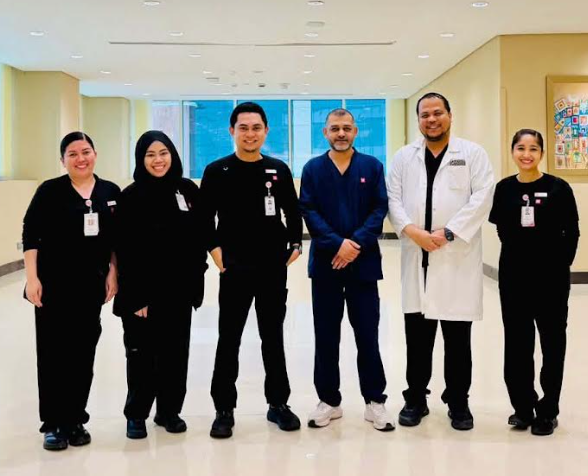
Across Jeddah, five Filipino nurses at Dr. Sulaiman Al Habib Medical Group Al Fayhaa carry this work forward in different ways. They are educators, quality leaders, charge nurses, clinical instructors. Their stories move beyond the familiar migration narrative of sacrifice alone. They speak of professional excellence, family separation, cultural adaptation, lifelong learning, and the enduring Filipino ethic of care.
Glenn’s own vocation began with a simple moral impulse. “I was inspired to become a professional nurse by a deep desire to care for people during their most vulnerable moments,” he says. “Seeing the difference compassion and kindness can make in someone’s healing journey showed me that nursing is not just a profession, but a calling to support, comfort, and advocate for others when they need it most.”
That calling took him from Saint Gabriel College in Aklan, where he completed his BSN, to the University of the Visayas in Cebu for his Master of Arts in Nursing Management, and later into advanced education across nursing, PhD in development education, and MS Education in mathematics. His path reflects a defining feature of the Filipino nursing diaspora: the drive to keep growing, even while far from home.
Jeana Kristie Elenzano, a Filipino registered nurse in Saudi Arabia for 10 years and now an Acting Charge Nurse in Nursing Quality, began differently. “At first, I pursued nursing because of my family’s influence, as it was a well-known profession in our community,” she says. “Over time, I developed a genuine passion for it. I realized that nursing is about caring for people and making a difference in their health, which, which made me truly appreciate and love this profession.”
Her work now centers on quality improvement and patient safety—areas that may not always be visible to patients, but shape the safety of every encounter. She monitors compliance, supports continuous improvement, and helps uphold standards that protect both patients and staff.
Arnel S. Eribal, a Filipino nurse-midwife, licensed professional teacher, educator, and healthcare leader, also found nursing through a route that eventually joined two vocations. “At first, nursing was not my childhood dreams, as I had always envisioned myself becoming a teacher,” he says. “However, over time, my decision to pursue nursing evolved beyond a simple career choice and became a genuine calling to care for and serve others.”
Now a Clinical Instructor in Jeddah, Arnel sees education as a continuation of care. “In this role, I am not only a nurse but also a teacher, guiding and inspiring future healthcare professionals while continuing to provide care and make a meaningful impact in people’s lives.”
Ethel Rose B. Yucor, Charge Nurse in the Outpatient Department, brings 17 years of clinical experience, including inpatient and nursery exposure, postgraduate study in International Health Management, and a Master of Science in Public Health from the United Kingdom. Her inspiration was shaped by family illness and the example of healthcare professionals. “I was inspired to pursue nursing by my deep desire to care for others and make a meaningful difference in people’s lives,” she says. “Witnessing the compassion and dedication of healthcare professionals, particularly during times of illness within my family, greatly influenced my decision to enter this noble profession.”
In the OPD, her work is both administrative and relational. She coordinates daily clinical operations, guides staff, and helps maintain a patient-centered environment. “What I find most fulfilling about my work is the opportunity to positively impact patients’ lives while also mentoring and guiding fellow nurses,” she says. “Seeing both patients recover and staff grow professionally brings me a deep sense of purpose and satisfaction.”
For Shahani M. Dimalna, RN, MAN, PhD-DA, now a Clinical Instructor, nursing began in Marawi City, where unmet health needs were part of the social landscape. “Growing up in Marawi City, where healthcare is not always prioritized, inspired me to pursue nursing,” she says. “I witnessed the gaps in access to care, which motivated me to become part of the solution and serve communities in need.”
That early exposure to inequity now informs her work in nursing education. She has served as ER Head Nurse, Nursing Supervisor, Program Director, and clinical educator. In Jeddah, she helps newly hired nurses and colleagues develop competence, critical thinking, and ethical practice. “In my current role in nursing education, I derive the greatest sense of purpose from mentoring and motivating newly hired nurses and colleagues,” she says.

These stories unfold against a broader global backdrop. Health systems across the world rely on migrant nurses, and Filipino nurses remain among the most visible and trusted members of this mobile workforce. Their contributions are not limited to filling shortages. They carry clinical expertise, language skills, adaptability, and a culture of service into complex healthcare environments. In Saudi Arabia, where many nationalities work side by side, this adaptability becomes essential.
But adaptation has a cost.
“As a Filipino nurse working abroad, I face challenges such as language barriers and cultural diversity, especially when communicating with patients, colleagues, and teaching novice nurses from different backgrounds,” Glenn says. He responds through culturally competent education, drawing on Madeleine Leininger’s Transcultural Nursing Theory. “I adapt my communication style, use clear and simple language, and respect each learner’s cultural background and pace of learning.”
Jeana names the emotional side plainly. “As a Filipino nurse working abroad, I face challenges such as adapting to a different culture, communication differences, and being away from family,” she says. “However, these experiences have helped me become more resilient, adaptable, and improve my nursing skills and patient care.”
Arnel echoes this sacrifice. “Working abroad presents several challenges including adapting to diverse cultural environments, healthcare systems and communication styles,” he says. “Additionally, being physically distant from family and love ones is a significant personal sacrifice.”
Ethel, too, sees difficulty as formation. “Working abroad presents challenges such as cultural adaptation, being away from family, and adjusting to different healthcare systems,” she says. “However, these experiences have strengthened my resilience, adaptability, and leadership skills, allowing me to grow both personally and professionally.”
Shahani gives the experience an academic and emotional vocabulary. “One of the primary challenges I have encountered is managing the sense of social and emotional displacement associated with being away from my home country,” she says. Teaching across cultures, particularly to Saudi nationals, requires “a high level of cultural competence, emotional resilience, and adaptive communication strategies.”
Still, none of them describe Filipino identity as something left behind. It travels with them.
Glenn says, “I stay connected to my Filipino roots by carrying the values of compassion, dedication, and genuine care in everything I do.” Jeana remains grounded through family, traditions, and community. Arnel says he embodies “Filipino values such as compassion, respect, hard work and hospitality in my daily practice.” Ethel carries “the compassion, dedication, and warmth that Filipino nurses are known for.” Shahani integrates “resilience, compassion, and a strong sense of family-oriented care” into her professional life.
This is the quiet architecture of diaspora leadership: values carried across borders, then translated into safer care, stronger teams, and better training.
As Glenn stands before learners practicing life-saving skills, his work becomes a bridge between the Philippines and Saudi Arabia, between compassion and competence, between one nurse’s calling and many patients’ survival. His message to fellow Filipino nurses is both tender and firm: “No matter where you are in the world, always remember that your compassion, resilience, and dedication make a meaningful difference in the lives of others.”
Jeana’s advice is equally grounded: “To my fellow nurses, stay strong and continue to serve with compassion and excellence.” Arnel urges steadfastness in learning and unity: “Let us take pride in our work support one another and remember that our role in healthcare is vital in shaping better outcomes for the patients we serve.” Ethel calls nurses to “continue to serve with compassion, integrity, and excellence.” Shahani offers a final reflection that feels like a benediction: “Nursing is among the noblest professions, shaping not only clinical competence but the entirety of one’s character.”
In Jeddah, Filipino nurses are doing more than working abroad. They are teaching systems how to care across difference. They are proving that migration can produce not only remittances, but leadership. They are showing future generations that service can begin at the bedside, grow in the classroom, mature in quality systems, and still remain rooted in the Filipino heart.
And in every learner Glenn trains, every standard Jeana protects, every nurse Arnel mentors, every outpatient Ethel guides, and every colleague Shahani inspires, the future of Filipino nursing becomes visible: skilled, compassionate, global, and still deeply connected to home.
Disclaimer: This article is part of a special series leading up to the celebration of Filipino Nursing Diaspora Day on 7 May 2026, highlighting the global contributions, experiences, and impact of Filipino nurses worldwide.
