



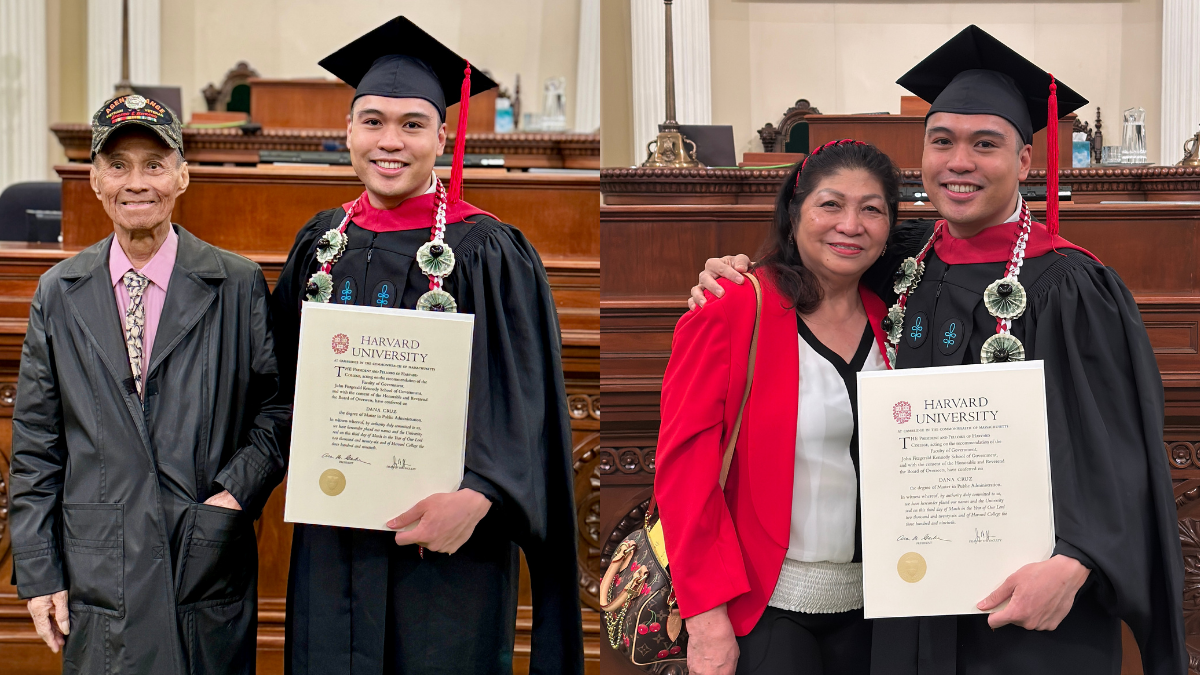

He shed a tear when he opened the letter. Then he told his mother he’d gotten into Harvard, and she said, “Is that a good thing?”

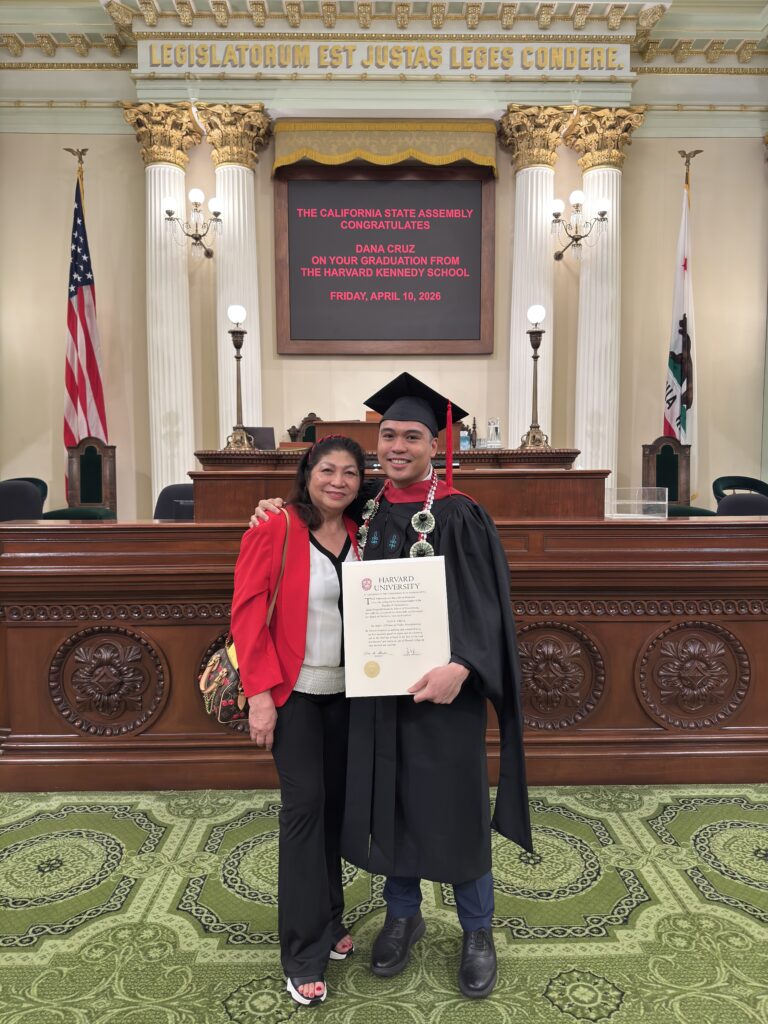
Dana Cruz laughs about it now — mothers have a way of keeping their sons grounded — but the disbelief in that moment was real, and it had deep roots. He’d gone to public schools all his life, through “code reds” and lockdowns triggered by gang issues, in a community he describes as one that “often felt neglected, underestimated, and overlooked.” Somewhere along the way, he’d absorbed the verdict. “I learned, in certain ways, to underestimate and overlook myself,” he says. So the idea that he’d be heading to Harvard — a place that had always seemed to belong “to the elite and enormously accomplished” — felt unreal. This month, it stops being an idea. He graduates with a Master in Public Administration from the Kennedy School.
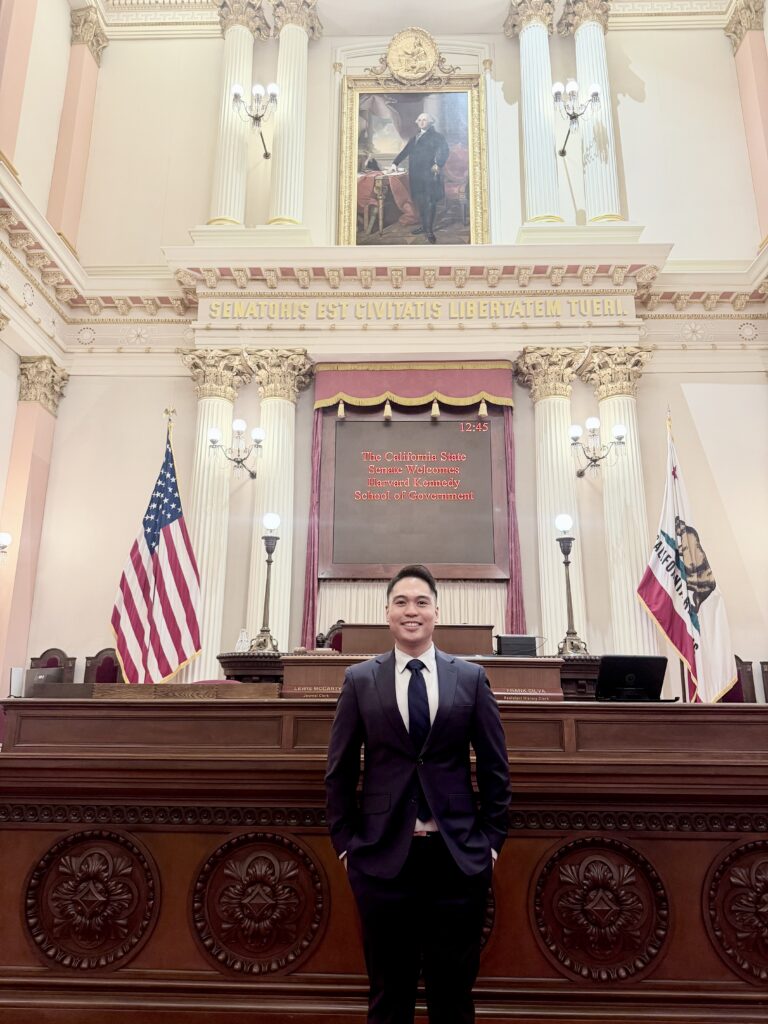
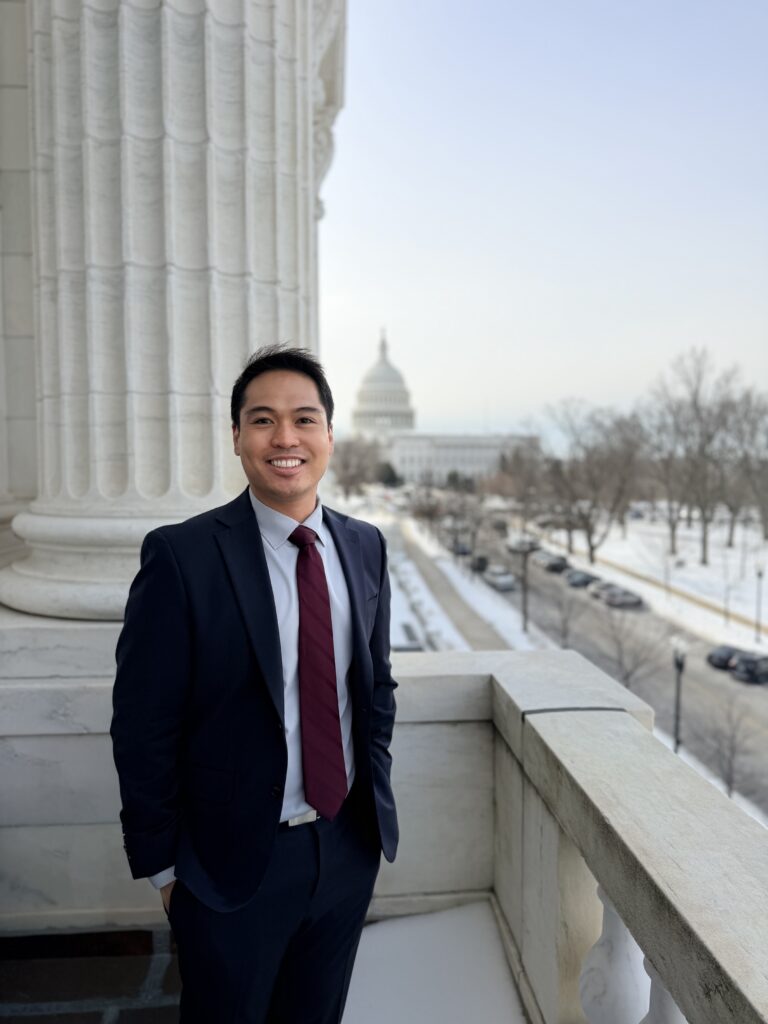
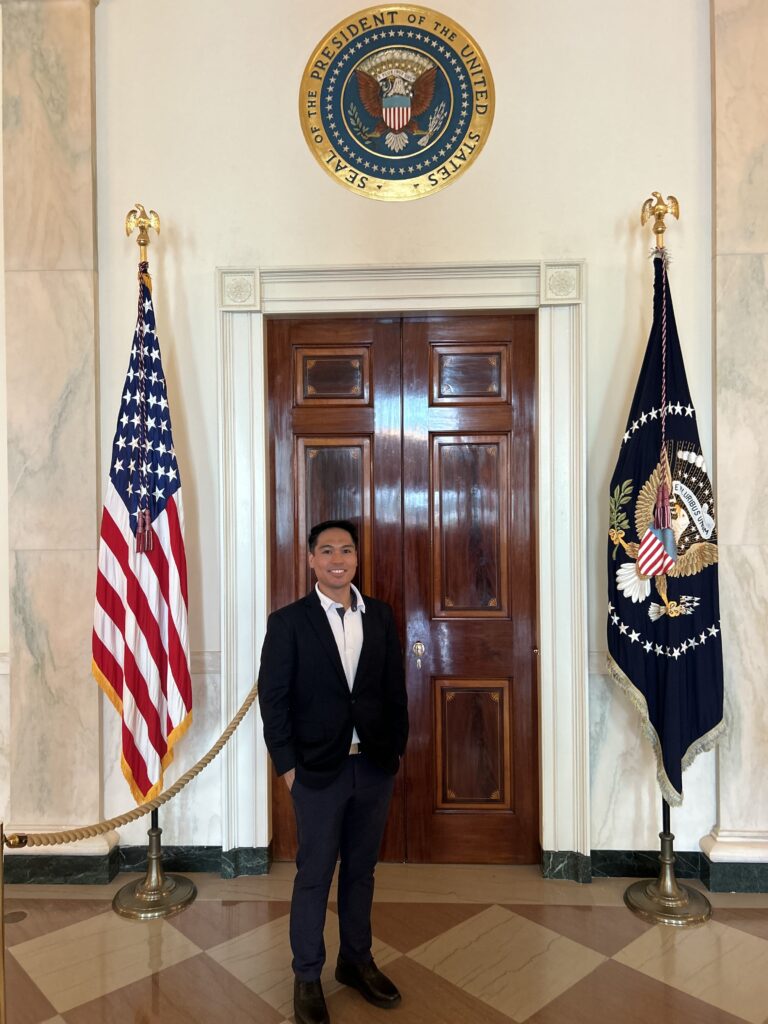
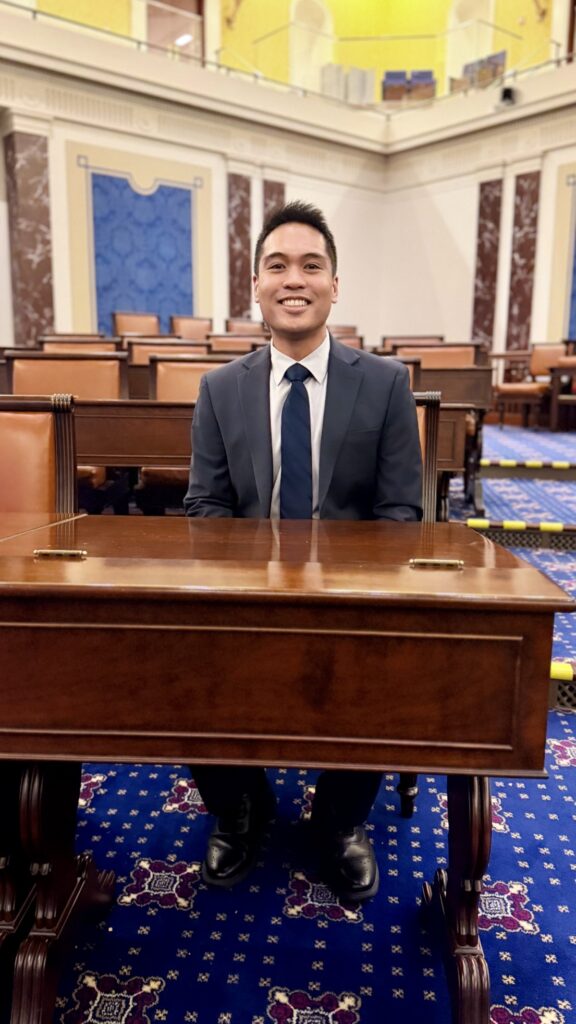
The 34-year-old is a governmental affairs attorney for the Judicial Council of California, the first lawyer his family has ever produced. To understand why a Harvard acceptance moved him to tears rather than a victory lap, you have to go back to the household that made him.
Grit, and a mother who taught herself to cook
Home was a Filipino immigrant household — “loud, loving, and full of life,” he says, a place that knew how to celebrate and how to eat well. His mother left the Philippines at nineteen, taught herself to cook from nothing, and built a life from scratch. It took him years to grasp what that actually required of a teenager.
His parents pointed the family in two directions at once. His father, born and raised in Tondo, had walked miles for water as a boy before later fighting in the jungles of Vietnam — facing gunfire, as Cruz puts it, “for a country he would later call his own.” “Long before I understood public service, I understood sacrifice through his example,” he says. His mother raised the children Catholic, which gave them “a deep sense of gratitude, sacrifice, and service.”
But America was no soft landing. The Cruzes were working-class and made full use of what little they had. He remembers his mother working two jobs on weekdays and a third on weekends. “There was grit in our household. There was industriousness. There was love expressed through sacrifice.” The lesson his father drove home — having had a single pencil and a single notebook for his entire limited schooling — was that complacency was a kind of theft in a country this full of opportunity. “Their sacrifices became the foundation for everything I have been able to pursue,” Cruz says.
The day the professor called on him anyway

The path to law wasn’t obvious, and for a while Cruz wasn’t sure it was his to walk. He still remembers sitting in the UC Davis law library early on, staring at the thick books, whispering to himself, “I can’t believe I’m here. I’m in law school.”
Then came a property law class — a subject notorious for being dense and obscure — taught by Professor Rose Cuison-Villazor, one of the few Filipino-American law professors in the country and, later, the first Filipina-American dean of a U.S. law school. Before the session, Cruz quietly confessed to the teaching assistant that he was afraid of being called on. He felt behind, unready, out of his depth. The professor heard about it. On the first day, she called on him anyway.
“I was terrified,” he says. But something turned over in that moment. “I realized I was not in law school by accident. I was there for a reason. It was game time.” He worked through her Socratic questions as best he could, and walked out with a conviction that has held ever since: “Fear was not proof I did not belong. It was simply part of stepping into a calling bigger than myself.”
That framing — service as a calling rather than a career plan — runs through everything he’s done since. He raised funds for vulnerable children in high school and helped his parish feed the homeless. He joined the military. In government, he helped pass workforce legislation in the California State Legislature, worked on housing and homelessness investments and programs for the Governor, and now negotiates legislation to improve mental health laws within the state judiciary. He resists mapping it out too far ahead. “I have tried to approach life less with a specific plan of what I will do next and more with a guiding principle of asking myself, ‘How can I best serve? How can I meet this moment?'”
The nerdy church boy who jumps off buildings
Ask him who he is apart from the résumé, and the answer is cheerfully contradictory. He’s a self-described “explorer” who will happily debate philosophy, dig into Catholic social teaching, or argue his way through a round of Jeopardy! — “probably a nerdy church boy who likes to read, discuss, and think deeply,” by his own account. He’s also the person who has gone skydiving, jumped off buildings, gone ziplining, and set a few invented world records at his own game-night parties, somewhere between P90X sessions and long runs. “Maybe I am restless,” he admits. “But I think that restlessness comes from a desire to keep growing, to keep seeking, and to keep exploring.”
When the acceptance finally sank in, he made himself a quiet promise: to use whatever Harvard gave him in service of communities like the one he came from, and “to help other ‘Dana Cruzes’ out there who may not yet believe that these spaces belong to them too.”
It’s the same thing he’d tell any Filipino kid — the child of immigrants, the first in the family reaching for something that seems out of range. “You exist for a reason,” he says. “There is no limit to what you can do except the height of your dreams and the depth of your drive.” And then the line that reads like a message to his younger self, the one whispering in the law library: “The rooms you admire from a distance may one day be rooms you are called to enter — not just for yourself, but for the people who come after you.”
