




On the day of his Grade 6 graduation, a twelve-year-old boy stood outside the ceremony he could not fully enter. His clearance was incomplete — one unfinished Filipino project, undone not for lack of effort but for lack of money to buy the materials. His mother borrowed from a friend so they could purchase the supplies that afternoon. He finished the project as fast as his hands could work and carried it back to school, certain the matter was closed.

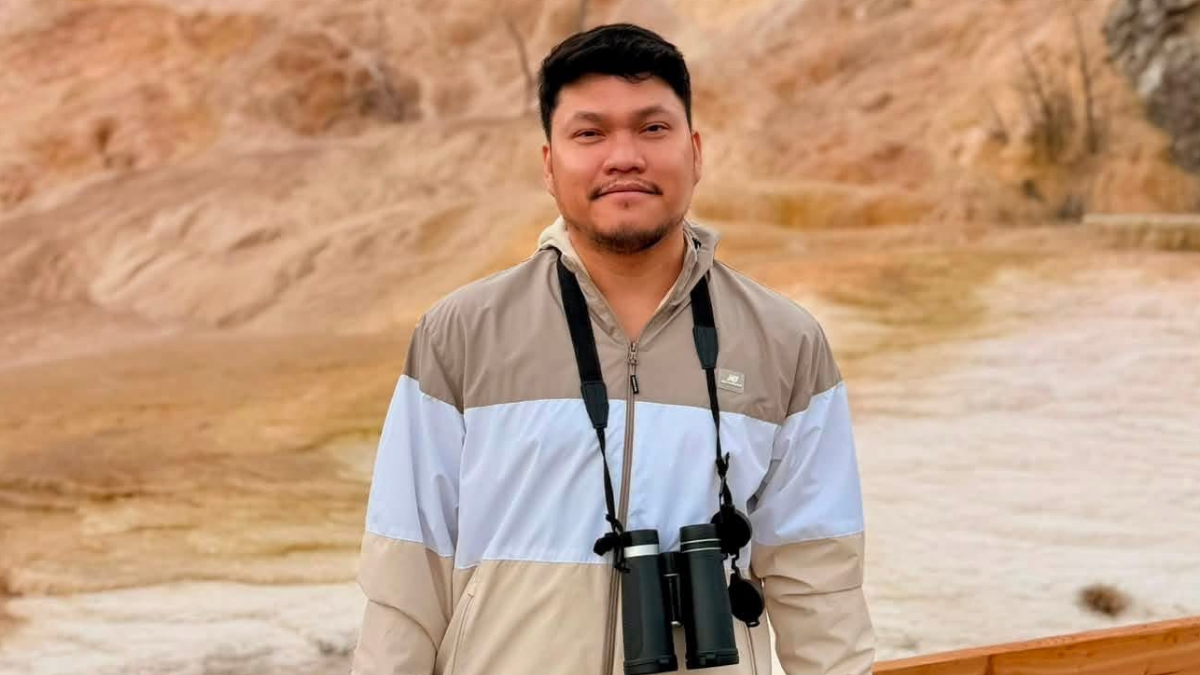
That boy was Mark Anthony Noli Tingson, now a 33-year-old middle and high school science teacher at Sawyer Public School in North Dakota, and one of only 32 educators across the United States chosen for a national STEM leadership fellowship. But on that afternoon in a rural Philippine town, none of that existed yet. There was only a child, a late project, and a teacher who took his completed work, looked at it, and delivered a sentence he has never forgotten.
“This child, who submits projects late like this, will someday become a problem to society.”
She said it in the principal’s office, in front of the other teachers. Mark was twelve years old, quiet, soft-spoken, and already dreaming of becoming a teacher himself. He did not have the words then to understand how someone could look at a poor child’s single unfinished project and see a future menace. What he did have, from that day forward, was a mission: to prove the prediction wrong.
A childhood spent playing teacher
Long before that graduation day, Mark already knew what he wanted to be. The evidence was everywhere in his early life — in the way he studied his teachers, mimicking how they spoke, how they moved through a classroom, how they broke a hard idea into pieces a child could hold. When the neighborhood kids gathered to play, he had a standing request.
“Whenever my siblings and neighborhood friends played together, I always volunteered to be the teacher,” he recalls. “Looking back, I realize that teaching was never just a career choice for me; it was a childhood dream.”
Growing up made that dream harder to chase. He was one of ten children, and the family’s poverty shaped the smallest details of daily life. A pair of shoes counted as a luxury. He and his siblings walked long distances to school in punishing heat or heavy rain, with no money for transportation. Being quiet made him a target, and bullying followed him through his school years.
The advice that eventually reframed the Grade 6 wound did not come until college, from a professor who asked him why he had chosen education. Mark told her the story. Her response was not the sympathy he might have expected.
“Use that experience as your motivation, but also thank that teacher,” she told him. “If she had never said those words, perhaps you would not have been driven to become the person you are today.”
He resisted the idea at first. Gratitude toward the person who had wounded him felt impossible. But it settled in over time, and it changed the shape of the memory. The pain that once fueled a desire to prove someone wrong slowly became something steadier — a source of resilience, and a reason to watch his own words carefully around the students who now sit in his classroom.
“Every time I meet a student who struggles academically, comes from a difficult background, or doubts their own potential, I see a part of my younger self,” he says. “I know that a teacher’s words can leave a lasting impact. They can either become a lifelong burden or a lifelong source of hope.”
Building a career, one classroom at a time
The path from that graduation day to North Dakota ran through a long apprenticeship in Philippine schools. Mark began teaching in 2013 at Montessori Academy in Pandi, Bulacan, moved to Holy Angels College Bulacan the following year, and in June 2015 earned an appointment as Teacher I in the Department of Education, assigned to Mamerto C. Bernardo Memorial Central School in the Pandi North district.
Those DepEd years were where he learned that teaching could extend well past his own students. He led the local rollout of the Learning Resource Management and Development System, helping fellow teachers build their own instructional materials — Strategic Intervention Materials, Self-Learning Kits, Big Books — and running seminar-workshops on educational technology and graphic design, including Adobe Photoshop and InDesign, so they could produce professional-quality resources themselves. He served on the District Quality Assurance Team, evaluating materials for wider use.
One accomplishment from that period still stands out. He authored a Grade 2 mathematics Big Book, Ang Lihim ng Hardin, which was chosen to represent the Schools Division of Bulacan in the regional competition and finished among the top ten entries. He developed science materials for learners in the Alternative Delivery Mode, driven by a conviction that a child’s access to a good education should not hinge on their circumstances. Around all of it, he took on the roles a busy district hands to its most reliable people: resource speaker, journalism coach, demonstration teacher, quiz master, judge, master of ceremonies.
A move to Virginia Ramirez Cruz National High School followed, where he taught Grade 9 science for two years and sharpened an inquiry-based, learner-centered approach. Then, in August 2022, he boarded a flight that opened an entirely different chapter — teaching science at Sawyer Public School in North Dakota.

Science without limits
Ask the former DepEd teacher what the highlight of his career has been, and he does not reach for a title or an award. He reaches for a description of what his students can now do.
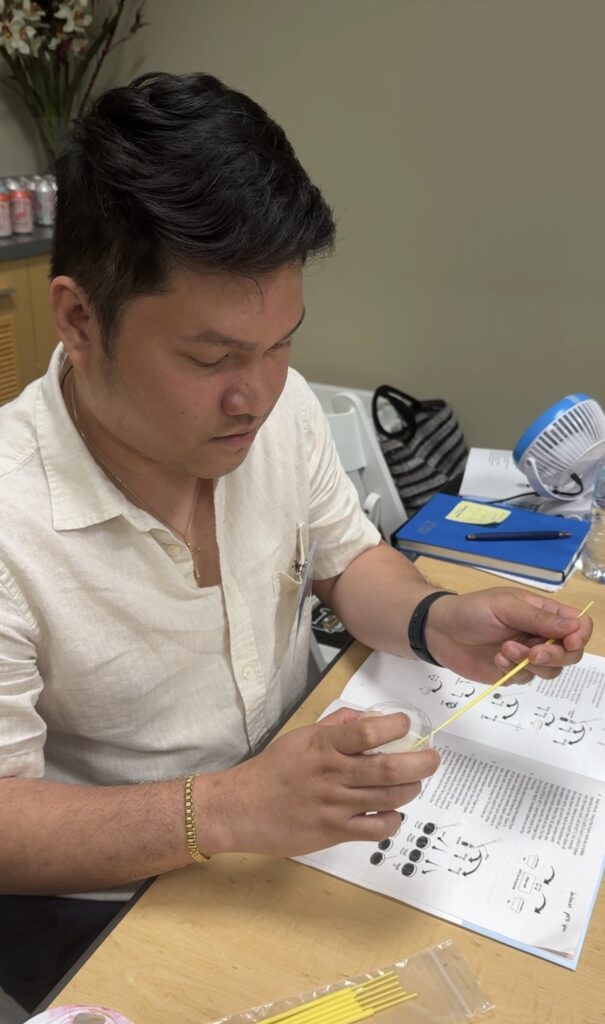
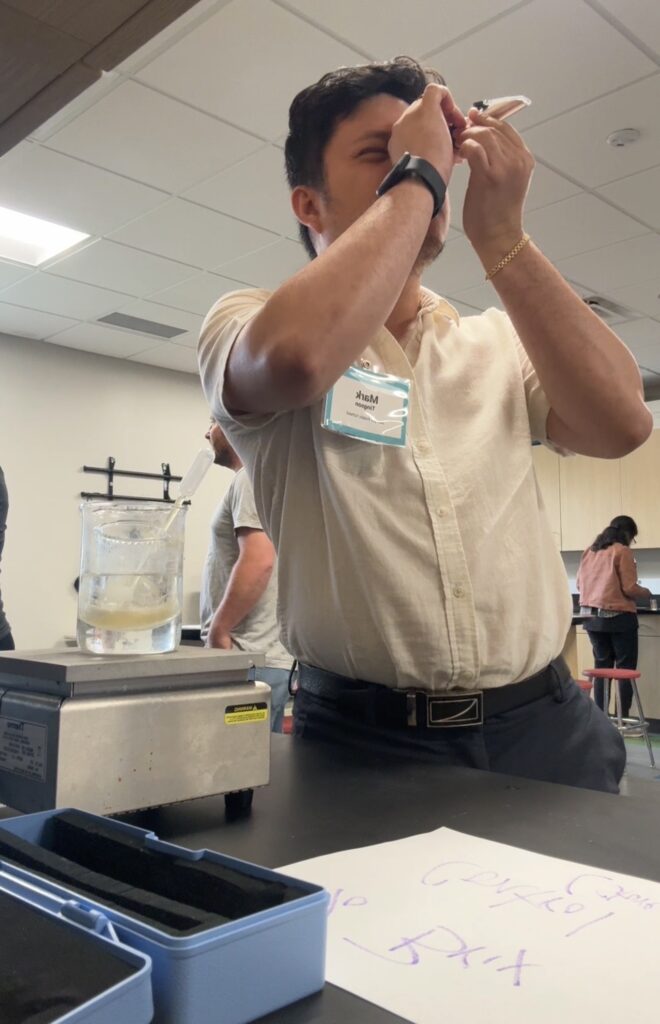
At Sawyer, he teaches a full spread of science courses — physical science, life science, STEM, anatomy and physiology, environmental science, chemistry, and biology. What has transformed is not the subject matter but the conditions. Access to real laboratories, modern technology, and institutional backing has let him turn abstractions into experiences that mirror the actual work of scientists.
His students have cultured E. coli and attempted to insert the green fluorescent protein gene — borrowed, in effect, from a jellyfish — to make the bacteria glow. They have produced ethanol and investigated biofuels. They have run the kinds of experiments that many students only read about.
“When I reflect on the highlight of my career, it is not a title or an award but the opportunity to teach science without limits,” he says.
That freedom is precisely what drew him abroad, and he is candid about the fuller picture. Financial stability was his first motivation, and he refuses to apologize for it. “As educators, we dedicate our lives to shaping the next generation, but we also have dreams and responsibilities that require financial security,” he says. Back home, overcrowded classrooms, thin laboratory facilities, and mountains of administrative paperwork left little room for the teaching he believed his students deserved. Abroad, inquiry and experimentation were not aspirations but the daily default.
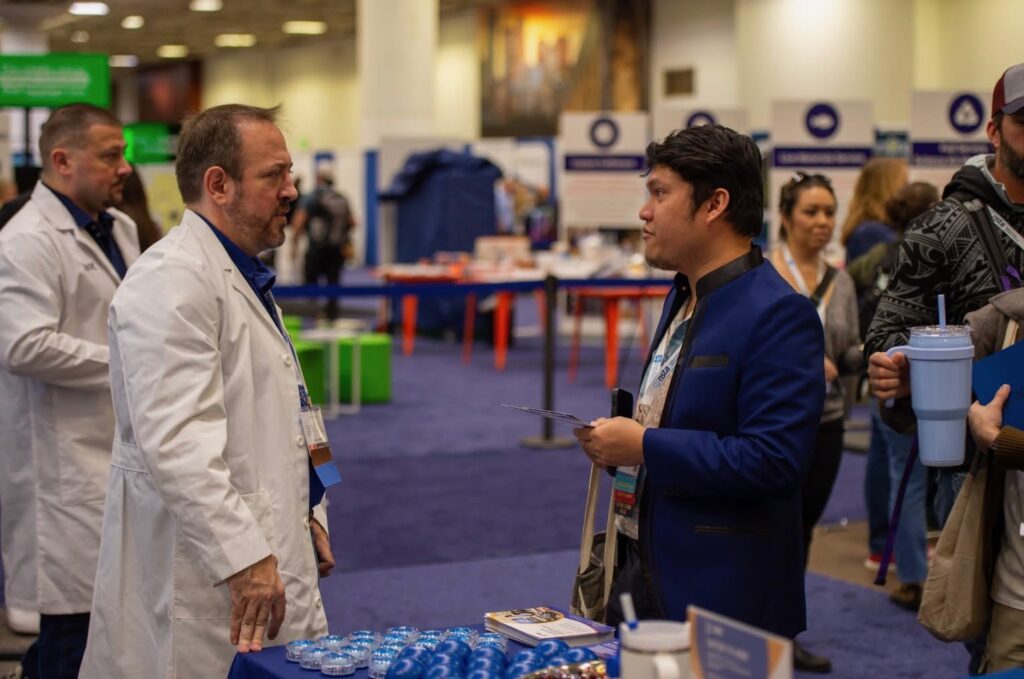
The recognition has accumulated from there. He mentors first-year teachers in his district as an instructional coach, sits on his school’s leadership team, and leads the professional learning community for the middle and high school department. At the state level, he has spent three years on North Dakota’s science assessment item review committee. Nationally, he has reviewed abstract proposals for the National Science Teaching Association since 2024 and was selected for the Nourish the Future Teacher Leader Community — a year-long fellowship backed by the United Soybean Board, the National Corn Growers Association, and Bayer, which counted him among just 32 teachers chosen nationwide. Through it, he toured Bayer’s research facilities in Missouri and brought what he saw back to his classroom.
His degrees trace the same upward climb: a bachelor’s in secondary education from the College of Mary Immaculate in Pandi, where he graduated a departmental awardee; a master’s in general science from Bulacan State University, with a thesis that earned a High Pass; and a doctorate in science education, in progress at the University of Perpetual Help System DALTA, with a hoped-for finish in December 2026.
A life built with dignity
What the outside sees is the résumé. What Mark values most about life in the United States is harder to list on one.
He points first to balance — an environment where rest, travel, and time with loved ones are treated as part of being an effective teacher rather than a distraction from it. He points to the everyday efficiency of reliable services and well-equipped schools that free his energy for the work itself. And he points, without hedging, to something more personal.
As a member of the LGBTQIA+ community, married to his Filipino same-sex partner, Reymark Rivera, he has been able to live openly. “Being able to build a life together with dignity, respect, and legal recognition is something I never take for granted,” he says. That security, he adds, gave him the peace of mind to pour himself more fully into his students and his profession.
None of it came without cost. The financial hurdle of getting to the United States nearly ended the dream before it started — the expense of documents, travel, and relocation was far beyond what a man from a humble family could cover alone. Family, relatives, friends, and mentors stepped in with money and encouragement when he needed it most. “Their support became the bridge that brought me to where I am today,” he says. Even after arrival, there was homesickness, self-doubt, and the loneliness of starting over thousands of miles from home, steadied by his family in the Philippines, by Reymark, and by colleagues who made an unfamiliar place feel like one he could belong to.
The former math and science teacher frames his future goals around the same values that got him here: continuing in teaching, research, and mentorship, and advocating for equitable access to STEM education for children who, like his younger self, learn with limited resources. He wants to keep mentoring beginning teachers, and he wants young people from humble backgrounds to hear one message clearly — that circumstances do not determine destiny.
His advice to fellow Filipinos abroad carries the weight of someone who has lived every line of it. Be wise with money, but remember that wealth is measured in security, health, relationships, and peace of mind. Choose the people you trust carefully, and treasure the ones who tell you the truth. Never let success change your heart.
“Sometimes the words that hurt us the most become the very reason we rise,” he says. What began as a boy’s determination to prove one teacher wrong has become a career-long effort to prove every child right. The Filipino educator who was once told he would become a problem to society now spends his days making sure no student in his classroom ever believes such a thing about themselves.
