



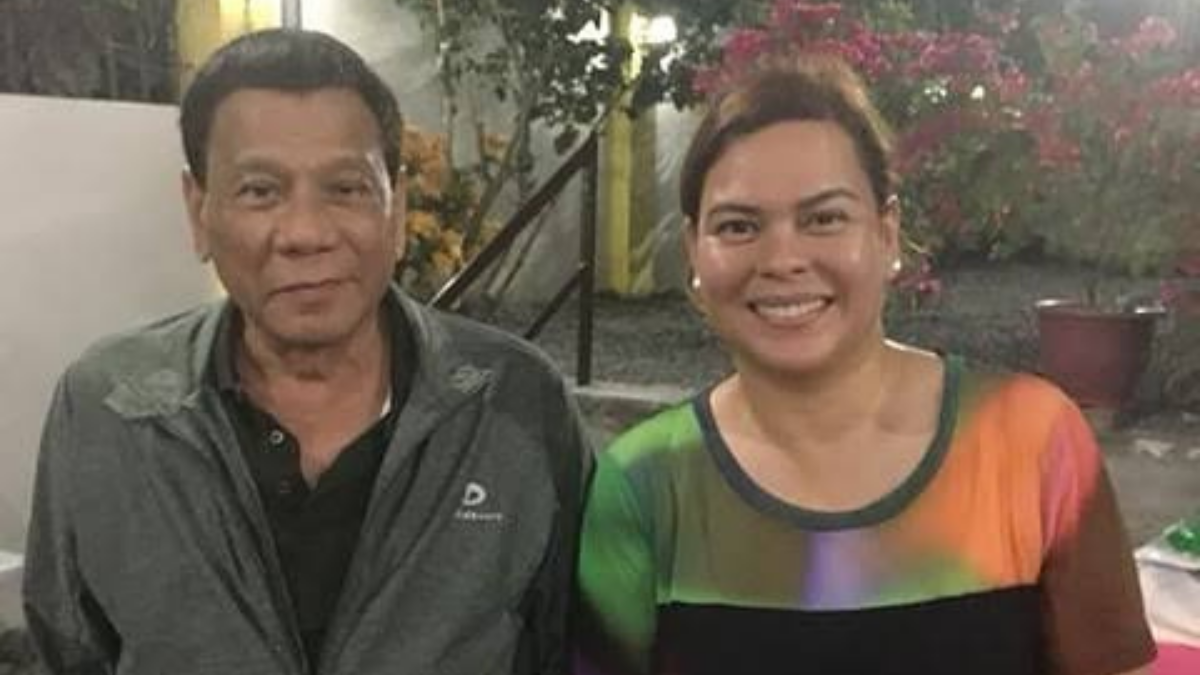

Vice President Sara Duterte arrived at the Quezon City Hall of Justice on Saturday, September 5, 2026, a day after a court ordered her arrest — and declared that she no longer trusts the very institution she once held up as the proper venue for justice in the Philippines.

“I do not feel safe. I do not trust the court, I do not trust the police,” Duterte said, in remarks reported by Malaya as she appeared at the court following the warrant issued against her over three counts of grave threats. She said she feared for her life and for the safety of her children, adding in Filipino that even after she left the place where her children were staying to travel to the court, police still arrived there. “Pakiramdam ko papatayin nila ako” (I feel like they are going to kill me), she said.
The Quezon City Regional Trial Court Branch 98 issued the warrant on Friday, September 4, after finding probable cause to try Duterte on three counts of grave threats. The court set bail at P120,000 for each count and denied her camp’s motion to defer or recall the warrant and quash the charges. Duterte posted bail on Saturday.
The case stems from Duterte’s online press briefing on November 23, 2024, in which she said she had arranged for someone to kill President Ferdinand Marcos Jr., First Lady Liza Araneta-Marcos, and then-House Speaker Martin Romualdez should she herself be killed. The same alleged threat is also an element of her ongoing Senate impeachment trial.
The contrast netizens seized on
Within hours, social media users circulated side-by-side graphics juxtaposing Saturday’s statement with Duterte’s earlier posture toward the courts — this time, the Philippine judiciary she was defending rather than doubting.
When her father, former President Rodrigo Duterte, was taken to the International Criminal Court in The Hague in 2025 over his deadly anti-drug campaign, the Vice President repeatedly argued that his case belonged before Philippine courts, not an international tribunal. “May mga korte naman sa Pilipinas, bakit sa ICC dinala si PRRD?” (There are courts in the Philippines, why was PRRD brought to the ICC?) became a rallying line for her camp, which insisted the country’s own justice system should decide her father’s fate.

That argument — that Philippine courts are the legitimate and trustworthy forum — is the one many online users now say she has abandoned the moment a Philippine court turned its attention to her.
“So the courts were good enough for a defense of her father, but not good enough when the warrant has her own name on it,” ran the gist of a widely shared reaction. Others pointed out the further layer of irony: the charge she faces springs from her own recorded words about having someone killed, yet her response to the court is that she fears being killed.
Supporters, for their part, framed her statement as the reasonable fear of someone who says she has faced documented threats and harassment since 2023 and who no longer believes the institutions arrayed against her will protect her.
Where the case stands
The Department of Justice said it respects the court’s ruling and reaffirmed what it called its commitment to the rule of law, maintaining there is prima facie evidence to support the three charges. Malacañang said it respects the court’s decision, with Palace Press Officer Claire Castro stating that the Palace honors any ruling or directive of the court.
Legal analysts note the warrant does not end Duterte’s options. Her lawyers have signaled they will exhaust all legal remedies, and the issuance of the warrant could still be challenged before the Court of Appeals or the Supreme Court. Duterte’s counsel, Paul Lawrence Lim, has said that regardless of the question of jurisdiction, the Vice President has no intention of evading the law.
Grave threats is a bailable offense, carrying a possible penalty of up to six months’ imprisonment on conviction. With bail posted, Duterte remains free as the criminal case proceeds to trial — running in parallel with the impeachment case before the Senate, where a conviction would remove her from office and bar her from politics.
