



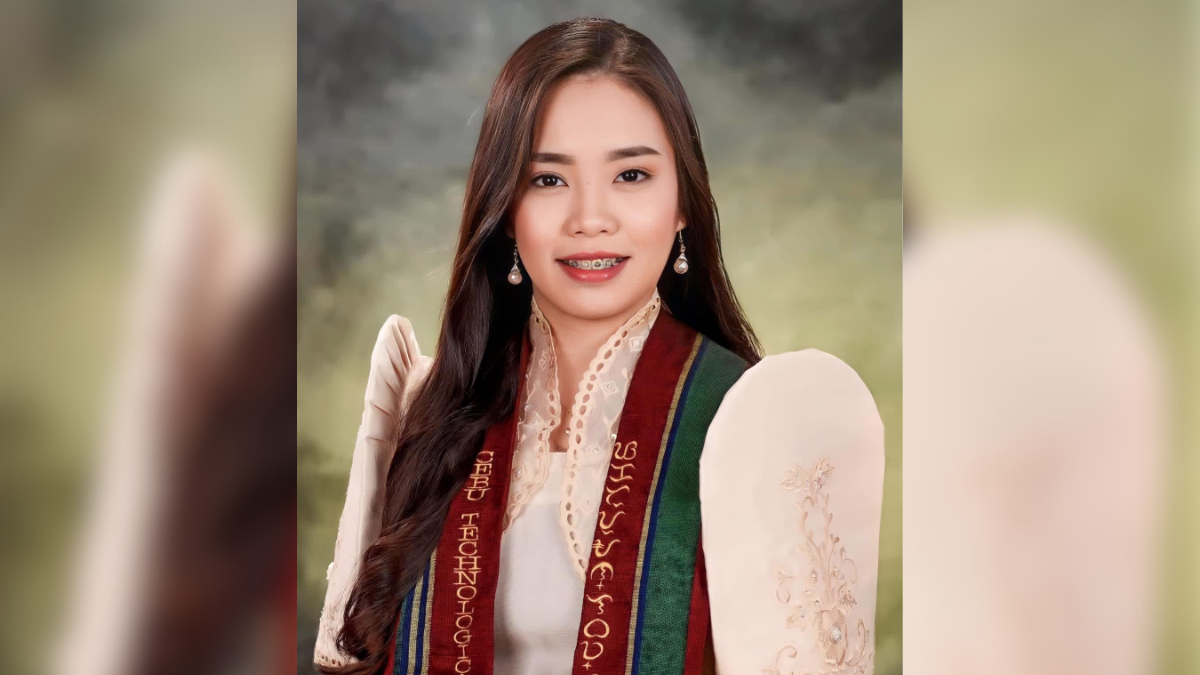

Yakutat sits at the edge of the Gulf of Alaska, a town of fewer than 700 people where the rainforest meets the sea and the nearest road to anywhere else simply doesn’t exist. It is not where most people picture a Filipina teacher from Cebu building the next chapter of her career. Yet this is exactly where Dr. Jamera S. Calbi found herself in October 2023, stepping into an elementary classroom after passing a teaching interview on the spot — and into a life that would test how far adaptability, faith, and a stubborn commitment to learning could carry her.

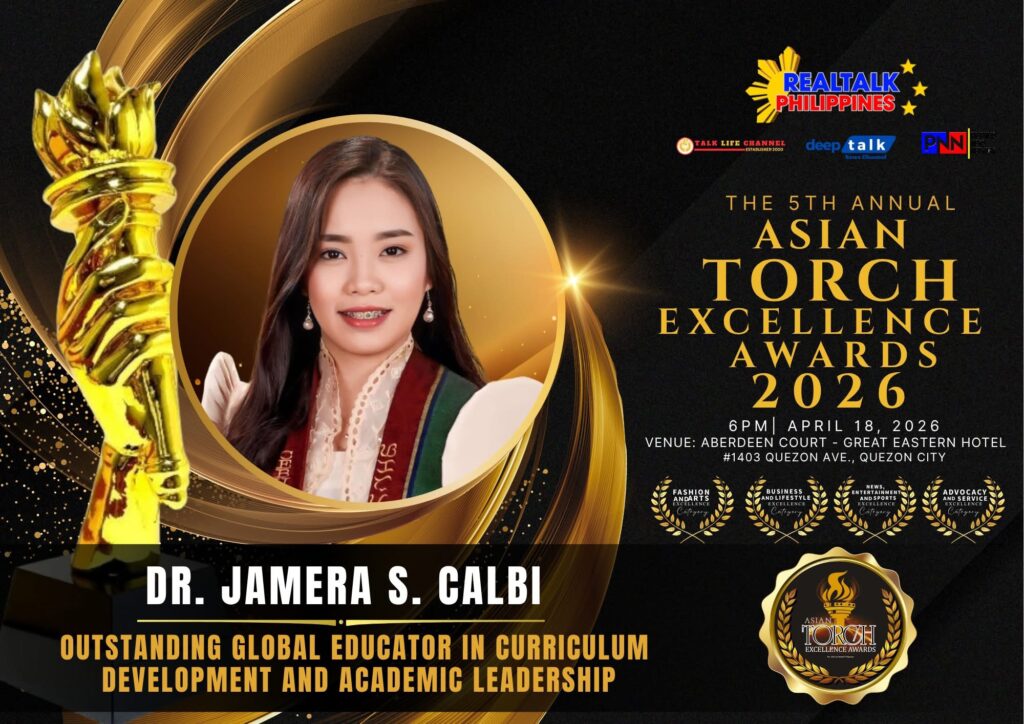
At 30, Dr. Jamera has already accumulated the kind of résumé that takes most educators decades to build: a doctorate in education, teaching licenses in the Philippines and three U.S. states, school-leadership and principalship qualifications, a published body of peer-reviewed research, and a registered mathematics workbook to her name. But ask her what the work is really about, and the answer is far less institutional.
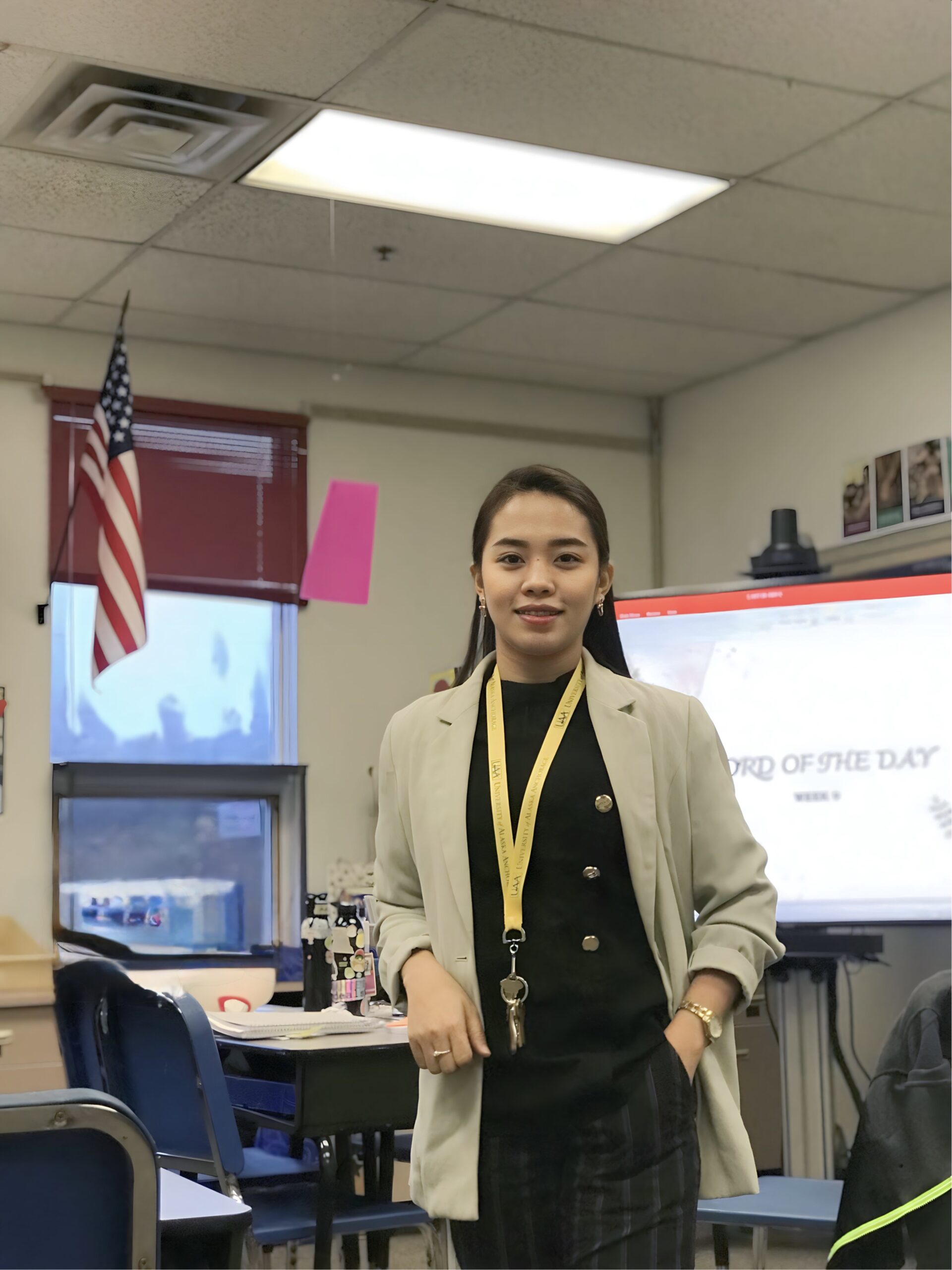
The classroom as the point of it all
For all her credentials, what anchors Dr. Jamera is something simpler than any degree. “Teaching has always been my passion because it gives me the opportunity to make a positive impact on children’s lives,” she says. The most fulfilling part of the job, she explains, is watching students gain not just knowledge but belief in themselves. “The most fulfilling part of my work is seeing students grow academically and develop confidence in themselves. Knowing that I contribute to their success brings me great satisfaction.”
In Yakutat, that mission takes a particular shape. As an elementary teacher, Dr. Jamera designs learner-centered lessons, tracks student progress, adjusts her instruction to meet a wide range of needs, and works to keep her classroom inclusive and culturally responsive — no small task in a community whose makeup looks nothing like the one she taught in back home. She frames teaching not as a solo act but as a shared one, leaning on colleagues, families, and school leaders to push student achievement forward.
That conviction — that education is collaborative rather than individual — runs through everything Dr. Jamera describes. “Education is a collaborative endeavor that benefits entire communities,” she says, and it’s a belief she earned the hard way, long before Alaska.
A foundation built in Cebu
Before the Gulf of Alaska, there was Cebu City, where the former math teacher spent more than six years under the Department of Education. It was there, during the disruption of the COVID-19 pandemic, that Dr. Jamera’s work took on a scale most classroom teachers never reach. She wrote Self-Learning Modules and Teaching Learning Guides in mathematics — instructional materials that, by her account, helped keep learning alive for thousands of students at a moment when schools had gone dark and continuity was anything but guaranteed.
The pandemic-era work was only one part of a fuller portrait. Dr. Jamera authored a mathematics workbook registered with both the National Library of the Philippines and the Intellectual Property Office. She co-authored peer-reviewed studies on school leadership, organizational innovativeness, mathematics achievement, and educational policy. And she repeatedly stepped to the front of the room not to teach children but to train fellow teachers, serving as a resource speaker in in-service programs and education conferences.
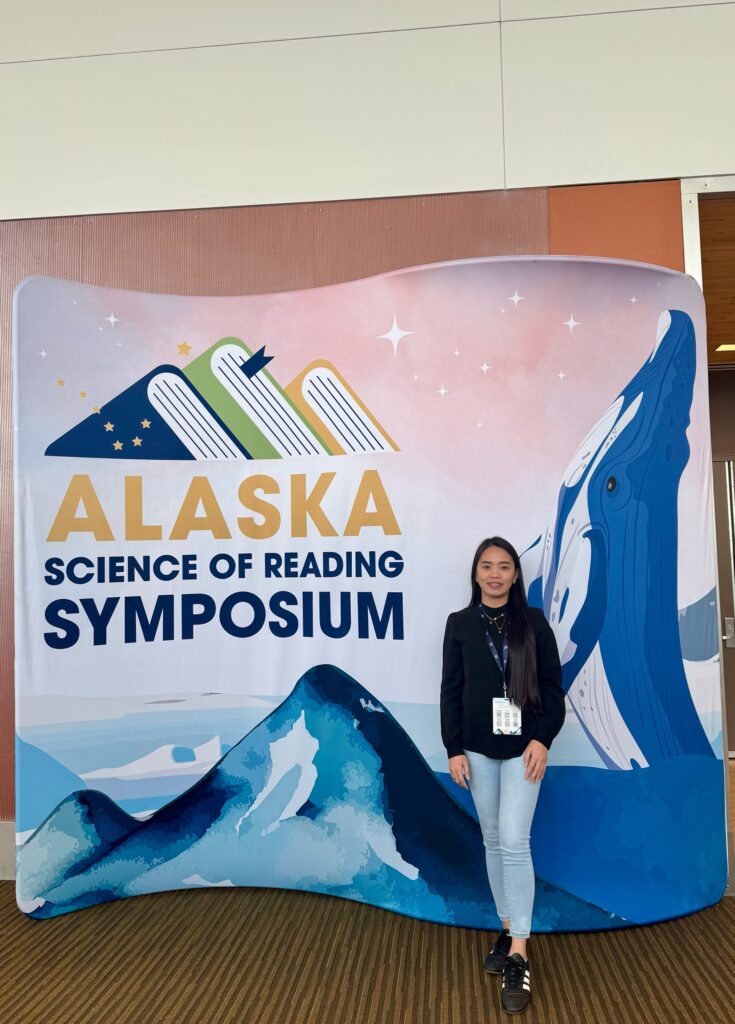
That instinct — to lift other educators rather than simply advance herself — is one Dr. Jamera returns to often. “Beyond my regular teaching responsibilities, I always sought opportunities to help other educators improve their craft,” she says. Sharing best practices, she adds, strengthened her own leadership and reinforced a lesson that would matter even more once she left the country: that the work is bigger than any one teacher.
Choosing the harder road
The decision to leave a stable, six-year career in Cebu for a remote Alaskan town was not driven by escape. It was, by Dr. Jamera’s telling, a deliberate choice to grow. She wanted international experience, broader professional opportunities, and a better future for herself and her family — but underneath those practical goals was something more personal.

“Another reason that motivated me to pursue a career abroad was my desire to challenge myself and step out of my comfort zone,” she says. Dr. Jamera suspected that working in an unfamiliar country would force a kind of growth that comfort never could. “I believed that working in a different country would help me become more adaptable and broaden my perspective as an educator.”
The growth came, though not without cost. Like countless overseas Filipinos before her, Dr. Jamera ran into the familiar wall of homesickness, cultural adjustment, and the disorientation of a new work environment. There were stretches of uncertainty. What kept her steady, she says, was a refusal to dwell. “Whenever I encountered difficulties, I reminded myself of the reasons why I chose to work abroad and focused on finding solutions instead of dwelling on problems.” Family, friends, and colleagues formed her support system; her parents and the dedicated educators she had long admired gave her a model of perseverance to measure herself against.
She is candid that none of it resolved overnight. “Through faith, determination, and the support of loved ones, I gradually adjusted,” she says — the operative word being gradually. Resilience and patience, Dr. Jamera learned, were not traits she arrived with so much as ones the experience demanded of her.
What the distance taught her
If there is a throughline in how Dr. Jamera talks about life abroad, it is that the hardest parts doubled as the most instructive. Working overseas, she says, made her more independent, more adaptable, and more resilient than she had been before. It also reshaped how she sees other people. “Living and working abroad has enabled me to appreciate diversity and develop a deeper understanding of people from different cultures,” she says, counting respect, inclusivity, and lifelong learning among the lessons she values most.
There is a quiet pride in the way Dr. Jamera frames her presence in American classrooms — not as an individual achievement but as representation. She speaks of sharing “the strengths and talents of Filipino teachers with the international community,” and of considering it a privilege to stand for Filipino educators on a global stage. For her, every well-taught lesson in Yakutat is also a small argument for what teachers from the Philippines can contribute anywhere in the world.
The road still ahead
Dr. Jamera’s current standing in the United States rests on an H-1B visa, and the next milestone she names is a familiar one for skilled workers abroad: permanent residency through a green card. Stability is part of the appeal, but so is reach. “Becoming a permanent resident would allow me to further expand my professional opportunities and continue making a positive impact on students and fellow educators,” she says.
The longer arc she imagines bends toward leadership. Dr. Jamera wants to move into curriculum development, instructional leadership, and teacher mentoring, to keep publishing research and building instructional materials, and eventually to take on administrative roles where she can shape school improvement at a larger scale. Running beneath all of it is an advocacy she states plainly — equitable access to education, and continued investment in teachers themselves. “I believe that investing in educators ultimately benefits entire communities and future generations,” she says.
For the kababayans navigating their own difficult chapters overseas, Dr. Jamera’s counsel is grounded rather than grand. Manage your money wisely. Protect your well-being. Keep talking to the people you love. Surround yourself with people you can trust, and never stop improving. “Challenges may come, but perseverance, integrity, and faith will help you overcome them,” she says. And she is honest about the timeline: “Success does not happen overnight. There will be moments of loneliness, disappointment, and sacrifice, but these experiences can help us grow stronger and wiser.”
What stays with Dr. Jamera, after nearly three years at the far edge of the map, is a redefinition of what success even means. “Success is not only measured by achievements but also by the lives we touch and the lessons we learn along the way,” she says. Measured that way, a small classroom in Yakutat is not the periphery of an ambitious career. It is the center of it.
