



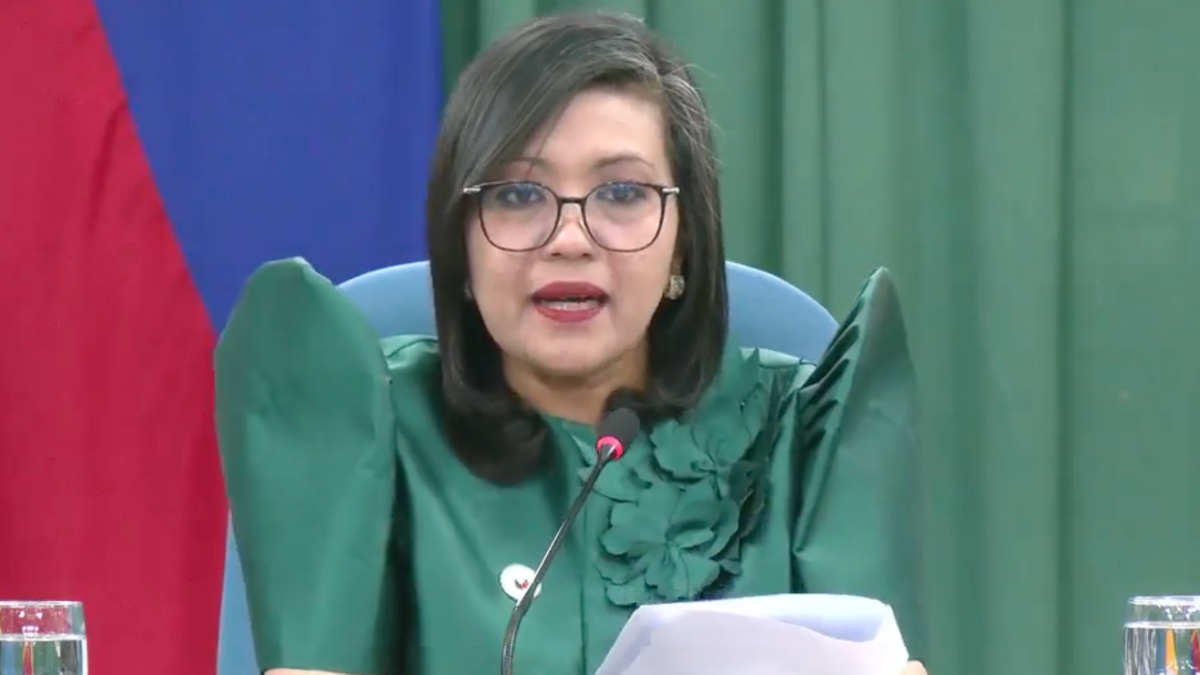

A single conviction on any of the four Articles of Impeachment filed against Vice President Sara Duterte would be sufficient to remove her from office and permanently bar her from holding public office again, according to the House’s lead prosecutor.

Representative Gerville Luistro explained that senator-judges will vote on each article separately after all evidence has been presented across the four charges.
“A conviction in just one article—that should be enough… If we get 16 votes in one article, that should be enough to convict the impeachable official and to impose upon her the penalty of perpetual disqualification,” Luistro said in an interview on dzMM.
She described how the voting would unfold: “The voting must happen per article, but the way I see it, the presentation of the four articles will be completed first, and then the senator-judges will be asked to vote individually. For example, the first article is confidential funds, and they will be called one by one to vote, then on the second article.”
The four articles charge Duterte — the first Philippine official impeached twice in succession — with graft, corruption, bribery, and an alleged plot to assassinate former ally President Ferdinand Marcos. The House approved the impeachment complaint 257-25-9 before transmitting it to the Senate, which formally convened as an impeachment court on May 18.
Luistro also addressed the question of what happens if Duterte resigns before the trial concludes. While a resignation would make removal from office moot, she said the Senate proceedings must continue because the penalty of perpetual disqualification remains independently applicable.

The question of remote participation has also surfaced as a point of contention. Senator Ping Lacson on Friday flatly rejected a proposal that would have allowed detained Senator Ronald “Bato” dela Rosa to vote online during the trial and on Senate matters including leadership reorganizations.
“Such a move won’t succeed. And it might delay us if we have to change the rules of the impeachment court,” Lacson said. He noted that Senate rules permit remote participation only in genuine emergencies, citing the COVID-19 pandemic lockdowns as the relevant precedent. “Even the Senate rules do not allow such remote participation,” he added. No decision has been made on a related motion filed by Senator Rodante Marcoleta.
Meanwhile, questions about the Senate’s own conduct have been raised by the House panel. Trial spokesperson and Kabataan party-list Representative Renee Co said the proceedings will test not just Duterte’s culpability but the upper chamber’s ability to act as an impartial constitutional body.
“Otherwise, what will also be on trial is the Senate’s ability to fulfill its constitutional duty to sit as an impeachment court, to maintain political neutrality as provided by the rules, and to provide due process—the entire gamut of it from start to finish,” Co said.
She noted that some senator-judges had already staked out public positions on the case before proceedings formally began, raising doubts about impartiality — though she said the youth still hold out hope for a fair trial.
