



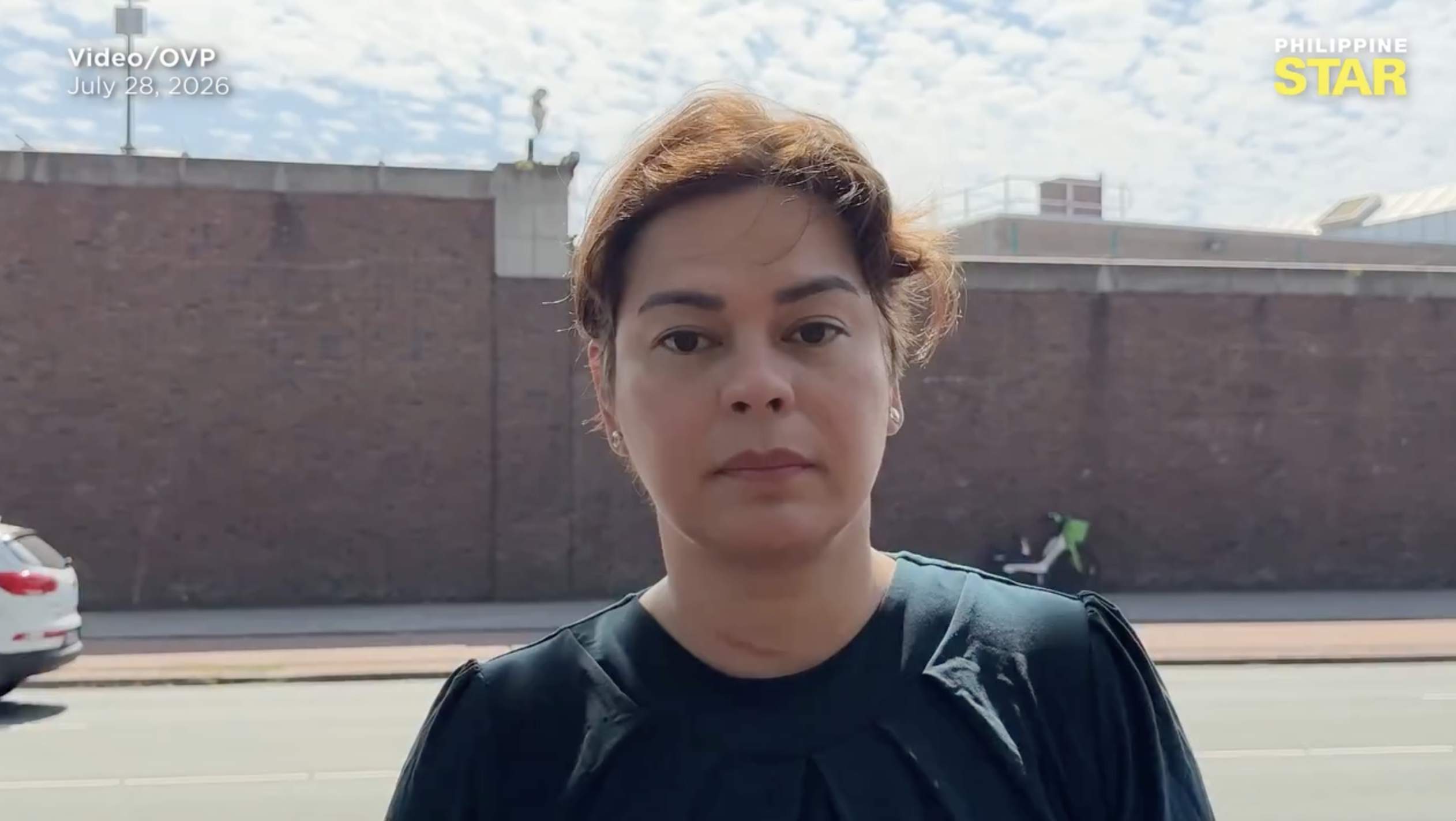

Confronted with a question about one of the biggest technology deals now taking shape in the Philippines, Vice President Sara Duterte appeared unfamiliar with the arrangement and ultimately begged off from giving a response.

During a chance interview in The Hague, Netherlands, on Monday, July 27, 2026, a supporter asked the Vice President what she thought of the Pax Silica plan being set up in the country. Rather than answer directly, Duterte first tried to make sense of the name, repeating it back in fragments — “Ano? Pax Sili—?” and later “Fox Silic—?” — before the questioner clarified that the subject was indeed Pax Silica.
“Hindi, ma’am. Pax Silica. Do you know anything about that, ma’am?” the interviewer pressed.
“Wala ako— I cannot comment on that,” she replied.

The exchange took place while Duterte was abroad in the middle of her Senate impeachment trial. She had left the Philippines on July 21 for what her office described as official foreign travel and personal engagements, with stops that included the Netherlands, Qatar, and the United Kingdom. The trip marked another of her visits to The Hague, where her father, former president Rodrigo Duterte, is detained at the International Criminal Court over the drug war killings during his term.
Pax Silica is a United States-led coalition launched in December 2025 that aims to build secure supply chains for semiconductors, critical minerals, and artificial intelligence technologies, in a bid to reduce reliance on China. The Philippines signed on in April 2026, becoming one of roughly two dozen signatory nations and one of only two Southeast Asian participants alongside Singapore.
The country’s flagship contribution is a planned industrial zone in New Clark City, Capas, Tarlac, spanning about 1,620 hectares, envisioned as an AI-native hub for chip fabrication, critical minerals processing, and advanced manufacturing. According to the Bases Conversion and Development Authority, Manila and Washington are aiming to sign a framework agreement covering the project around November, with officials still exchanging drafts of the arrangement.
The initiative has met resistance from critics who warn it could relegate the Philippines to a subordinate role centered on raw materials and low-value work, while raising environmental, economic, and national security concerns tied to escalating friction between the US and China. Finance Secretary Frederick Go has defended the country’s entry, framing it as a potential “generational type of project” that would let the Philippines harness its mineral resources and location rather than remain on the sidelines of the global technology race.
