



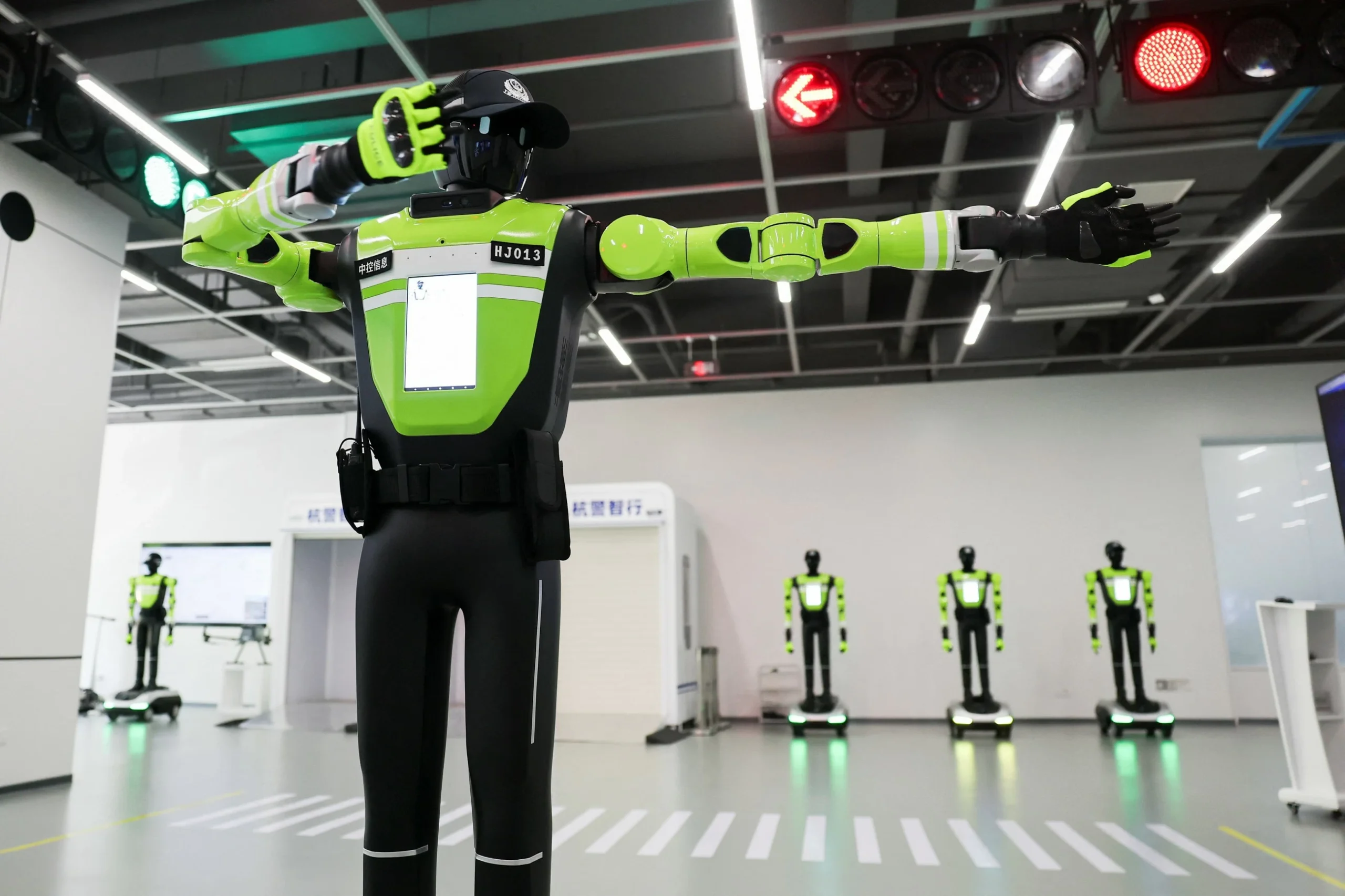

Nearly 50 humanoid robots are now handling routine traffic duties across roughly eight cities in three Chinese provinces, with the developer expecting that number to near 200 by the close of the year.

The machines come from SUPCON Information, a technology firm that built the T2 model standing 1.88 meters (6 feet 2 inches) tall and weighing 98 kilograms (216 pounds). Since May, 15 units have operated at intersections in Hangzhou, in eastern China. SUPCON reports the robots have delivered more than 170,000 warnings and contributed to a drop of over 40 percent in monthly instances of helmetless riding and vehicles crossing stop lines. Hangzhou’s traffic police did not reply to a request for comment, and Reuters said it could not confirm the numbers on its own.
The robots run on their own from 7 a.m. to 6 p.m., shifting among fixed points at intersections without anyone steering them remotely, according to Cao Hui, who heads SUPCON’s intelligent unmanned systems innovation center. Traffic teams track and direct the units through a central platform. Their seven-jointed arms replicate the hand signals of human officers, timed to the traffic lights.
Cameras, radar, and onboard computing let the robots spot riders without helmets, e-bikes carrying passengers, vehicles halting past marked lines, and pedestrians crossing against signals, Cao said. The machines also respond to questions about directions, parking, and road rules, and an emergency feature links people to local police. SUPCON puts the system’s violation-recognition accuracy above 95 percent, though it acknowledges that intense sunlight, rain, and temperature swings can interfere with the sensors.

Cao said the company logged thousands of testing hours in tourist zones, school areas, commercial districts, rush-hour congestion, and rough weather. The purpose, he said, is to swap out post-violation penalties for a warning delivered before a bad habit sets in. “It doesn’t get tired,” Cao said of the robot. “It can work steadily for long periods.”
The rollout reflects a wider effort across Chinese industry to shift robots away from stage demonstrations and greeting roles toward functional work. Chery-backed firm AiMOGA views police robots as a fit for foreign markets where officers endure harsh roadside conditions, pointing to Middle East heat and long rainy seasons in Southeast Asia.
AiMOGA executive Zhang Guibing said sending the machines abroad would prove trickier than shipping a car. Because the robots depend on cameras and other sensors, Zhang said, they would have to mesh with each country’s law-enforcement IT systems, secure certifications, and meet data-protection requirements.
