



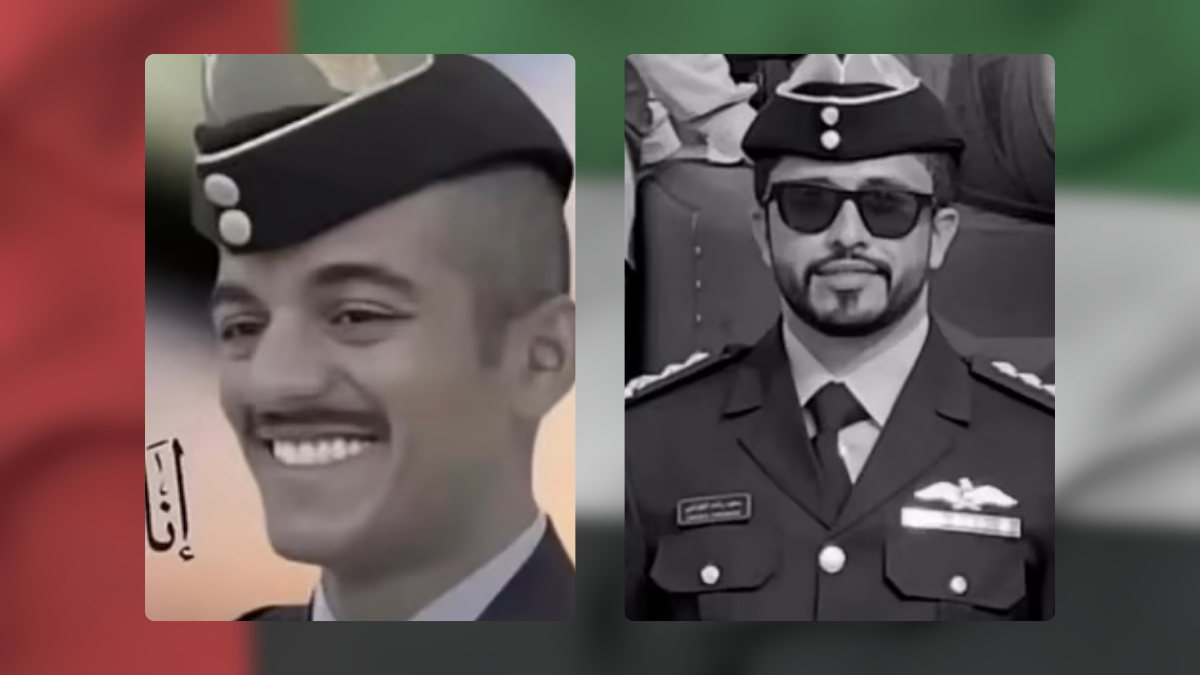

A voice message recorded moments before his last flight has become an emblem of sacrifice for a nation deep in mourning. First Lieutenant Pilot Ali Saleh Ismail Al Tunaiji, one of two UAE military officers killed when their helicopter went down Monday due to a technical malfunction, had left behind words that his countrymen are now carrying with them.

“The great reward comes from the Lord of the worlds. If it is written that we are to be among the martyrs, then we shall be martyred. And if God grants us life, it is enough for us that you are well, sleeping and at peace,” Al Tunaiji said in the recording.
The UAE Ministry of Defence confirmed on Monday, March 9, 2026, that both Al Tunaiji and Captain Pilot Saeed Rashid Hamad Al Balushi had died in the crash while on national duty. The Ministry offered its condolences to the families of both officers, according to Khaleej Times, calling on God to grant them mercy and their loved ones patience.
Funeral arrangements have been set for Tuesday. Al Tunaiji’s prayer will be held after Dhuhr at Abdullah Al Amaashi Mosque in Al Rams, Ras Al Khaimah, while Al Balushi’s will take place at Al Muatared Al Kabeer Mosque in Al Ain at the same time.

Regional solidarity followed swiftly. Qatar’s Prime Minister and Foreign Minister Sheikh Mohammed bin Abdulrahman bin Jassim Al Thani personally called Sheikh Abdullah bin Zayed Al Nahyan, the UAE’s Deputy Prime Minister and Minister of Foreign Affairs, to offer condolences and reaffirm Qatar’s support. Oman, Bahrain, and Saudi Arabia have also extended their sympathies.
The crash occurred against a backdrop of sustained Iranian aerial assault on UAE territory. Since February 28, 2026 — following joint US-Israeli strikes on Iran — the UAE Ministry of Defence says Iran has launched 238 ballistic missiles and 1,422 drones at the country. Of those, 221 ballistic missiles, 1,342 drones, and eight cruise missiles have been intercepted. The attacks have left four people dead and 112 injured across various nationalities.
The UAE Ministry of Foreign Affairs has characterised the strikes as violations of international law and the UN Charter, stating that the country is operating in “a state of defence” against what it called Iran’s “unprovoked aggression” — while maintaining that it does not seek further escalation.
