



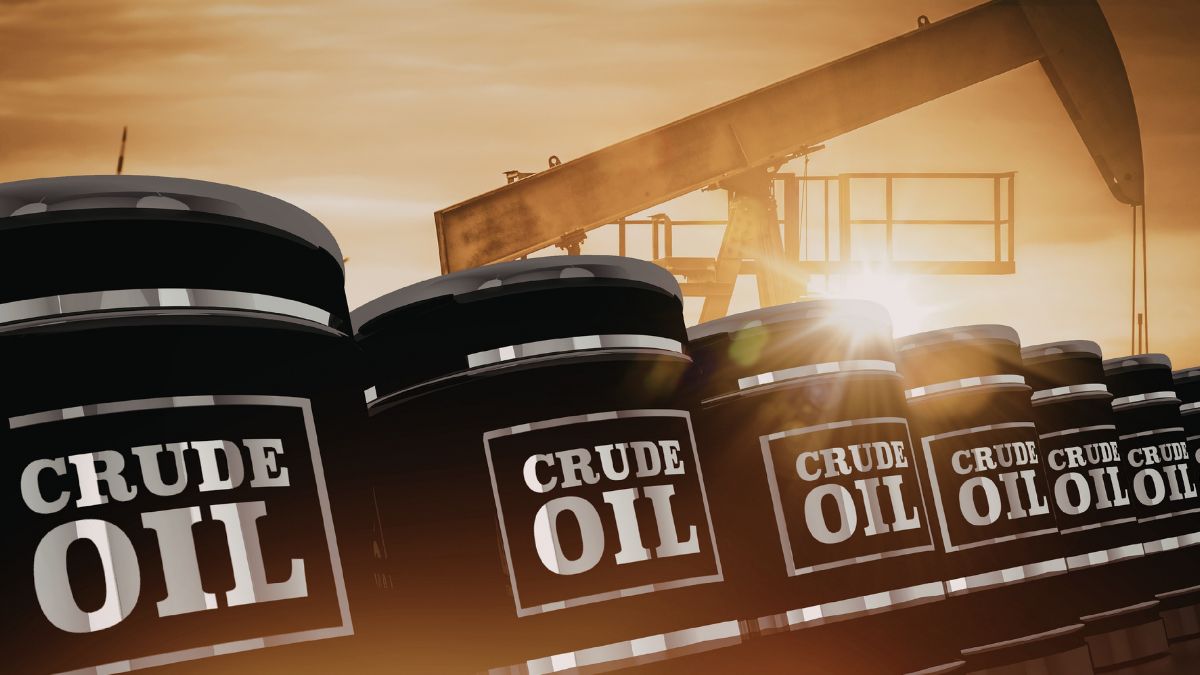

Iran’s Revolutionary Guards declared they would not allow “one liter of oil” to leave the Middle East if American and Israeli strikes persist, escalating a war of words over the Strait of Hormuz as global energy markets lurched between record highs and sharp selloffs.

The Guards’ pledge came alongside a pointed assertion of control over the war’s timeline. “We are the ones who will determine the end of the war,” a spokesperson told state media, signaling that Iran’s security establishment — now rallying behind newly appointed Supreme Leader Mojtaba Khamenei — has no intention of standing down.
Trump responded with sweeping warnings, first at a Monday news conference and later in a Truth Social post. “If Iran does anything that stops the flow of Oil within the Strait of Hormuz, they will be hit by the United States of America TWENTY TIMES HARDER than they have been hit thus far,” he wrote. At the press conference, he added: “We will hit them so hard that it will not be possible for them or anybody else helping them to ever recover that section of the world.”
The Strait of Hormuz, through which roughly one-fifth of the world’s oil passes, has already been effectively shut down. Tankers have been unable to sail for over a week, and producers have been forced to halt pumping as storage fills to capacity.
The war — launched at the end of February with a barrage of US and Israeli air and missile strikes across Iran — has killed at least 1,332 Iranian civilians and wounded thousands more, according to Iran’s UN ambassador. Tehran was blanketed in black smoke this week after an oil refinery took a direct hit, a visible escalation in targeting Iran’s domestic energy infrastructure. The World Health Organization’s chief, Tedros Ghebreyesus, warned the blaze posed contamination risks to food, water, and air supplies.
Khamenei’s appointment on Monday undercut hopes for a quick resolution. Oil markets surged as much as 29% — their highest level since 2022 — before giving back gains. Brent crude futures fell more than 10% on Tuesday after Trump predicted the conflict would wrap up well ahead of his initial four-week projection and reports circulated of a possible easing of sanctions on Russian energy. Global equities also swung sharply before recovering.

Trump said he had spoken with Russian President Vladimir Putin and would waive oil-related sanctions on “some countries” to relieve supply pressure. Multiple sources indicated this could involve broader relief for Russian oil exports — a move that risks undercutting Western efforts to hold Moscow accountable for the war in Ukraine. Other scenarios being weighed include tapping strategic petroleum reserves or curbing US exports.
A Reuters/Ipsos poll released Monday found 67% of Americans expect gasoline prices to climb in the months ahead, with only 29% expressing support for the war — a politically fraught backdrop as Trump’s Republicans prepare to defend their congressional majority in November midterms.
Israel, whose stated aim is to dismantle Iran’s clerical governing structure, launched fresh strikes in central Iran and hit Beirut, extending its campaign after Hezbollah fired across the Lebanese border. US officials have framed Washington’s goals more narrowly — dismantling Iran’s missile arsenal and nuclear program — though Trump has said the conflict can end only with a compliant Iranian government in place.
Turkey reported that NATO air defenses intercepted a ballistic missile fired from Iran that had entered Turkish airspace, the second such incident since the conflict began. Iran offered no immediate response.
Australia announced it would deploy military surveillance aircraft to the Middle East and supply missiles to the UAE to bolster its defenses, as five Iranian women’s soccer players sought and received humanitarian visas in Canberra, citing fear of persecution if returned home.
