



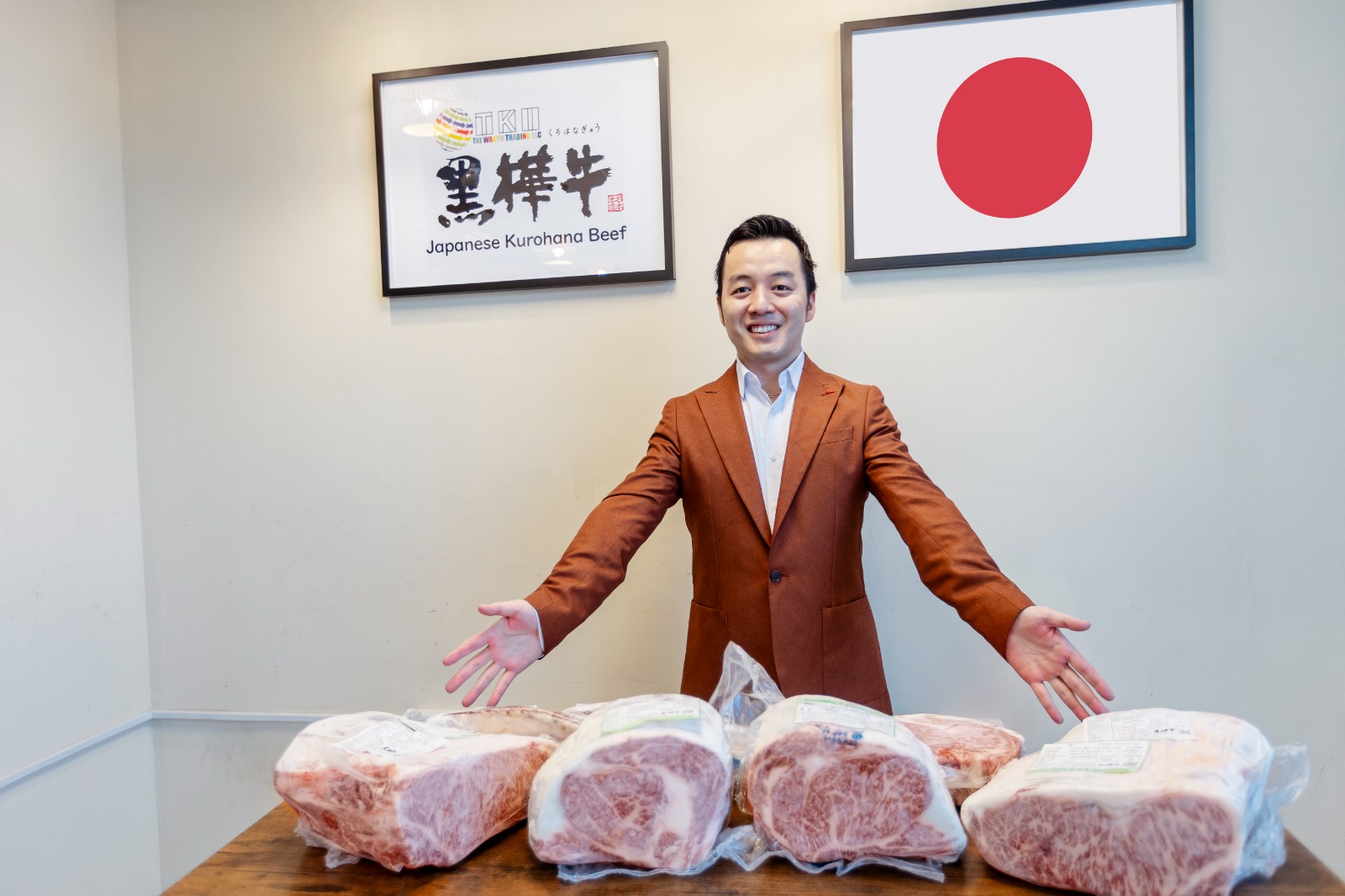

Trust — in suppliers, in staff, and in Dubai itself — is what keeps TKI Wagyu Trading running without interruption as regional tensions weigh on businesses across the UAE.

Ayaka Mogi, general manager of TKI Wagyu Trading, frames the company’s core challenge in cultural terms that go beyond logistics. “We believe that culture is something shaped by people who have lived in a particular region over a long period of time and comes to exist only within that context,” she said. “Once you step outside of that region, the culture itself no longer naturally exists. In that sense, bringing a culture into another region is a continuous process of challenge and adaptation.”
That philosophy underpins TKI’s broader ambition: introducing authentic Japanese wagyu — and the culinary culture surrounding it — to 100 stores across 100 countries. The halal-certified Dubai-based company is already present throughout the GCC, including Bahrain, Kuwait, Oman, Qatar and Saudi Arabia, and has established footholds in Angola, Bangladesh, Egypt and Jordan. Markets in Cyprus, Kazakhstan, Lebanon, Turkey and Uzbekistan are currently being entered.
For CEO Takahiro Mogi, the current period of uncertainty has not disrupted that trajectory, in part because the company’s supply model was never dependent on conditions being calm. “Even in normal times, our beef is always shipped frozen from Japan to the UAE, so there is no immediate concern,” he said.
Mr Mogi also expressed confidence in the city where TKI is headquartered. “Dubai is also a very resilient city with strong leadership and global connections. I believe in the long-term future of Dubai and the opportunities here,” he said.
Internally, the company’s stability rests heavily on its workforce — roughly 90 percent of whom are Filipino — and on a management culture that emphasizes open communication. “I trust my managers and employees. We value communication, stability and continuity. We do our best to protect jobs and keep the team united,” Mr Mogi said. Staff development is supported through a company education program designed to prepare employees for more complex, senior responsibilities.
That same emphasis on reliability shapes how TKI approaches its restaurant and wholesale clients. Japanese business culture has long placed significant weight on supplier trust — at fish markets across Japan, for instance, buyers routinely accept deliveries of high-value products like tuna based on an established relationship, without being physically present to verify each transaction.

TKI applies a similar standard. “A trusted supplier is very important because restaurants rely on consistency and reliability for their menus. TKI manages everything from import to delivery, giving chefs confidence that the product will meet their expectations,” Mr Mogi said. “This kind of trust is especially crucial with premium products like Japanese wagyu.”
The company controls the full supply chain — sourcing in Japan, cold storage, processing and final delivery — to protect product integrity at every stage. “Because wagyu beef is such a delicate and premium product, any mistake in handling can affect the taste,” Mr Mogi said. “TKI prioritizes consistency, food safety, and traceability, building strong trust with chefs and restaurants through reliable, high-quality products.”
End consumers in the UAE have responded well. Kurohana wagyu, graded A5 — the ceiling of Japan’s beef grading system — has drawn particular attention for its marbling and depth of flavor. “Many chefs and diners can clearly see and taste the difference compared to other wagyu, which has helped build strong trust and appreciation for this premium product,” Mr Mogi said.
Beyond wagyu, TKI imports uni, oysters and other Japanese seafood, each held to the same handling protocols. All products, Mr Mogi says, follow “a strong focus on quality and proper handling.”
Pricing, despite the complexity of the supply chain, is kept accessible through tightly managed logistics and sourcing. “Prices are based on the true quality and origin of the product, allowing customers to receive authentic Japanese wagyu at a fair and transparent value,” he said.
TKI’s UAE restaurant portfolio — Kimuraya, Mogiya, Hisaya and Omakaseya — and its Saudi Arabian arm, Dark Cow Trading Company, round out a group built to deliver what Ms Mogi describes as something larger than a product offering. “In that sense, it would not be an exaggeration to say that TKI Group is creating Japan within Dubai,” she said.
