



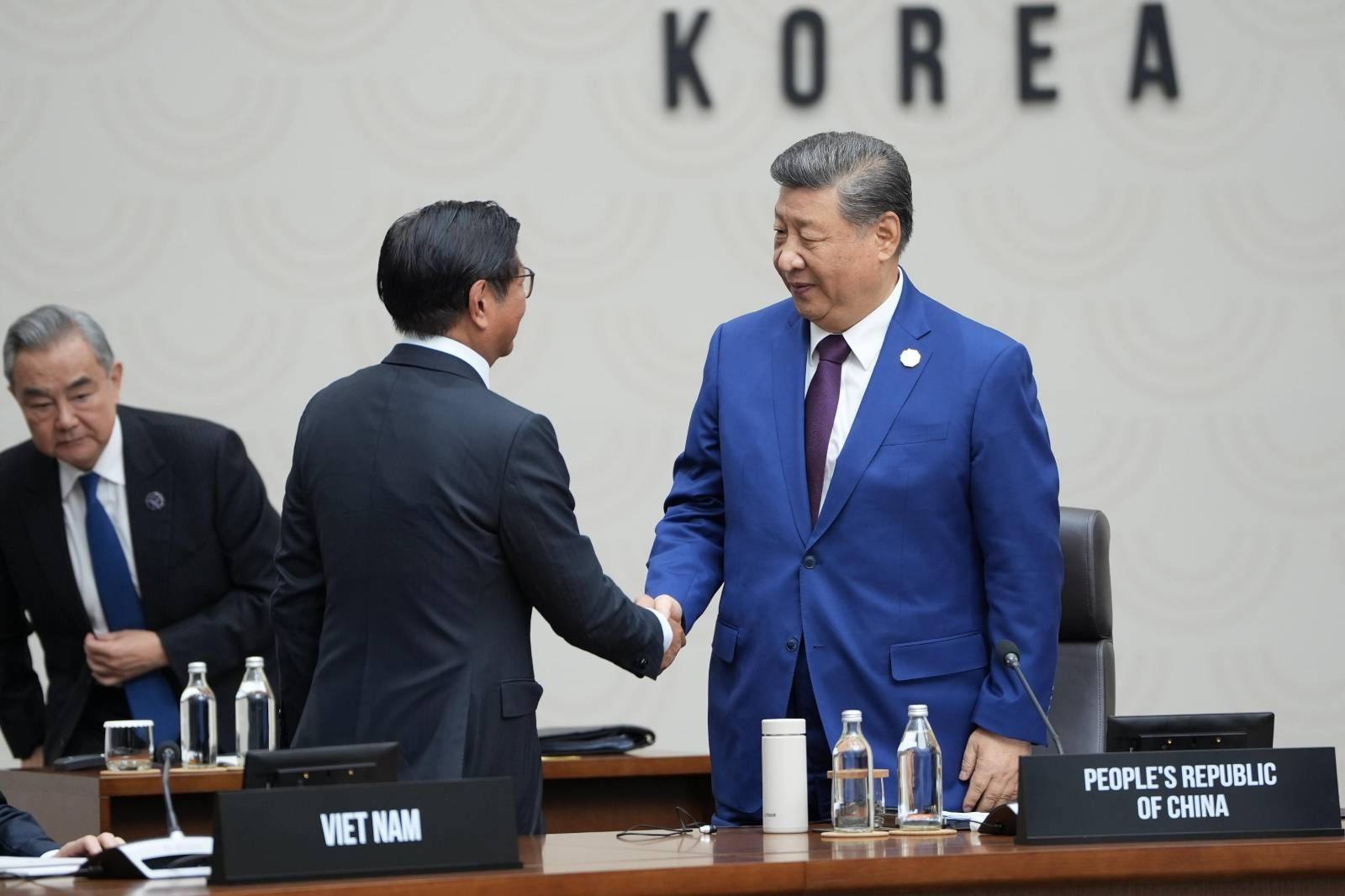

Back-to-back diplomatic meetings between the Philippines and China are now underway in Quanzhou, Fujian province, with energy security emerging as an unexpected area of potential collaboration as oil prices surge from the ongoing Middle East conflict.

The Department of Foreign Affairs confirmed that the 24th Philippines-China Foreign Ministry Consultations and the 11th Bilateral Consultation Mechanism on the South China Sea are being held consecutively from March 27 to 28, 2026 — platforms the DFA describes as venues for frank exchanges on bilateral concerns and possible cooperation in non-sensitive areas.
Foreign Affairs Undersecretary for Policy Leo M. Herrera-Lim said energy-related discussions remain at a preliminary stage, framing them as a potential response to the pressures the Middle East crisis is placing on global commodity markets.
“Exploratory lang at best kung papayag sila na explore namin na mag-exchange ng views on potential values for cooperation, exchange of views on ‘yung impact ng prices sa Middle East, areas for cooperation,” Herrera-Lim said.
He elaborated on the range of commodities under consideration: “Whether it’s oil, fertilizer, food, and whether we can use the energy crisis as an opportunity to have platforms for cooperation para may energy security within the region.”
Herrera-Lim was careful to temper expectations on oil exploration specifically, noting the long timeline before any results could be realized.

“‘Yung oil exploration mahabang proseso ‘yun. Siguro hindi mo ma-harvest ‘yun within five to 10 years ‘yung end product. Pero ‘yung fact na China has a lot of refineries and refined products and ‘yung ibang opportunities for, say, ano bang potential for renewables in the Philippines in terms of share,” he said.
The energy conversation follows recent signals from both governments. President Ferdinand Marcos Jr. told Bloomberg this week that he was open to reviving discussions with Beijing on a joint energy project in the South China Sea. The Chinese Embassy in Manila separately announced that talks on possible joint oil and gas exploration had yielded “positive progress.”
According to Department of Energy data from 2020, the West Philippine Sea may contain over six million barrels of oil and more than seven billion cubic feet of natural gas in undiscovered reserves — including potentially significant deposits at Recto Bank, which falls within the Philippines’ exclusive economic zone.
Beyond energy, the BCM is expected to sustain progress on the long-stalled Code of Conduct in the South China Sea, which the DFA has said it hopes to finalize within the year. A proposed memorandum of understanding on Coast Guard-to-Coast Guard cooperation between the two countries is also on the table, with the Philippine side now awaiting Beijing’s response to a draft.
“So, aantayin lang namin ‘yung comments ng China and then we’ll share it with Coast Guard,” Herrera-Lim said.
China’s sweeping claims over nearly the entire South China Sea — including areas recognized under international law as Philippine territory — remain a fundamental complication for any joint development arrangement, given Beijing’s continued refusal to recognize the 2016 arbitral ruling that invalidated those claims.
