



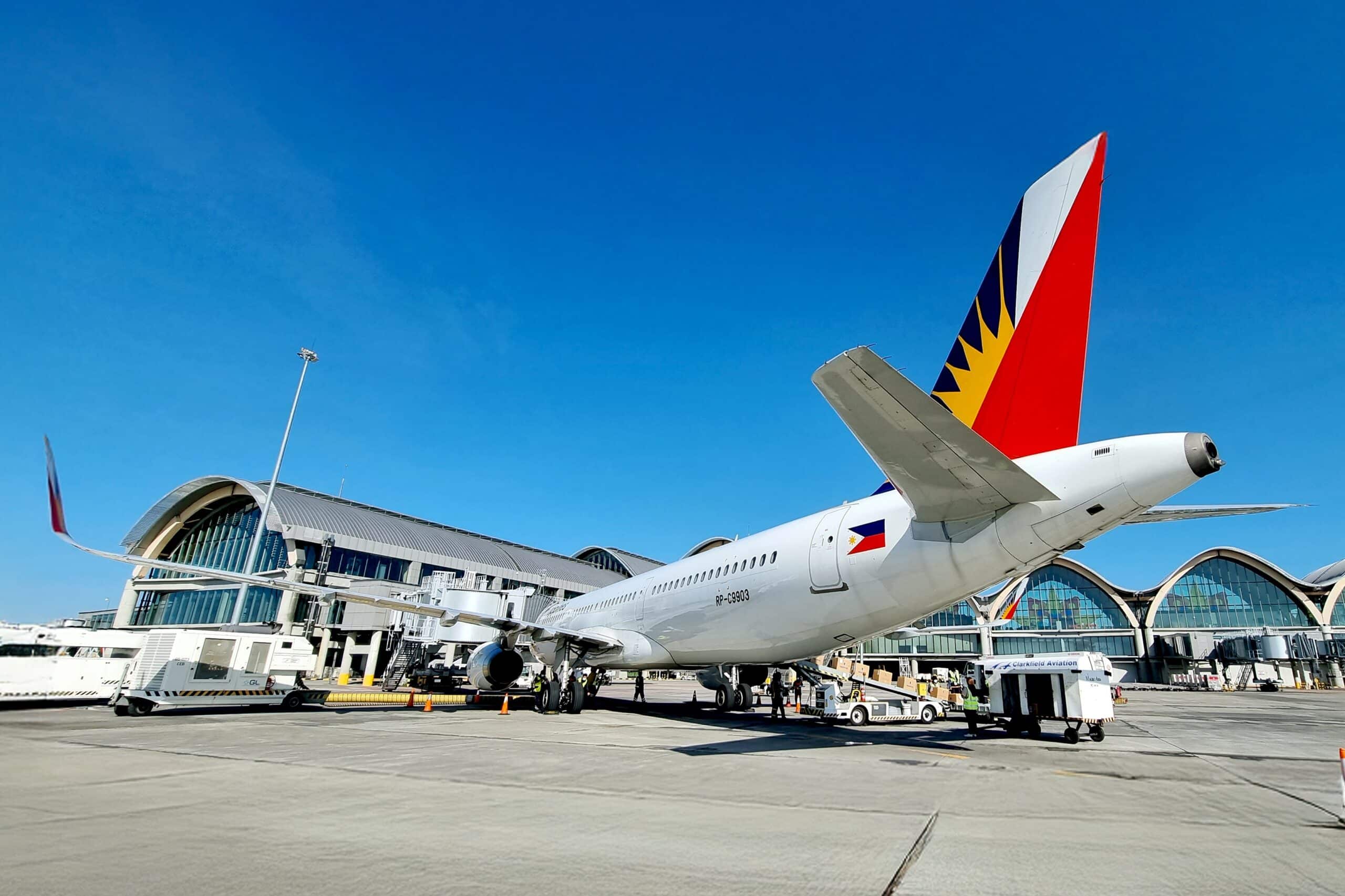

Philippine Airlines says it has locked in enough jet fuel to keep its scheduled routes running, including long-haul services, even as the country’s energy chief warned that a full supply depletion remains the government’s worst-case fear.

In a statement, PAL said it has been working with fuel suppliers, industry partners, and government stakeholders to maintain stable operations. “PAL continues to work closely with fuel suppliers, industry partners, and government stakeholders to ensure stable and sustainable operations over the longer term,” the carrier said, adding that it is treating current global supply conditions as dynamic and requiring active monitoring.
The reassurance comes against a deteriorating national backdrop. Energy Secretary Sharon Garin said Tuesday that the Philippines has an estimated 38.62 days of jet fuel remaining — the tightest margin among major fuel categories tracked by the Department of Energy. Gasoline supply is estimated at 53.14 days, while diesel stands at 45.82 days. Garin said the government is actively reaching out to non-traditional supplier countries to shore up imports. “Kaya we are reaching out to all countries, alternative countries even to make sure na merong darating because the uncertainty of the war makes us uncertain,” she said.
President Ferdinand Marcos Jr. acknowledged the stakes in a Bloomberg Television interview Tuesday, saying the grounding of aircraft is a “distinct possibility.” He pointed to a complicating factor already affecting international operations: some countries are refusing to refuel Philippine airline aircraft, forcing carriers to carry enough fuel for both legs of a flight. “When our airlines fly out, several countries have said we cannot fuel your aircraft. So, you will have to carry the fuel there and back,” Marcos said. “Long haul is going to be a much more serious problem.”

The disruption traces back to late February, when Iran effectively blocked the Strait of Hormuz following US and Israeli military strikes — cutting off a corridor that normally handles roughly 21 percent of global petroleum liquids in transit. Jet fuel prices have since climbed to $197 per barrel as of March 20, more than double the 2025 average, according to data from the International Air Transport Association.
Budget carrier Cebu Pacific has already moved, announcing the suspension of five international routes and frequency cuts across nine others from April through October. Among the routes going dark: Davao–Bangkok, Iloilo–Bangkok, Iloilo–Singapore, and Clark–Hanoi. Services between Manila and Jakarta will be cut from seven weekly flights to four.
To ease supply pressure, the Philippines has turned to Russian crude for the first time in five years. The tanker Sara Sky, carrying 100,000 tonnes of ESPO Blend crude from Russia’s Kozmino port, was expected to arrive at Petron’s Bataan refinery between March 23 and 25 under a US sanctions waiver valid until April 11.
PAL said the rest of its network is expected to operate as scheduled, framing its current posture as one of precaution rather than crisis response.
