



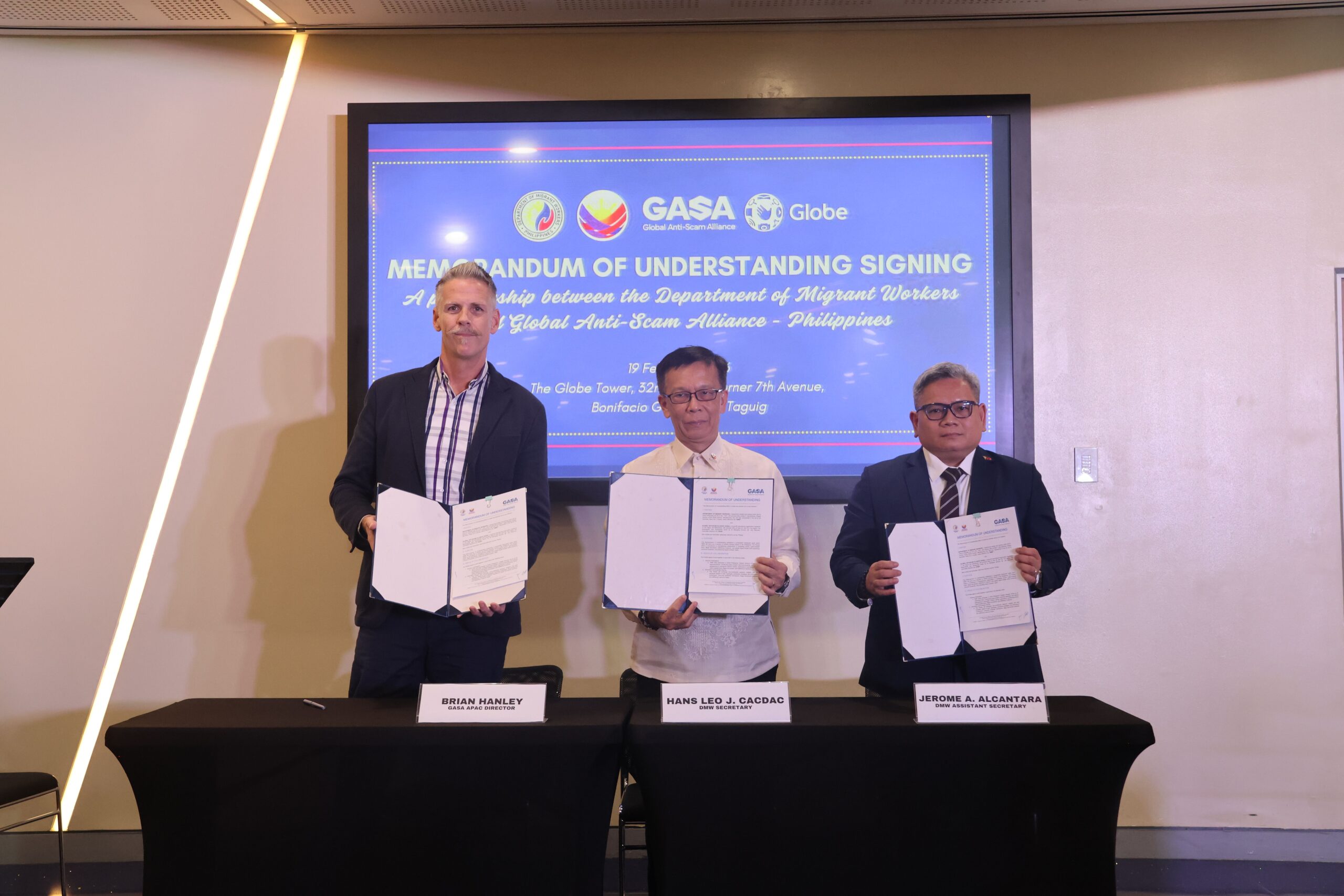

Efforts to curb online fraud targeting overseas Filipino workers gained fresh momentum after the Department of Migrant Workers (DMW) entered into a formal collaboration with the Global Anti-Scam Alliance. The agreement was sealed through a Memorandum of Understanding signed on February 19, 2026, in Bonifacio Global City.

The partnership seeks to reinforce safeguards for migrant workers and their families by enhancing digital security programs and deepening coordination across borders. Authorities said the initiative will facilitate stronger information exchange, expand access to protective tools, and develop systems that help identify fraudulent schemes before they inflict harm.
Migrant Workers Secretary Hans Leo J. Cacdac underscored that the collaboration goes beyond information drives. “We entered this agreement not only to campaign against scams, but to address the underlying causes — whether it’s a lack of jobs or opportunities — and to respond with real solutions. By boosting our information efforts and connecting victims to employment options, we aim to take both preventive and corrective measures,” he said.

Under the arrangement, both sides plan to roll out expanded awareness campaigns and strengthen digital literacy initiatives tailored for Filipinos working abroad. The program also includes joint capability-building activities, research efforts, and structured training sessions designed to equip workers and their families with practical knowledge on spotting and avoiding deceptive online tactics.
Brian Hanley, Asia-Pacific director of GASA, highlighted the urgency of unified action. “This is the time for the public sector and private entities to come together, because scams are no longer just a government concern — they are now recognized as a global concern and as a cybercrime,” he said.
The alliance brings together major technology and financial firms as part of a global coalition committed to combating scams. Among its members are Globe Telecom, Gogolook, Meta, Google, and Mastercard, which collaborate to strengthen cross-sector and international responses to scam-related threats.
