



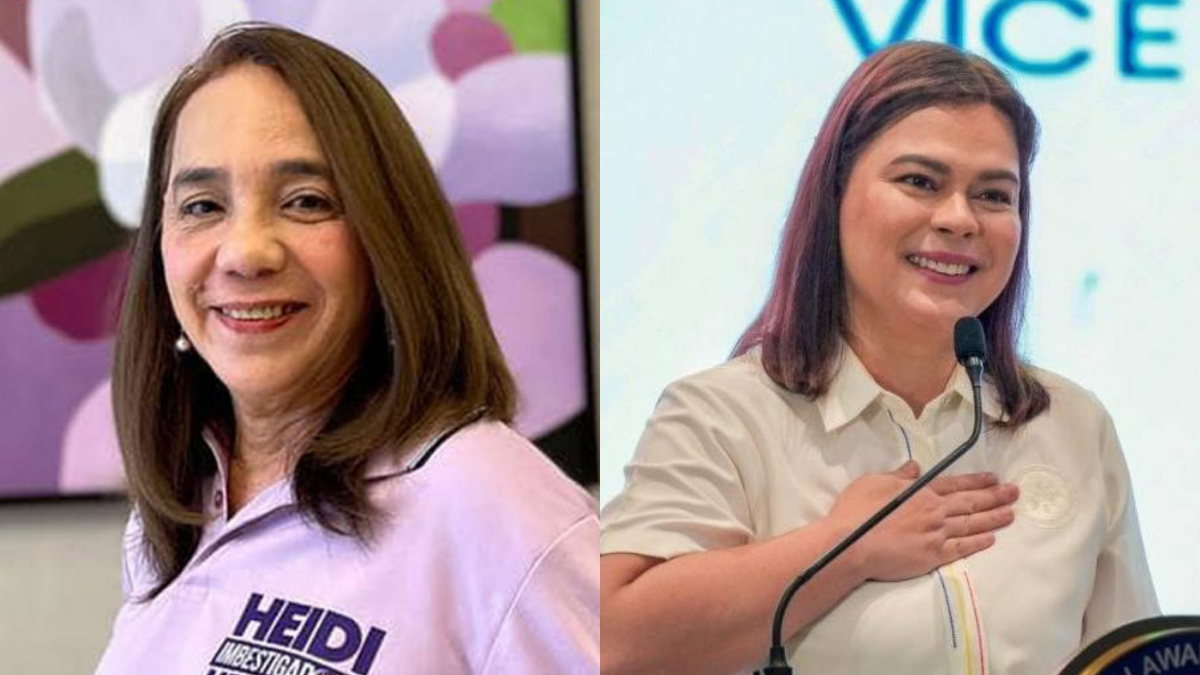

A former state auditor has pushed back on Vice President Sara Duterte’s characterization of bank transaction figures tied to her name, arguing the numbers presented before Congress may actually be incomplete rather than inflated.

Heidi Mendoza, a former Commission on Audit commissioner, said Anti-Money Laundering Council reports — the basis of the P6.7-billion figure that surfaced during House impeachment hearings — carry built-in blind spots that could leave significant fund movements undetected.
“Bago mo sabihing bloated… meron pa ngang hindi pumasok sa sistema,” Mendoza said in an April 26 appearance on the web program “Facts First.” (Before you say it’s bloated… there are even some that weren’t included in the system.)
AMLC monitoring systems are designed to flag transactions exceeding P500,000, Mendoza explained, but amounts broken into smaller figures can slip past automatic reporting triggers entirely.
“Kung inutay-utay mo iyan… marami pang hindi na-cover sa monitoring,” she said. (If you do it gradually… there are still many that were not covered by the monitoring.)
Duterte’s camp had responded to last week’s House Committee on Justice hearings by contending the figures were “bloated,” saying they represented aggregate transaction flows rather than actual balances.
Mendoza said that distinction does not hold up under scrutiny. Bank account balances themselves are shielded from congressional review under bank secrecy laws, meaning only AMLC transaction reports — not full statements — were available to lawmakers.

“Yung bank account balance… hindi natin mapapasok iyan… kaya ang pwede lang nating tingnan ay yung AMLC report,” she said. (The bank account balance can’t be looked at, so only the AMLC report could be examined.)
Tracing becomes further complicated, she said, when funds are commingled. “Hindi iyan one-to-one correspondence… kapag naghalo-halo na iyan, hindi mo puwedeng i-match,” she said. (That is not a one-to-one correspondence… if they are mixed, it is not possible to match.)
Mendoza also raised the role of bank personnel in structuring transactions, saying account holders are sometimes guided by staff who understand compliance thresholds. “Usually ang nag-a-advise sa kanila ay taga-banko rin… alam nila kung paano dapat igalaw iyon,” she said. (Usually they are advised from within the banks… they’d know how to move the funds.)
She was careful to note her remarks were grounded in professional audit experience and did not constitute a direct accusation in Duterte’s specific case.
On internal bank transfers, Mendoza flagged the use of debit and credit memos as a potential vulnerability when institutional oversight is weak, saying such mechanisms could enable account-to-account movements through “connivance” and delayed monitoring.
Mendoza said the situation calls for a broader investigative approach that goes beyond what AMLC data alone can establish. “Kung ako ang auditor, dito dapat papasok ang COA. Dapat joint investigation ito,” she said. (If I were the auditor in the case, this is where COA enters. This should be a joint investigation.)
Full reconciliation, she added, would require complete bank statements — records that are not immediately accessible to auditors working within standard legal constraints.
