



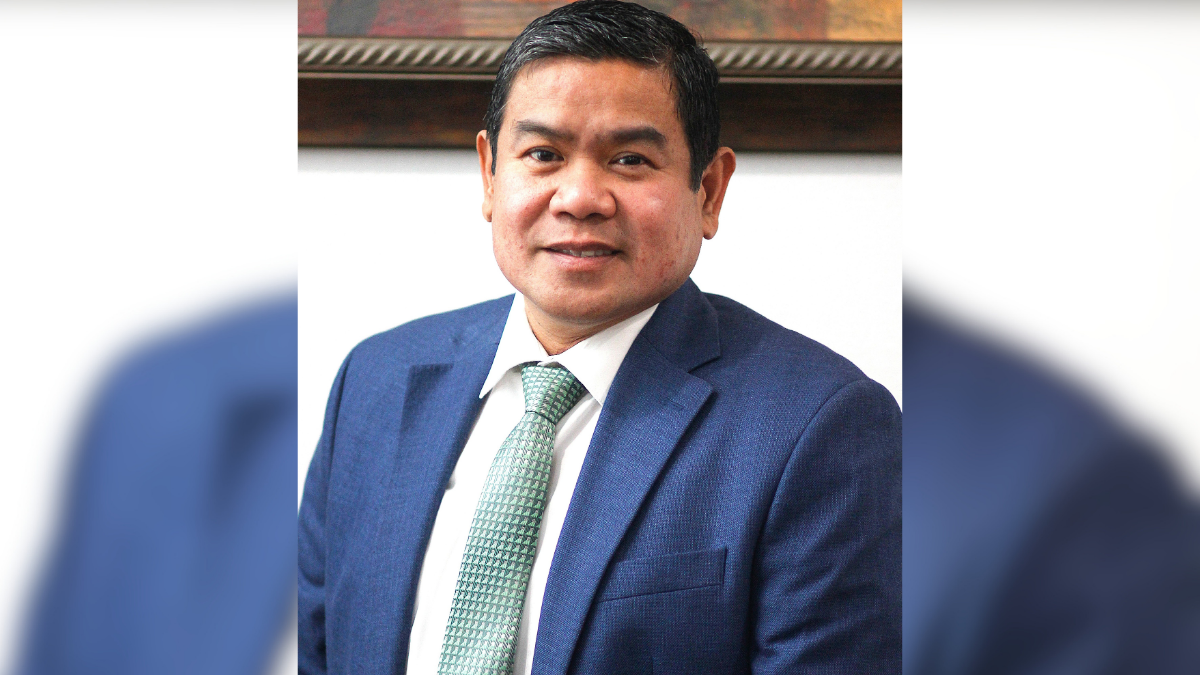

There is a particular kind of teacher who does not just explain what something is but shows you what it can become. They work at the intersection of theory and real life, drawing blueprints not only for buildings but for careers, and sometimes for entire lives. Orlando Bagcal is that kind of teacher — though when he first arrived in the United States, he was stocking pills in a pharmacy.

It is not the beginning anyone would predict for a man who would eventually become the first Asian in more than a decade to receive the Associated General Contractors of America National Outstanding Educator Award. But Orlando, now 53, has built his American career the same way a good construction manager builds anything: methodically, with purpose, and without wasting a single material.
A foundation laid in the Philippines
Before the US, there was the Philippines — years of it. Orlando taught civil and sanitary engineering at the Technological Institute of the Philippines, where he eventually served as department chair. He was also an adjunct professor at EARIST, PUP, CCP, and Lyceum of the Philippines University. Community service was part of the curriculum even then. He led students in Habitat for Humanity projects, a commitment he would carry across the Pacific.
The move came because of his wife, a nurse recruited by a hospital in Kentucky. The family’s reasons were layered: career growth, international exposure, a better future for their children. “Pursuing employment outside our home country, both my wife and I were driven by the desire to accelerate our career growth, gain international exposure and experience, develop cross-cultural competence, as well as to ensure better opportunity and future for our children,” Orlando says.
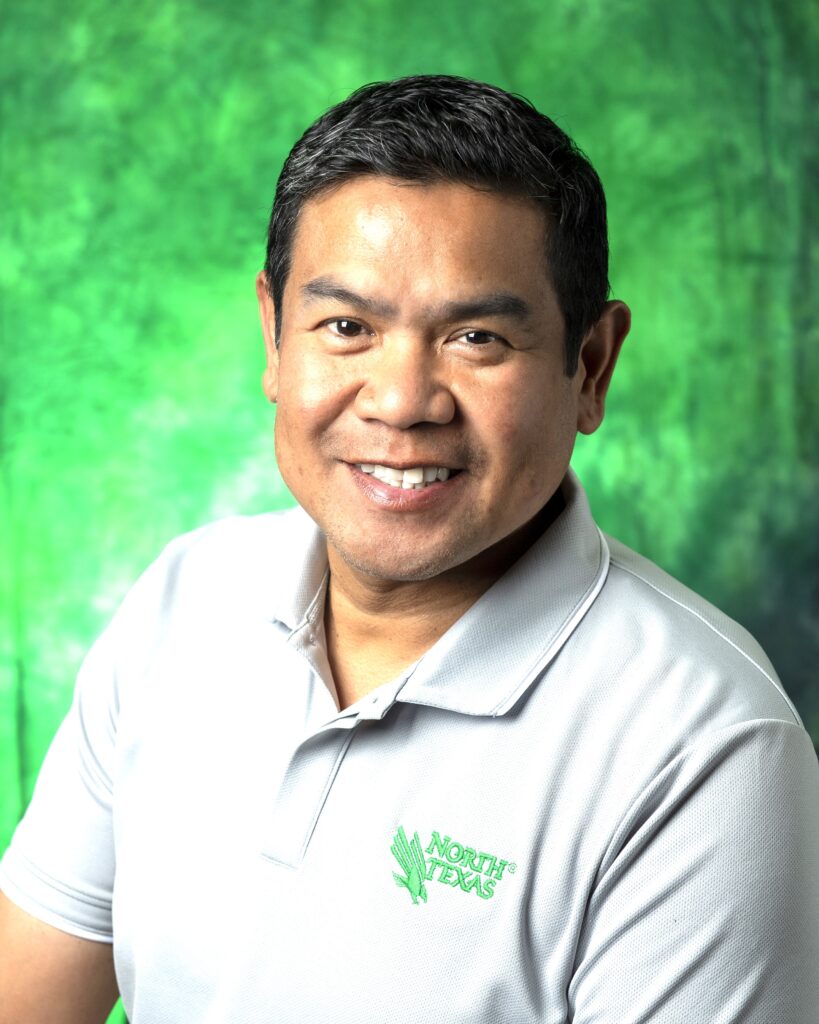
What followed was not a smooth transition. It rarely is. Settling abroad, he notes, means rebuilding everything — a social network, a professional identity, a daily rhythm — while contending with homesickness, culture shock, and bureaucratic unfamiliarity. He does not romanticize it. “Settling abroad is a profound challenge,” he says plainly.
Building programs from scratch
The pharmacy job lasted three months. Then came an adjunct teaching position at a community college. Then a full-time offer to lead the Construction Management program at Tarrant County College (TCC). It was there that Orlando’s career found its particular shape.
He led TCC’s Construction Management program through full accreditation by the American Council for Construction Education — one of only 12 associate degree programs in the country to earn that status, and one of only two in Texas at the time. After twelve years as a tenured associate professor, he moved to Tarleton State University, part of the Texas A&M system, where he helped grow a newly established construction degree from 20 students to more than 200. The program reached candidate status for ACCE accreditation under his watch.

He then took on an even more unusual challenge at Collin College: establishing the first bachelor’s degree in construction management at a community college in Texas. That meant building a curriculum from nothing — developing syllabi, designing coursework, and driving yet another accreditation effort, this time for the associate program, which achieved full ACCE recognition.
Orlando is now a Clinical Associate Professor and Program Coordinator for Construction Management at the University of North Texas, where he also serves on various academic committees. He holds a Texas Professional Engineer license, an NAHB Certified Green Professional designation, and an Associate DBIA credential. His research focuses on sustainable construction materials made from industrial waste by-products, as well as construction labor productivity and Building Information Modeling. He has recently added a post-graduate certificate in artificial intelligence and machine learning to his profile — a signal, perhaps, of where he sees the industry heading.
What teaching actually means to him
When Orlando talks about why he teaches, he reaches for a three-word framework that sounds simple but holds considerable weight: Teach, Inspire, Transform. “As a teacher, I have the opportunity to ‘Teach’ and mold the minds of students by providing the necessary knowledge that will ultimately prepare them for a challenging career and dynamic world,” he says. “At the same time, teaching allows me to ‘Inspire’ the heart of my students to have compassion to help, share, and apply their gained knowledge for the benefit of humankind.”
The third piece — Transform — is where he places the most emphasis. “Equipping them with knowledge and compassion will ‘Transform’ their lives to become a better person and be a valuable individual in their chosen career that will help propel the nation’s economy.”
It reads like a mission statement, but it also matches what he has actually done. His volunteer record in the US includes delivering meals for Tarrant County Meals on Wheels, coordinating student volunteers for Trinity River Habitat for Humanity, and organizing participation in initiatives like Cowtown Brush Up and the TxDOT Adopt-A-Highway program — totaling more than 200 volunteer hours annually. The classroom ethos, it turns out, extends well beyond it.
His awards reflect this consistency. The 2026 AGC National Outstanding Educator Award is the most prominent, but the list is long: a 2025 regional award from the Associated Schools of Construction covering Texas, Oklahoma, Arkansas, and Louisiana; a 2017 National Teaching Excellence Award from the US National Institute for Staff and Organizational Development; the 2013 National Outstanding Educator of the Year from the National Association of Home Builders; and multiple college- and district-level recognitions over the years. He has published six refereed journal articles and three conference papers, accumulating more than 200 citations.
For fellow Filipinos navigating life abroad, his advice is practical and grounded in experience. “Moving abroad is a journey that takes resilience and patience,” he says. “Facilitate the transition by learning the language, immersing yourself in the culture, and establishing a comforting routine. Remember, adapting takes time, so be kind to yourself through the highs and lows.”
