



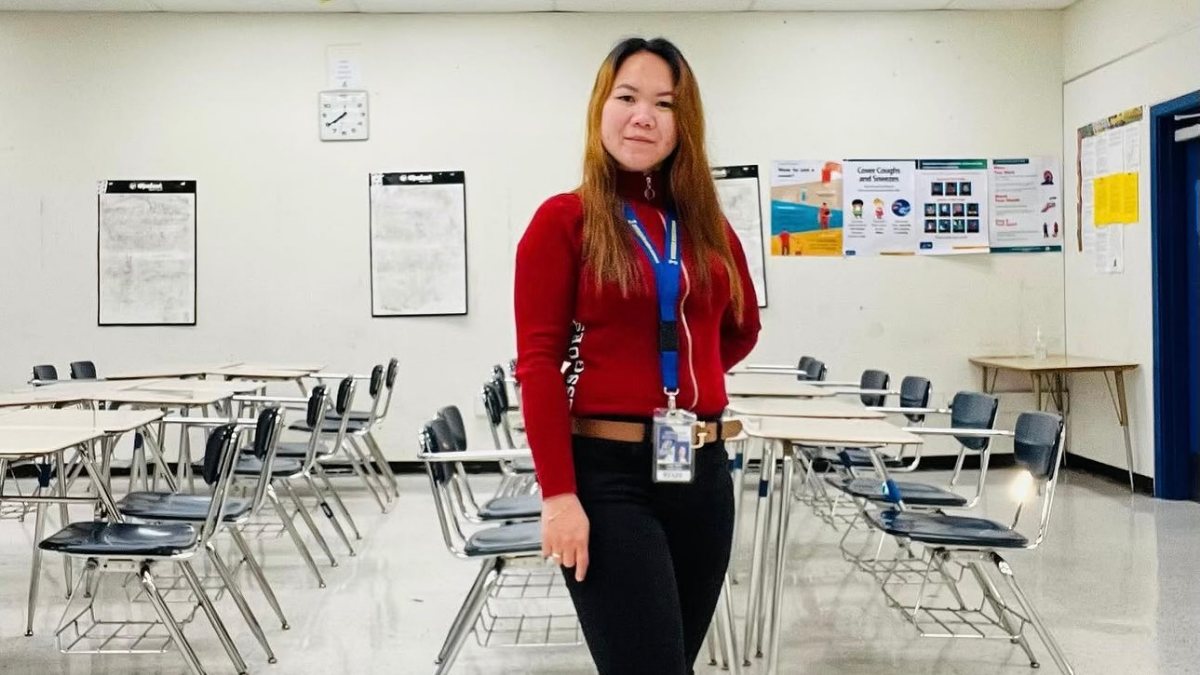

Plenty of people will tell a struggling student exactly what they cannot become. Fewer stick around to be proven wrong. Lolly Beth Aparece Justiniane has spent more than a decade collecting that particular kind of proof — first for herself, then on behalf of every student who has sat in her classroom convinced that mathematics was simply not meant for them.

Today she teaches Algebra, Geometry, and Precalculus at Jefferson High School in Daly City, California, where she has worked for almost five years. But the path to a standards-based American classroom began in a far less certain place: a Cebu high school where her family’s finances made every coming semester feel like a gamble, and where the doubts came not only from circumstance but from people who said them out loud.
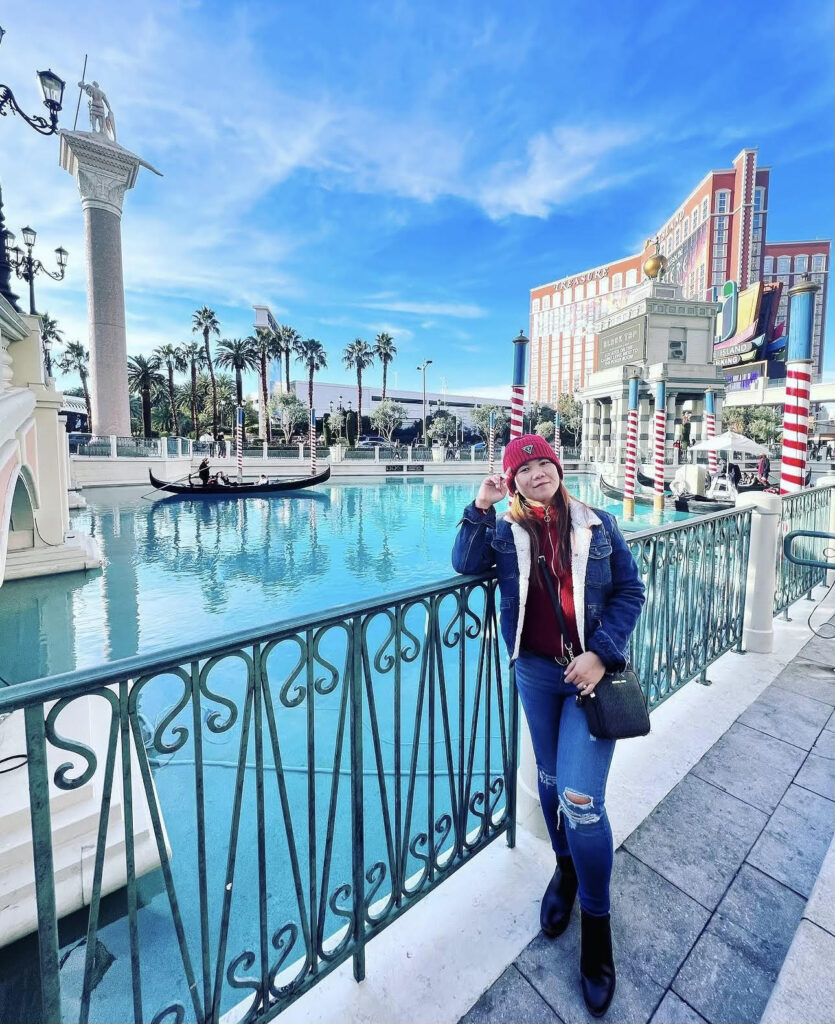
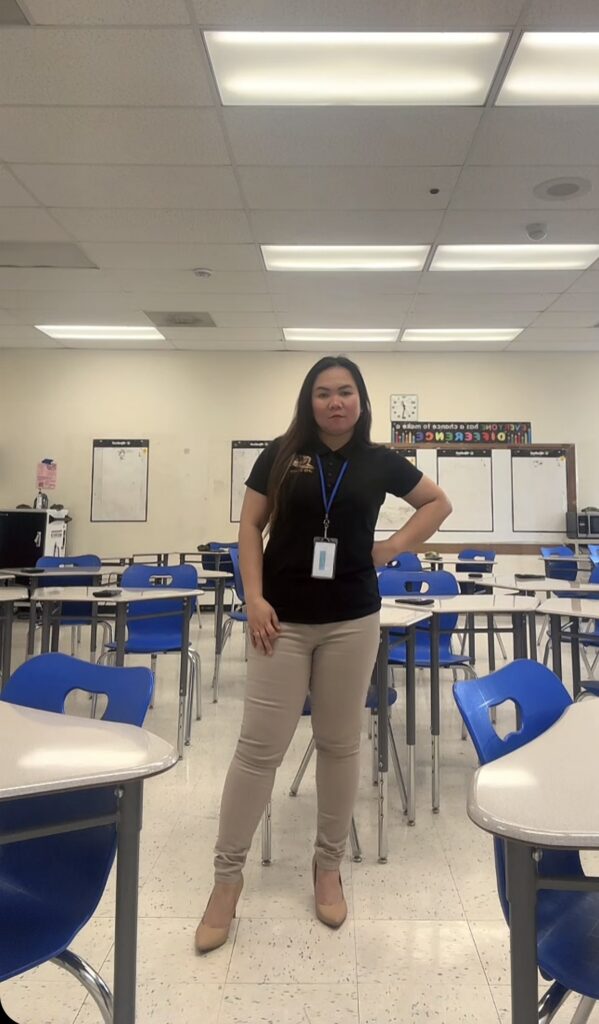
“There were moments when continuing my studies felt uncertain,” she shares with TGFM. “I also experienced being judged and discouraged by others who made me feel like I would not have a better future.” She does not soften the memory, but neither does she dwell in it. The discouragement became fuel. She sat the entrance examination at Cebu Normal University, passed, finished her degree in Education, and earned her teaching license in 2009. The credentials kept coming after that — a Master’s in Mathematics in 2018, a PhD in 2024 — each one a quiet rebuttal to everyone who had counted her out.
Learning to teach where the resources ran thin
Her classroom education began at Siena School of Naga, where she taught high school mathematics for four years and learned the unglamorous fundamentals of the job: patience, discipline, and the importance of building strong foundations before reaching for anything advanced. She doubled up at the same time, handling working students and adult learners in a night program at Pardo Night High School — an experience that stretched her understanding of who walks into a classroom and what they are carrying when they do.
Then she left. For a year and a half she worked at the BPO company Concentrix, a stint that sharpened her communication and her composure under pressure. It also clarified something she had not fully appreciated until it was gone. “I missed the classroom, I missed teaching, and I missed working with students,” she says. The detour ended the way these things often do — with a return to the thing she had tried to walk away from.
That return led her to Sinsin National High School, a mountain barangay school where she taught for five years and where, by her own account, much of her teaching philosophy was forged. The students there faced obstacles that extended well beyond algebra. The materials were limited. What wasn’t limited was the demand on a teacher to make the subject reachable anyway.
“With limited materials but strong determination, I learned how to teach mathematics in a way that made learning meaningful and accessible,” she says. She also took on nearly everything a small school needs someone to take on: Mathematics Coordinator, SMEA Coordinator, Girl Scouts coordinator, liaison officer, payroll assistance, sports supervision, competition judge. The list reads like an argument that leadership in an under-resourced school is less about title than about showing up. “These roles taught me how to lead quietly, work with limited resources, and still make a meaningful impact on students’ lives.”
A new country, a different kind of classroom
The decision to leave the Philippines was, as she describes it, a difficult one — driven by a desire for professional growth and a steadier footing for her family. She wanted to test herself in classrooms shaped by different cultures, different learning needs, and an educational system she would have to learn from the inside.
The system she walked into at Jefferson High School was demanding in ways her Philippine experience had not prepared her for. Her current responsibilities span lesson planning, assessment design, data-driven instruction, and differentiated support for English Learners and students with IEP or 504 accommodations. She advises the senior class, supervises after-school sports, proctors state exams, and tutors students who need more than the school day allows.

The harder lesson arrived early, and it did not come dressed as a teaching philosophy. It came as a roomful of students who would not settle down.
“During class discussions, they would often talk over the lesson or lose focus,” she says. When she addressed it, some of them gave her an answer she had not expected: they did not understand what she was saying. “Which made me realize that the issue was not only behavior, but also access to the content and language.” Slowing down and repeating herself, she found, only went so far — especially for her English Learners.
So she rebuilt her approach rather than patch it. She moved toward inquiry-based learning and the Building Thinking Classrooms model, designing tasks that put students into groups to make sense of problems together instead of waiting through long teacher-led explanations. She layered in scaffolds — sentence starters, step-by-step prompts, clear success criteria — so that a language barrier no longer meant a student couldn’t begin.
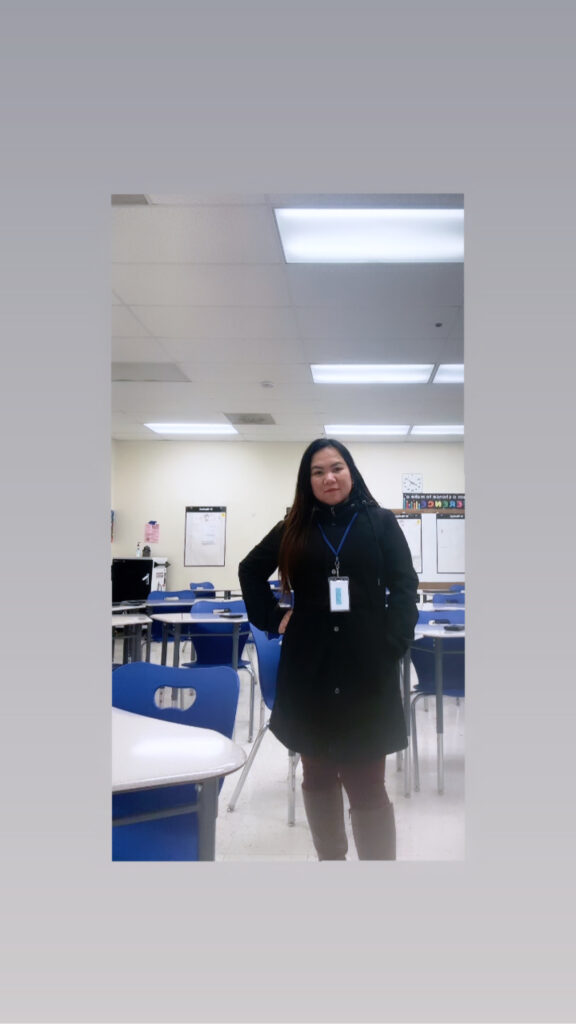
The change in the room was hard to miss. “The same group of students who were previously disruptive became more focused when they were given roles, collaborative tasks, and opportunities to explain their thinking in their own words.” What had looked like a discipline problem turned out to be a design problem. It is the kind of realization that reorganizes how a person teaches, and for her it did exactly that.
The moment that makes the rest worth it
Ask her what she actually enjoys, and the answer is not the credentials or the international posting. It is a single recurring instant she calls the “moment of understanding” — when a student who had been hanging back begins to participate, explain their reasoning, and trust that they belong in a math class after all.
She is most fluent on the subject of access. Many students struggle, she argues, “not because they lacked ability, but because instruction was not always differentiated or accessible.” Her workaround is deliberate and concrete: visual models, sentence frames, collaborative structures, step-by-step scaffolding, and a steady reliance on assessment data to keep adjusting. The goal is equity in who actually gets to learn the hard content, not just who gets exposed to it.
Watching English Learners explain their reasoning in English over time, or students with accommodations solve complex problems on their own, lands for her with particular weight. “It confirms for me that thoughtful instruction and the right support can unlock every student’s potential.”
Five years abroad have taught her that adaptability matters as much as experience — that even a strong teaching background means little without the willingness to adjust to a new curriculum, a new classroom culture, a new way of communicating. The trick, she has found, is adjusting without surrendering the values underneath.
Her plans bend back toward home. After her time abroad, she wants to mentor teachers and support professional development, carrying the strategies she has sharpened in Daly City to wherever they might be useful next. Her advocacy is inclusive education — the conviction that no student should be shut out of mathematics because of language or a learning difference.
For kababayans finding their footing overseas, her counsel is measured rather than sweeping. Trust slowly. Build a small, reliable support system. Protect your peace. “Success abroad is not just about financial growth, but also about maintaining peace, dignity, and self-respect while working toward your long-term goals.” It is advice that sounds a lot like the way she has run her career — steadily, deliberately, and without much patience for anyone who tries to tell her what cannot be done.
