



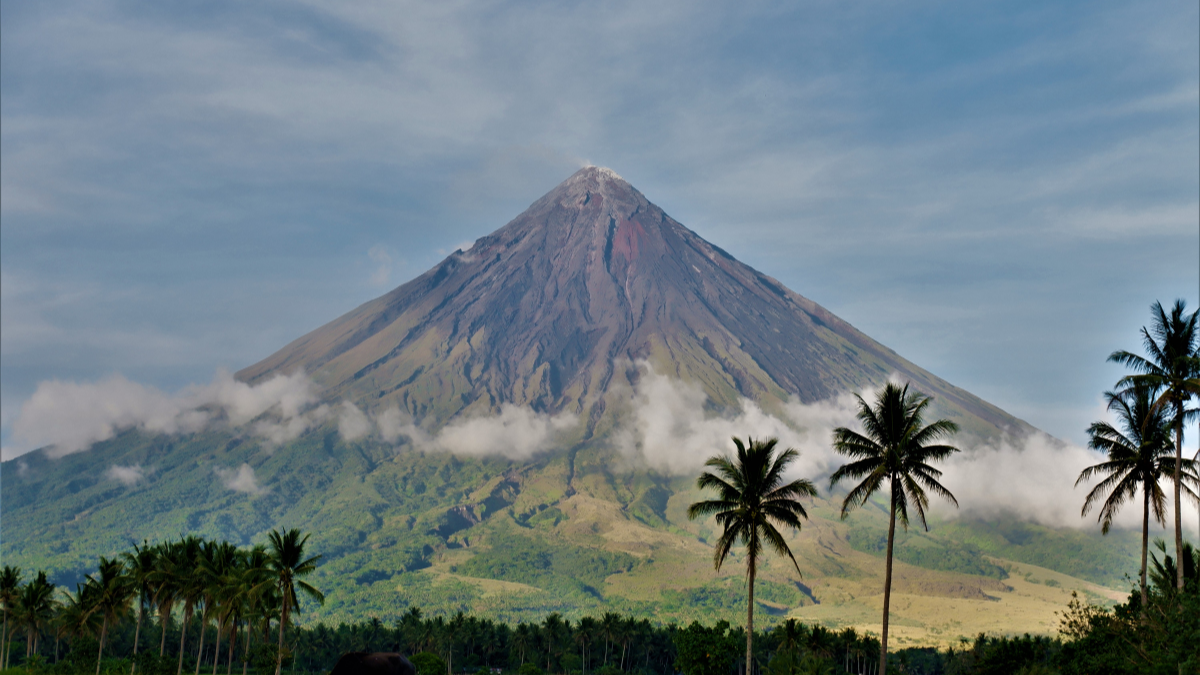

A microbe pulled from the ground near one of the country’s most active volcanoes has emerged as a candidate for future medicine, after laboratory work showed it could strike at dangerous pathogens and act against colorectal cancer cells.

The organism, labeled Streptomyces sp. A1-08, was one of 30 bacteria that scientists at the University of the Philippines Los Baños drew out of soil collected in Malilipot, Albay, a town sitting close to Mayon Volcano. Of that batch, the Department of Science and Technology said at least 13 displayed some degree of antibiotic activity against known pathogens affecting humans and plants. A1-08 stood apart from the rest.
What first drew attention to the isolate was its ability to suppress methicillin-resistant Staphylococcus aureus, or MRSA, a bacterium notorious for shrugging off standard treatment and complicating infections. That result pushed Kristel Mae P. Oliveros, an assistant professor in the UPLB Microbiology Division who led the project, and her colleagues to run further tests, including a screen against colorectal cancer cells and an examination of the organism’s genetic makeup.
Oliveros said the team had not expected such findings from the site. “We have high hopes of getting new and novel species because this is a less explored environment, a volcano,” she said in a statement carried on the DOST’s social media channels.

The anti-cancer screening, however, came with a clear qualifier. According to DOST, the crude extracts taken from A1-08 registered weaker effects than doxorubicin, an established chemotherapy drug used as the benchmark in the test. Oliveros cautioned against reading too much into that gap, noting the comparison was uneven from the start. “It is good to remember that the positive control doxorubicin is a pure, proven and tested commercially available chemotherapy drug. In contrast, the ethyl acetate extract of [Streptomyces sp.] A1-08 which we have used in the study, [is] a crude extract, and therefore still a complex mixture and may contain multitude of raw compounds at different concentrations,” she explained. Those raw compounds, she said, could later be refined to isolate a specific anti-cancer agent.
To trace which genes might be producing the antibiotic and anti-cancer compounds, the researchers turned to genomic analysis. Albert Remus R. Rosana, who worked on the study and was pursuing a PhD at the University of Alberta in Canada, compared the approach to assembling building blocks. “In our genomics work, we use computer software to build the correct sequence of the Lego pieces and predict target outcomes, which in our research are the different antibiotics and potential anti-cancer molecules,” he said.
The relevance of the work extends beyond the laboratory bench. The World Health Organization has flagged antimicrobial resistance among the leading threats to global health, while colorectal cancer ranks as the third most common malignancy in the Philippines, figures cited by Asean Centre for Biodiversity Executive Director Theresa Mundita Lim when she welcomed the discovery as a milestone for the country and the wider region.
Should additional testing confirm that A1-08 is genuinely a new species, the team intends to register it as Streptomyces mayonensis A1-08, tying the name to the volcano where it was found. The research was supported by the UPLB Basic Research Grant along with a scholarship grant awarded to Rosana.
