



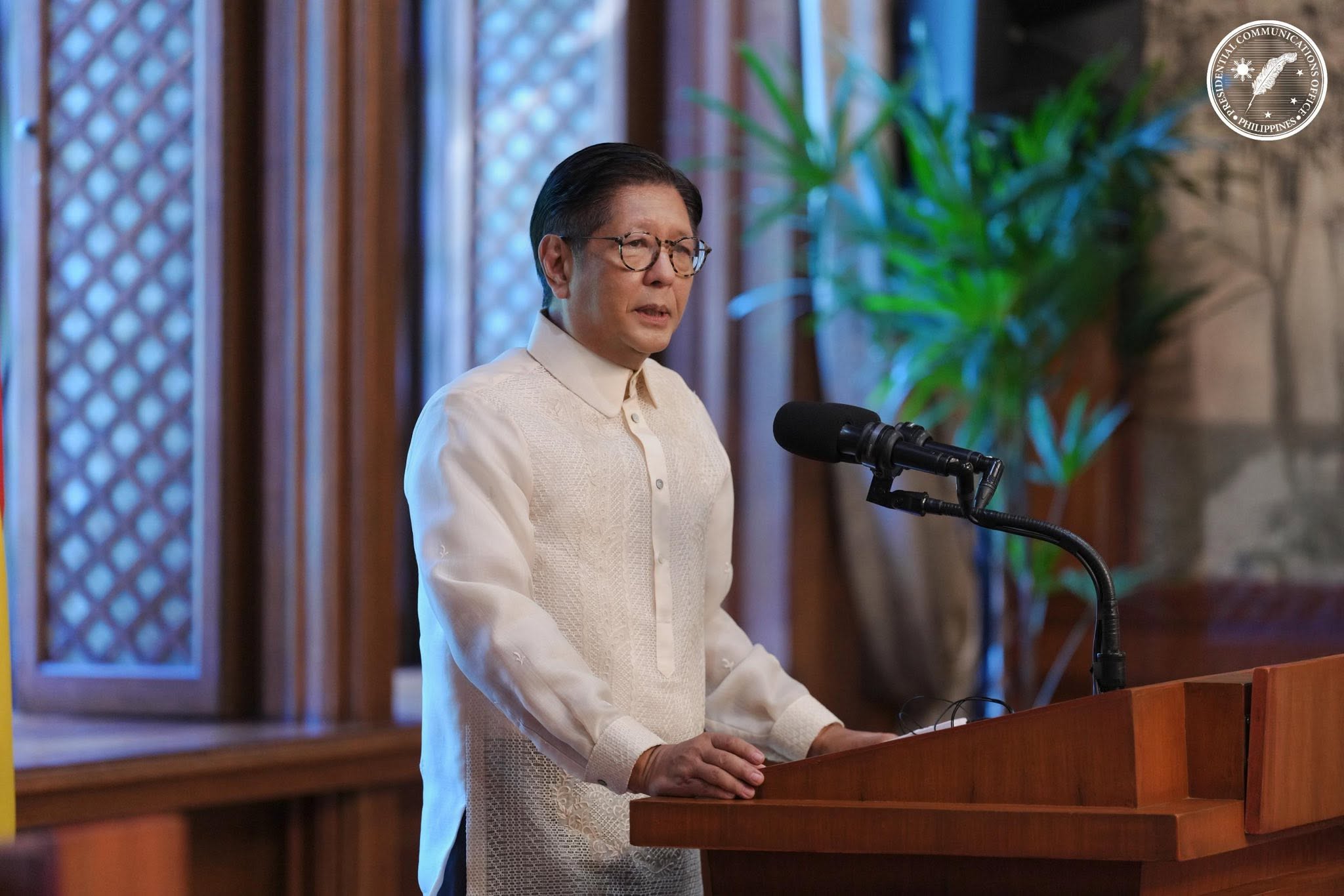

President Ferdinand Marcos Jr. expressed optimism on Tuesday that economies worldwide could begin stabilizing if the newly announced agreement between Washington and Tehran holds and the Strait of Hormuz returns to normal operation.

Speaking alongside visiting German President Frank-Walter Steinmeier at Malacañan Palace, the Philippine leader framed the development as cause for cautious hope rather than certainty. “Any step towards peace is a good step, and that is hopefully what we are observing here,” he told reporters.
Marcos was careful to note that earlier US declarations about resolving Gulf hostilities had not always materialized, prompting his measured tone. “So we hope, we pray that this is the case, that it is over, the war is over, and it will be a lasting peace,” he said.
The President tied his hopes directly to the welfare of ordinary Filipinos, pointing to the petroleum-driven price shocks that accompany conflict in the region. He said a durable settlement would allow governments to “once again bring our economies to a normal state and be able to support our people properly, and without suffering the vagaries of price rises that come with such a petroleum crisis.”

During their bilateral discussions, Marcos said, Steinmeier described how the Middle East crisis had weighed on Germany. The two leaders agreed that the disruption had rippled across the globe, with Marcos observing that recovery would not be immediate even as fighting winds down. “And therefore, we await with bated breath the actual finalization of that agreement,” he said, calling the prospect “some of the best news that we could hope for if indeed it comes to fruition.”
Tempering the optimism, Palace Press Officer Claire Castro relayed an assessment from Economy, Planning, and Development Secretary Arsenio Balisacan warning that relief at the pump and in markets could be slow to arrive. Reading his statement during a briefing in Kazan, Russia, she said damaged infrastructure, broken supply chains, and drawn-down stockpiles meant “it may take months before global prices fall to prewar levels.”
Steinmeier’s trip marks the first visit by a German head of state to the Philippine capital in more than six decades, the last having taken place in 1963. He and his wife, Elke Büdenbender, were formally welcomed by the President and First Lady Liza Araneta-Marcos at the Kalayaan Grounds before the two couples proceeded to a wreath-laying at the Rizal Monument in Luneta.
