



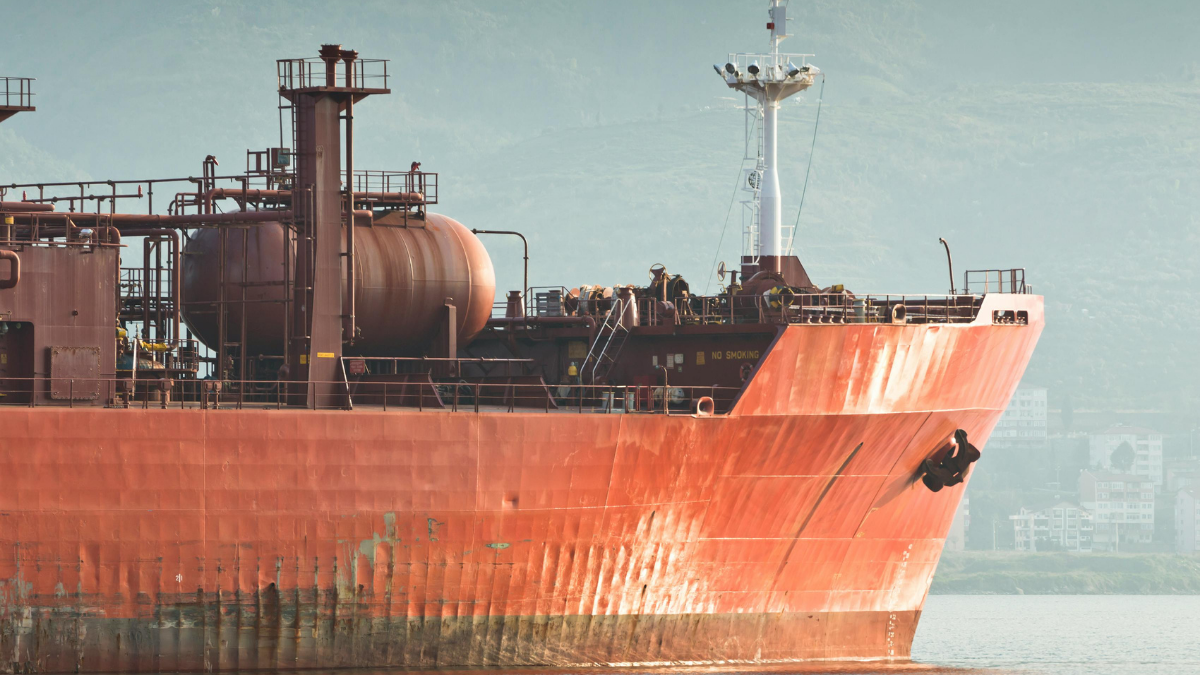

Iran’s state oil chief said the country has moved over 25 million barrels of crude past the blockade line in the span of a week, an assertion made on state television Sunday by Hamid Bovard, who heads the National Iranian Oil Company. The claim landed as diplomats from Tehran and Washington opened their first round of negotiations under an interim peace arrangement — talks that ran into trouble almost immediately.

The Iranian delegation walked out of the venue in Switzerland after roughly 80 minutes, according to Iran’s IRNA news agency, which said the team left following a meeting with Qatari mediators. IRNA tied the early exit to a message US President Donald Trump posted on X as the session began, characterizing his remarks as insulting and saying the discussions had reached a difficult stage. State broadcasters in Iran reported that the round, mediated by Pakistan and Qatar, did not touch on the country’s nuclear program at all; the focus instead fell on carrying out the memorandum of understanding between the two governments and on the situation in Lebanon.
Trump used Sunday to issue a string of warnings, threatening renewed military action against Iran unless it reined in Hezbollah and saying he was prepared to strike the country hard again. The talks had convened just after Iran declared the Strait of Hormuz shut once more, a move Tehran linked to fresh Israeli airstrikes a day earlier that killed at least 30 people across eastern and southern Lebanon.
Shipping data showed the number of vessels clearing the Strait dropped off steeply on Sunday once Iran announced the renewed closure, which it justified by pointing to what it called Israeli and US breaches of the interim deal. Estimates cited in reporting put as many as 20,000 sailors stuck aboard ships in the waterway while the channel stayed sealed and negotiations continued.

Other producers in the region have moved to fill gaps left in the market over the past week, with the United Arab Emirates, Kuwait and Iraq putting additional volumes in front of buyers. Iraq’s deputy oil minister for upstream affairs said in a Sunday statement that Baghdad intends to bring crude output back up in stages, targeting a band of 4.2 million to 4.3 million barrels per day.
The Strait has been a flashpoint since late February, when a coordinated US and Israeli air campaign against Iran killed Supreme Leader Ali Khamenei and triggered Iranian missile and drone retaliation against Israel and US-allied Gulf states. Iran first declared the waterway closed in early March and has kept traffic to a trickle since, periodically making exceptions for ships from countries it regards as friendly. Roughly a fifth of the world’s seaborne oil ordinarily passes through the channel, which separates Iran from Oman at the mouth of the Persian Gulf.
Markets read the latest disruption as a setback to hopes the chokepoint would reopen soon. Brent crude rose 54 cents, or 0.67 percent, to $81.11 a barrel in early Monday trading after climbing as high as $82.30, while US West Texas Intermediate futures gained $2.02 to $78.62 ahead of that contract’s expiry. Saul Kavonic, head of energy research at MST Marquee, said traders had gotten ahead of themselves in betting on the Strait opening back up.
