



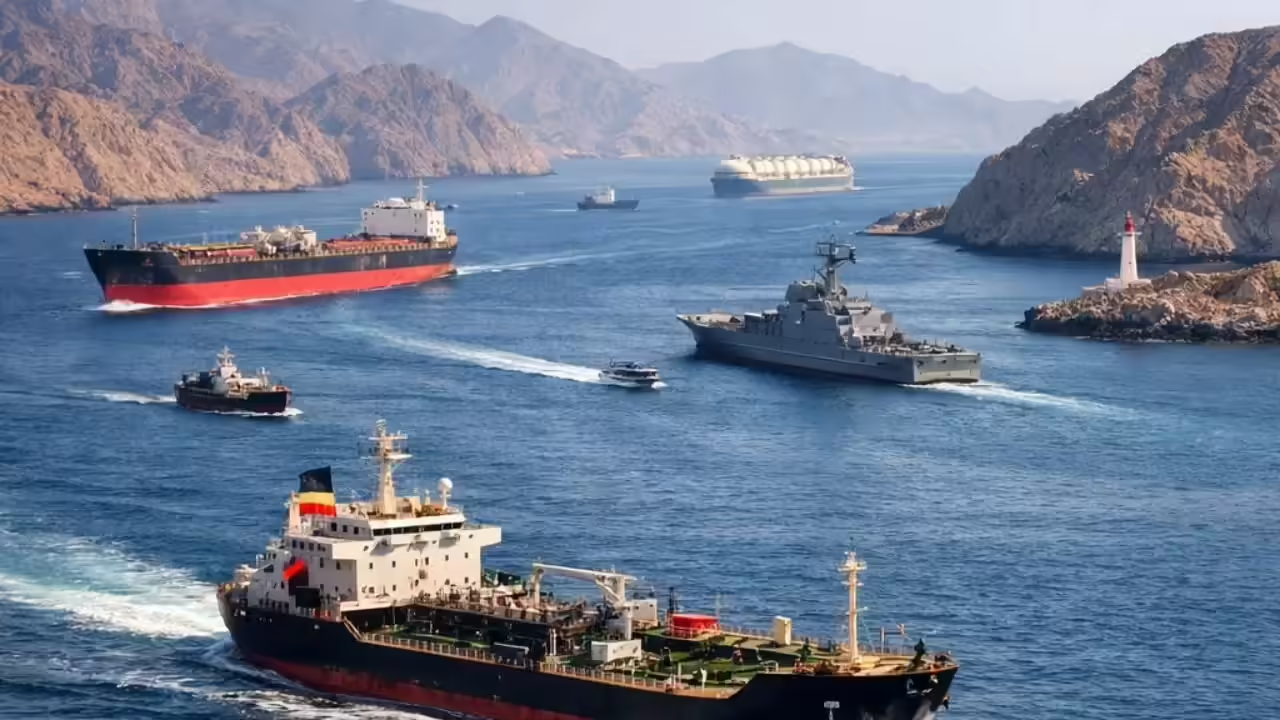

The Islamic Revolutionary Guard Corps formally announced Friday that the Strait of Hormuz is closed, warning that any vessel attempting to pass through the critical waterway will face “strict measures” — a declaration that came even as U.S. President Donald Trump granted Tehran a ten-day reprieve from threatened strikes on its energy infrastructure.

Three container ships of varying nationalities attempted to enter the strait Friday but were turned back after receiving warnings from IRGC naval forces. The Guard made clear the closure was absolute, stating that ships bound for or departing from ports of nations it considers allied with or supportive of the United States and Israel would be blocked without exception.
Trump had issued an ultimatum threatening the destruction of Iranian power plants before announcing the extension Thursday via Truth Social. “As per the Iranian Government’s request, please let this statement serve to represent that I am pausing the period of Energy Plant destruction by 10 days to Monday, April 6, 2026, at 8:00 P.M. Eastern Time,” he wrote. He insisted the ongoing talks were progressing well, dismissing contrary reports as misinformation from what he called the “Fake News Media.”

White House Press Secretary Karoline Leavitt reinforced that position Wednesday, describing negotiations with Tehran as continuing and constructive. “Talks continue. They are productive, as the President noted on Monday, and they remain so,” she said, adding that initial Iranian resistance to American proposals had not broken the dialogue.
Israel’s Channel 12 reported Wednesday that Tel Aviv is preparing for the possibility of a Trump ceasefire announcement as early as this Saturday. A fully detailed agreement is considered unlikely, but a framework deal is reportedly under discussion — prompting Israeli officials to position themselves for rapid diplomatic movement.
On the regional diplomacy front, Egyptian Foreign Minister Badr Abdelatty held separate phone calls with his Pakistani and Turkish counterparts to coordinate efforts aimed at bringing Washington and Tehran to direct negotiations. The three ministers agreed that concerted multilateral pressure toward dialogue remains the only viable alternative to a military escalation that risks pulling the broader region into open conflict. Abdelatty expressed hope that joint mediation by the three countries could contribute to a gradual reduction in hostilities.
