



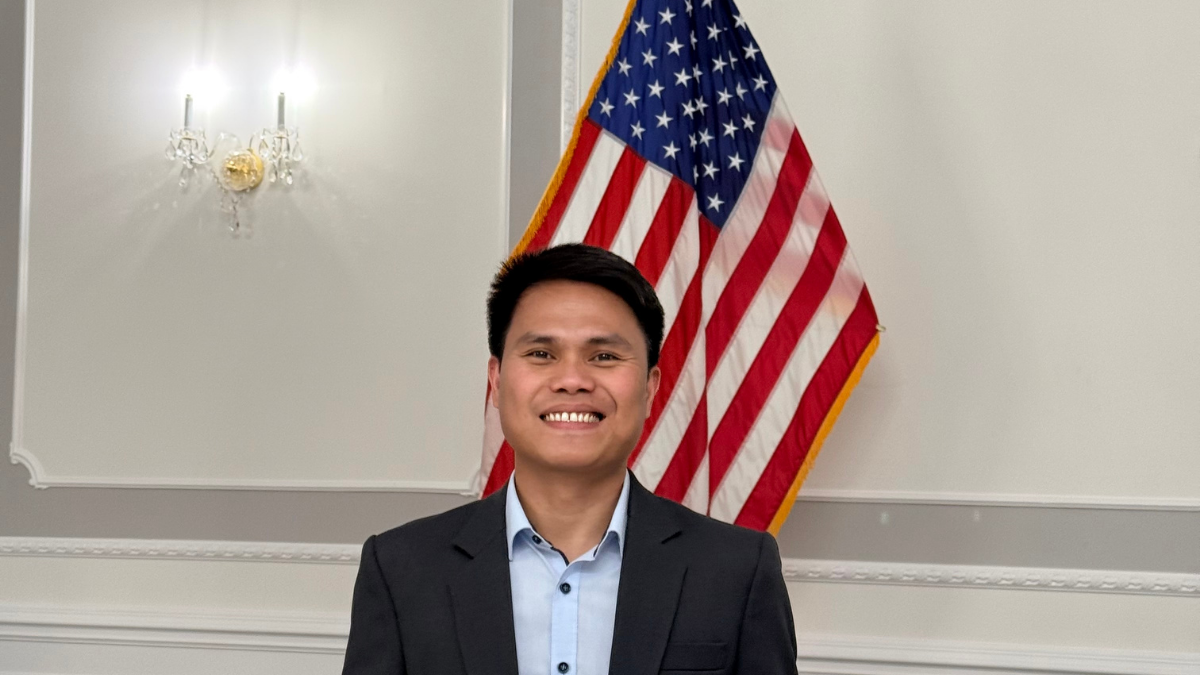

Every overseas Filipino worker carries a private arithmetic: the years counted against the distance, the sacrifices weighed against the dream that set them in motion. For Richard Bilo Bonaagua, that arithmetic began in Malilipot, Albay, and ten years later, on June 6, 2026, it added up to a milestone he marked from a fifth-grade classroom in Michigan.

But the figure who sent him there never saw the result.
A father’s dream, carried forward
Bonaagua had eight years of teaching behind him in the Philippines before he ever boarded a plane. The decision to leave wasn’t about ambition for himself. “One of the main reasons I pursued working abroad was to fulfill my father’s dream of seeing one of his children work overseas and help improve our family’s quality of life,” he says.
His father died in November 2015, a year before Bonaagua moved to Saudi Arabia to teach first grade. The dream outlived the man who held it. “His dream and my parents’ sacrifices were my motivation to fulfill my dreams, not for myself but for my family.”


Saudi Arabia tested him in ways the classroom never had. Everything was unfamiliar — language, customs, the expectations placed on an international teacher. He learned independence the hard way, building a support system thousands of miles from anyone who had known him as a boy. Then came the news that turned adjustment into ordeal: a year into the job, his mother was diagnosed with cancer.
“Being thousands of miles away during such a difficult time brought feelings of worry, helplessness, and guilt,” he recalls. He kept working, kept sending support home, kept showing up for students who had no idea what their teacher was carrying. “That experience taught me perseverance, sacrifice, and the importance of cherishing every moment with loved ones, even when distance separates us.”
Teaching through a war
Five years in Saudi Arabia gave way to Ukraine, where Bonaagua taught the Cambridge curriculum to students from across the world. He thrived on the mix — the diverse classrooms, the colleagues from different countries, the constant exchange of how to teach better. It was, by his account, the kind of international setting he had imagined when he first dreamed of going abroad.

Then, in 2022, the war arrived.
He left the country but not his students. Lessons continued online, across time zones and air-raid sirens, because stopping was never something he considered. “While the conflict disrupted daily life and created fear and uncertainty, I knew that my students still needed stability, guidance, and a sense of normalcy,” he says. “Education became more than just academics — it became a source of hope, connection, and reassurance during a very difficult period.”
What kept him going was partly what he saw in the people around him. “Seeing students remain eager to learn and stay connected inspired me to persevere,” he says. The classroom had taught him to deliver lessons. The war taught him that teaching, at its core, is about uplifting young people when they need it most.
The American classroom
Michigan is the latest chapter, and Bonaagua calls it his American dream realized. It comes with its own demands. American students are encouraged to speak up, to think independently, to push back — which means a teacher spends real energy on motivation and behavior. He doesn’t mind the work. “I enjoy helping students discover their potential and become engaged learners,” he says, crediting strong relationships and meaningful lessons for keeping his class invested.
He values, too, the room the system gives him. U.S. schools, he notes, often hand teachers more autonomy in planning and strategy, with the emphasis on critical thinking and collaboration rather than the high-stakes exams that dominate elsewhere.
This year, both his school and the AAYSP Foundation named him Teacher of the Year — recognition that, to him, points backward as much as forward. “It reminds me of the people who shaped me — my family, mentors, colleagues, and especially my students,” he says.
To the young Filipinos eyeing the same path, his advice is unadorned: stay committed, stay humble, keep growing. “The path will not always be easy, but every challenge will build your strength and character.” It is the lesson of a man who never forgot his mantra — that where you come from may be humble, but it will never limit where you can go.
