



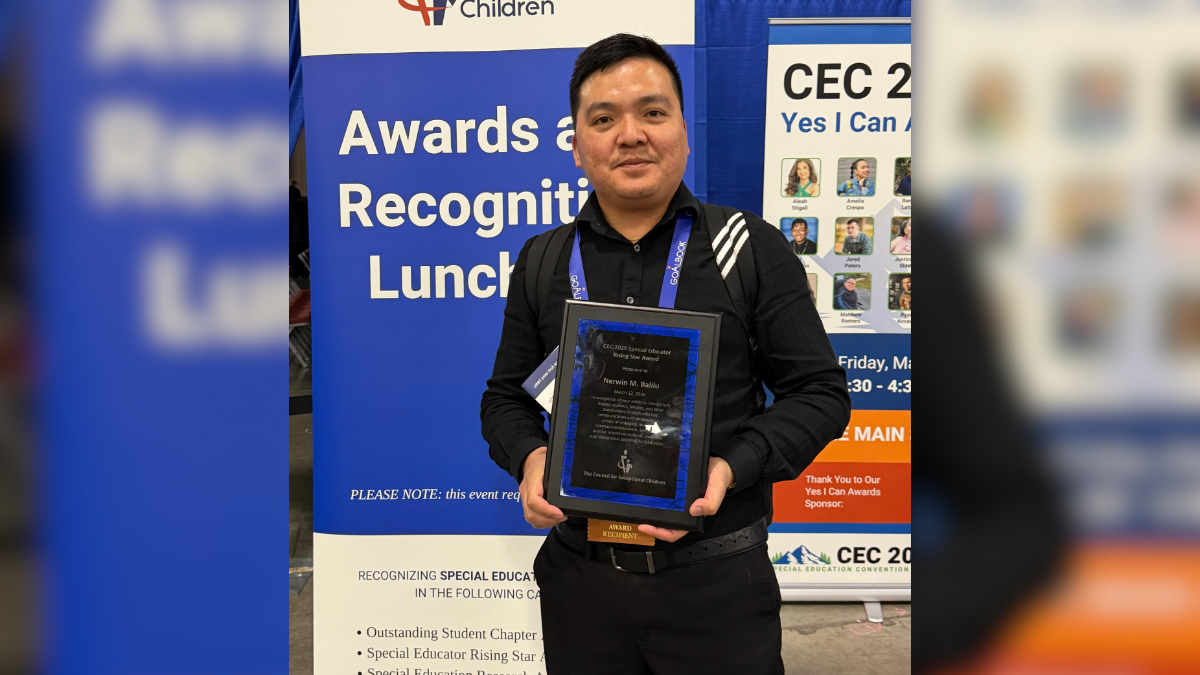

There is a particular kind of courage required to walk into the same building every morning when your heart is pounding and your eyes are still swollen from the night before. For Nerwin Montecalvo Balilu, that building was a middle school in the Arizona desert — and for months, it nearly broke him.

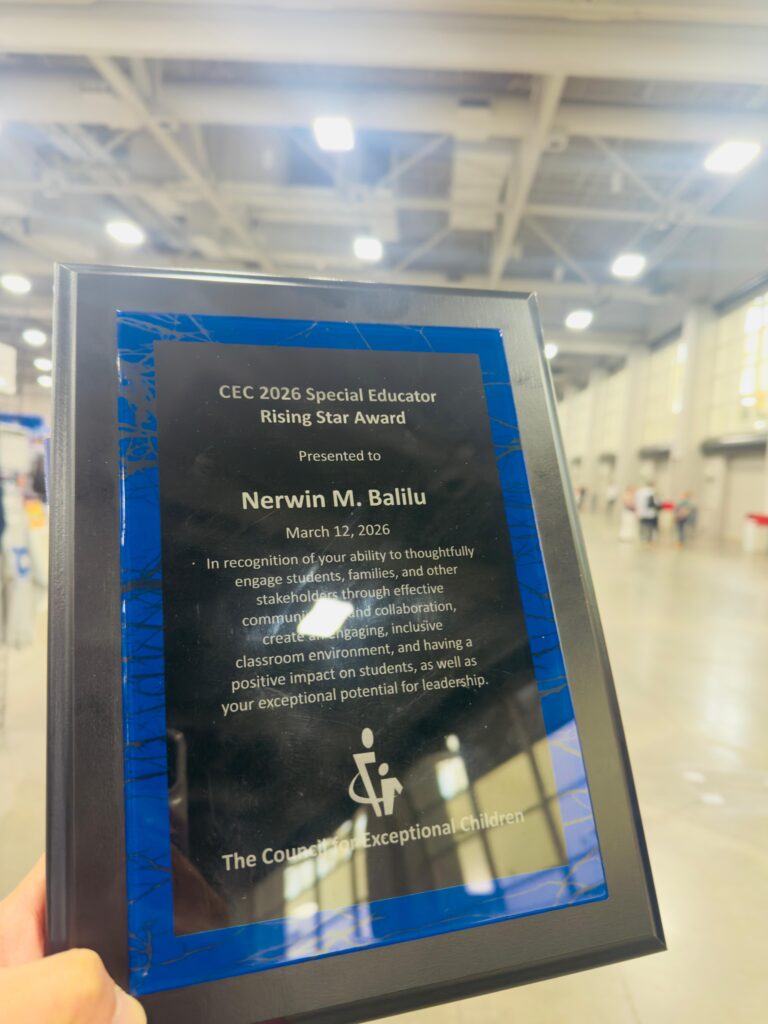
The man who would go on to win the 2026 Council for Exceptional Children National Special Educator Rising Star Award — the highest recognition of its kind in the United States — once sat alone every night, crying, wondering if he had made the biggest mistake of his life.
He had not.
When the classroom fights back
Balilu grew up in Pampanga, a province in Central Luzon known for its culinary tradition, its resilient people, and a cultural value he still carries with him: malasakit — compassion, the kind that moves a person to act.
He came to the United States as an international teacher with a solid foundation in general education, having taught high school English and served as a part-time college instructor back home. What he was not prepared for was the behavioral landscape of an American middle school.
“The culture shock of American middle school behavior was overwhelming,” he recalled. “I was literally crying every night. I remember the feeling of my heart palpitating every morning just seeing the school building; the anxiety was that real.”
His colleagues were supportive. His administration believed in him. But Balilu came to understand that external support, no matter how genuine, could not substitute for internal transformation. The realization, when it came, was blunt: the change had to start with him.
“I couldn’t change the students until I changed my approach,” he said. He overhauled everything — his wardrobe, his speech, his entire classroom philosophy. He built iron-clad routines, structured his lessons more deliberately, and set consistent expectations. More critically, he stopped trying to manage students from a distance and started meeting them with both structure and heart.
The results did not arrive overnight. But they arrived. The teacher who had once dreaded walking through the school gate became, in time, someone his students trusted completely.
The path into special education
Balilu’s move into special education was not planned. It was observed.
When he first arrived in the U.S. as an English teacher, he noticed something that had no equivalent in his Philippine classroom experience: students with learning and emotional disabilities being pulled out of class, or having resource teachers come in to support them — a structured, specialized system built around individual need. He was intrigued.
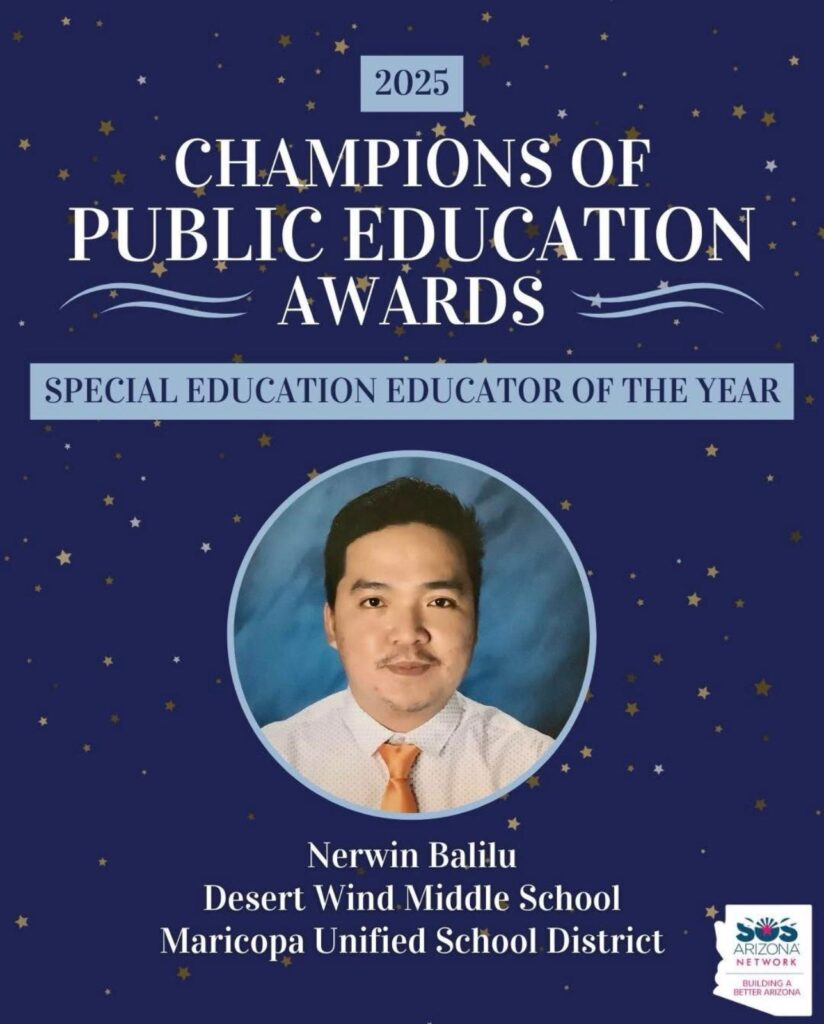
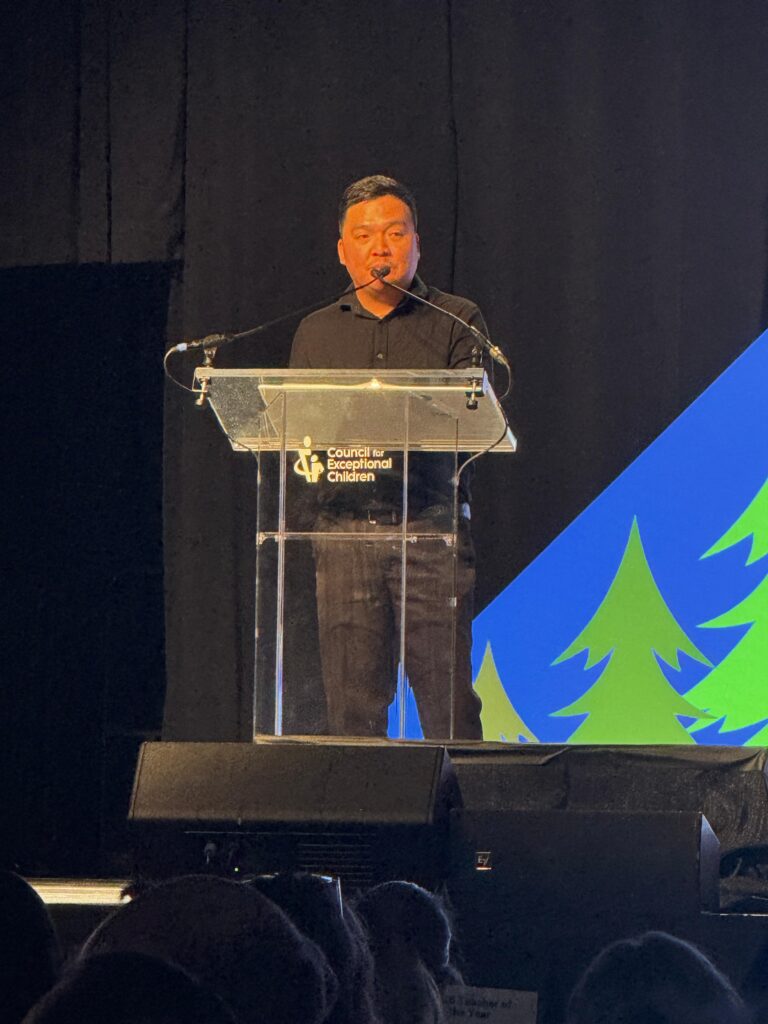
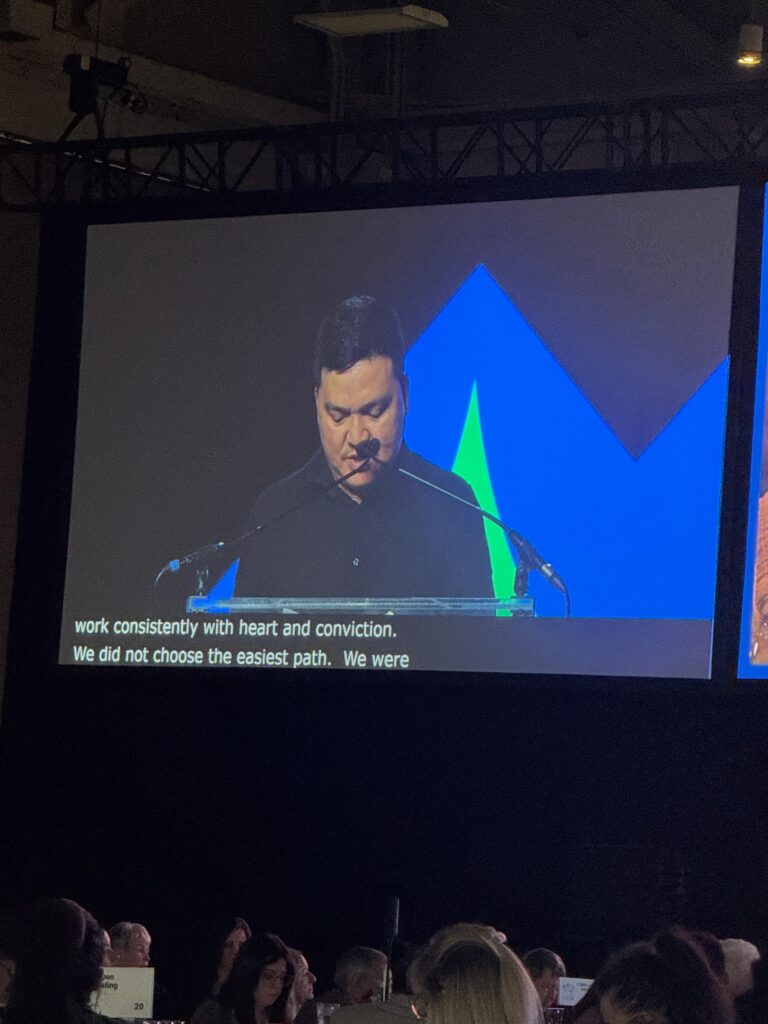
At home, his housemates were all special education teachers. They would ask him, given his background as a school paper writer, to help draft professional goals and descriptive statements for documents he later learned were IEPs — Individualized Education Programs. The technical writing came naturally. The purpose behind those words stayed with him longer.
“I didn’t just want to watch these students struggle from the sidelines of a standard English curriculum,” he said. “I wanted to be the one providing the ladder they needed to climb.”
He pursued and completed a Master’s degree in Special Education. Today, as a special educator and ELA inclusion teacher at Desert Wind Middle School in Maricopa, Arizona, he also serves as his department’s chair — mentoring colleagues in the morning, pulling small groups of students twice a week to work on reading and writing goals, and spending hours gathering data and drafting IEPs that he describes as “a true roadmap for each child’s unique journey.”
The disability, he has come to believe, is never the ceiling. The real barrier is the absence of the right support.
What a name being called at a national convention actually feels like
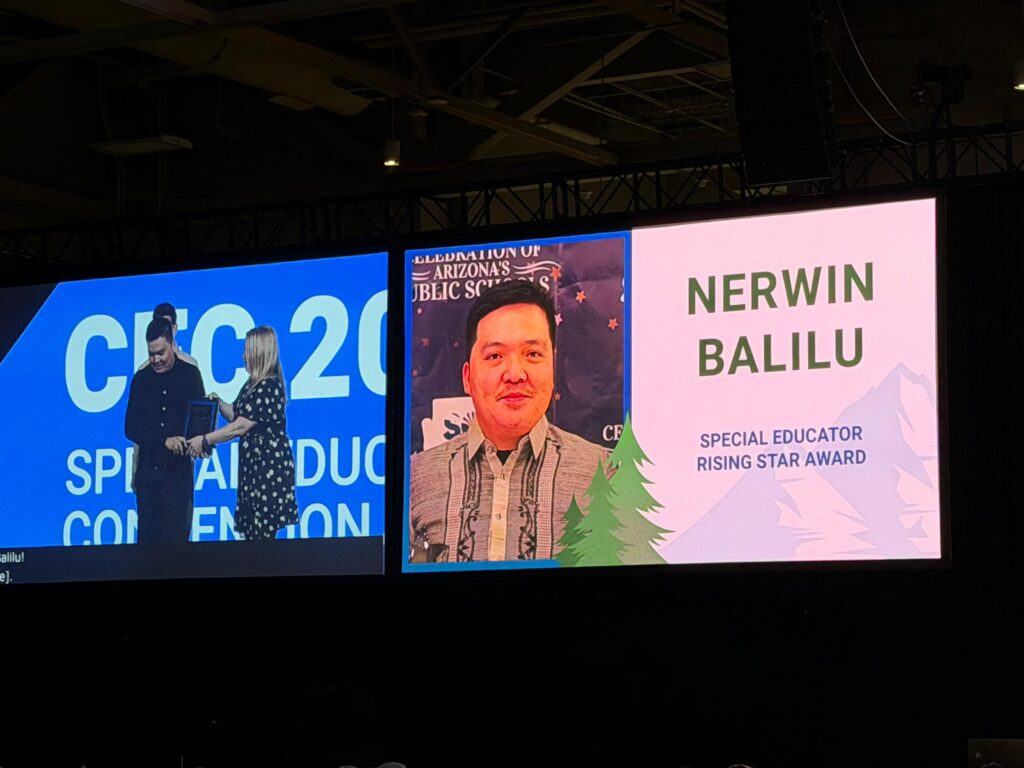
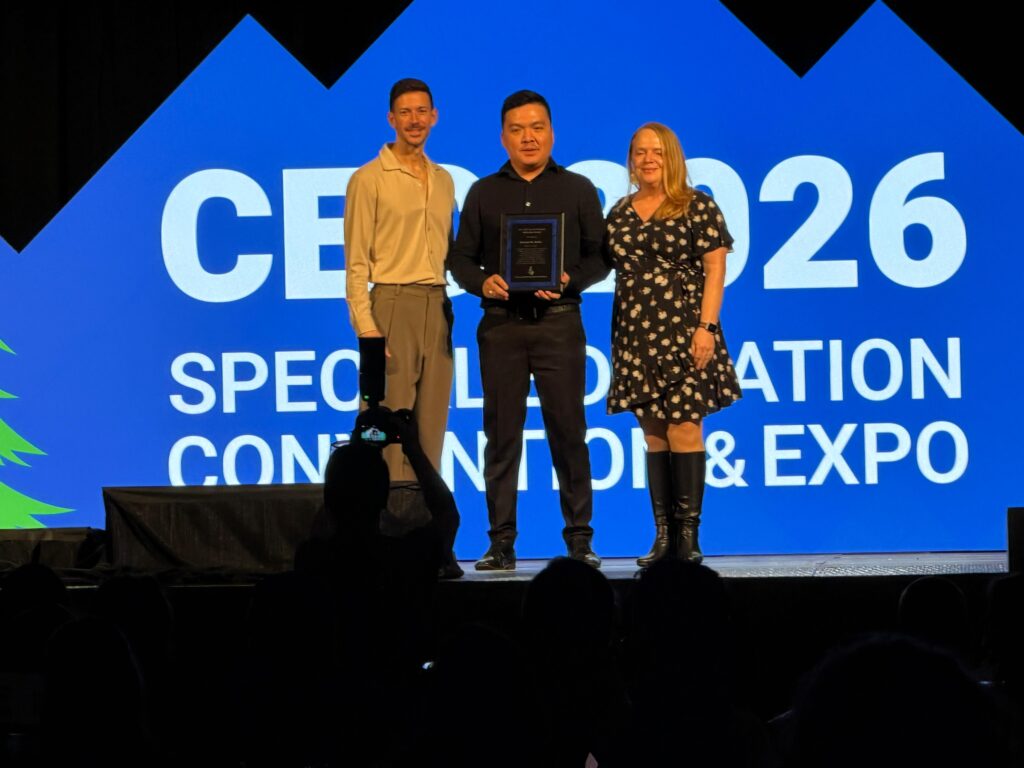
In April 2026, at the Council for Exceptional Children Convention in Salt Lake City, Utah, Nerwin Balilu’s name was announced as the national winner of the Special Educator Rising Star Award. It was his 11th professional recognition — and his largest stage yet.
“Surreal is the only word that comes close, yet it still feels inadequate,” he said of the moment.

His mind did not linger in that ballroom. It traveled — back to Angeles City National Trade School in Pampanga, where he first stood in front of a class. It traveled to Republic Central Colleges, his alma mater. It traveled to the faces of the students at Desert Wind who had trusted him enough to try.
And it traveled to the broader community of Filipino teachers working across the United States.
“In that moment, it felt like I wasn’t just standing there for myself — I was waving our flag with pride and honor,” he said. “It was a humbling reminder that while the journey was often lonely and difficult in the beginning, I was never truly alone.”
The award is Balilu’s 11th recognition across local, district, state, and now national levels, a list that includes the 2025 Desert Wind Middle School Teacher of the Year, the 2023 Second Step Educator of the Year (national winner), and four consecutive years as a District Legendary Teacher. He is open about the weight that accumulates with each new recognition — not in a way that burdens him, but in a way that clarifies his responsibility.
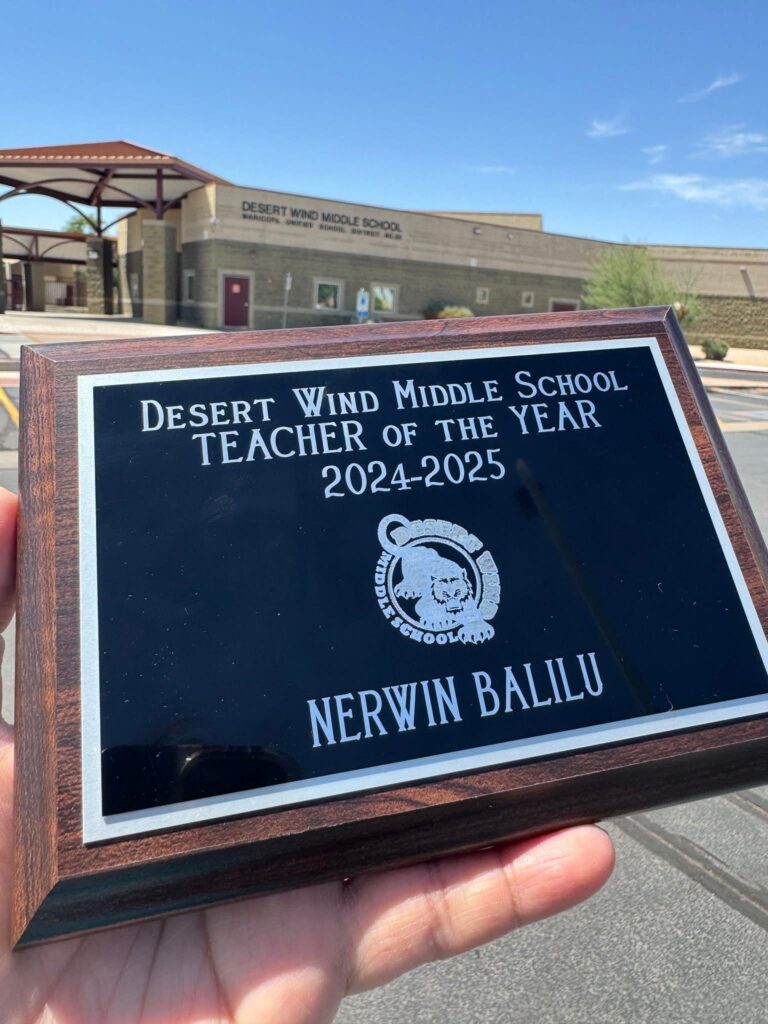
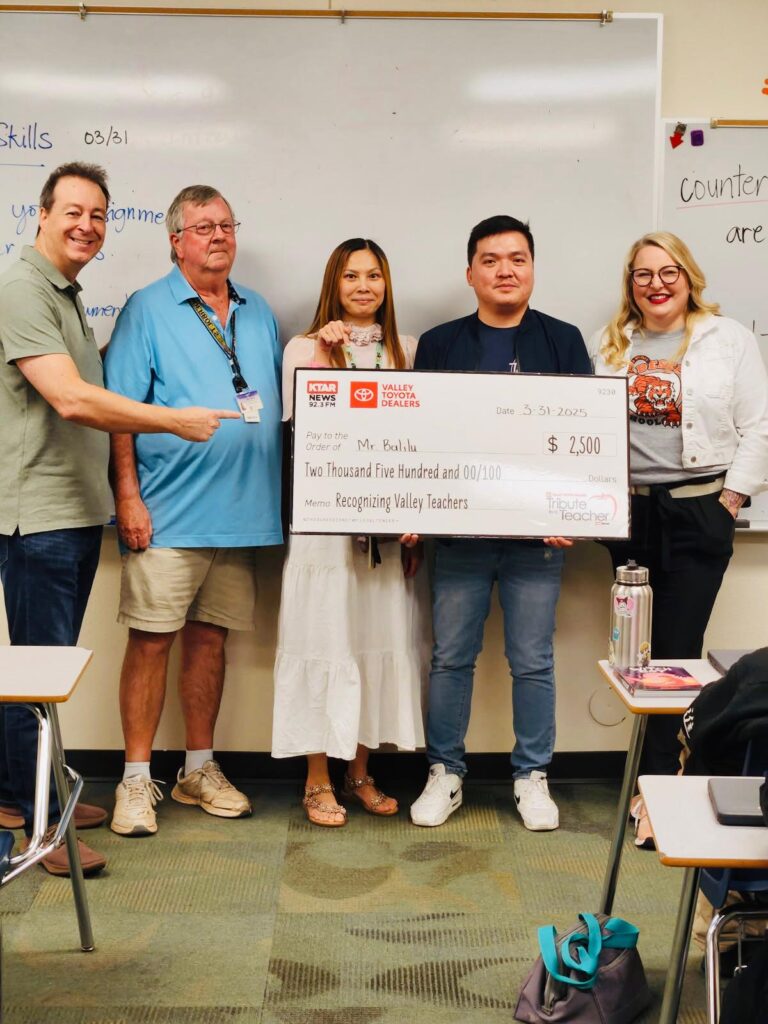
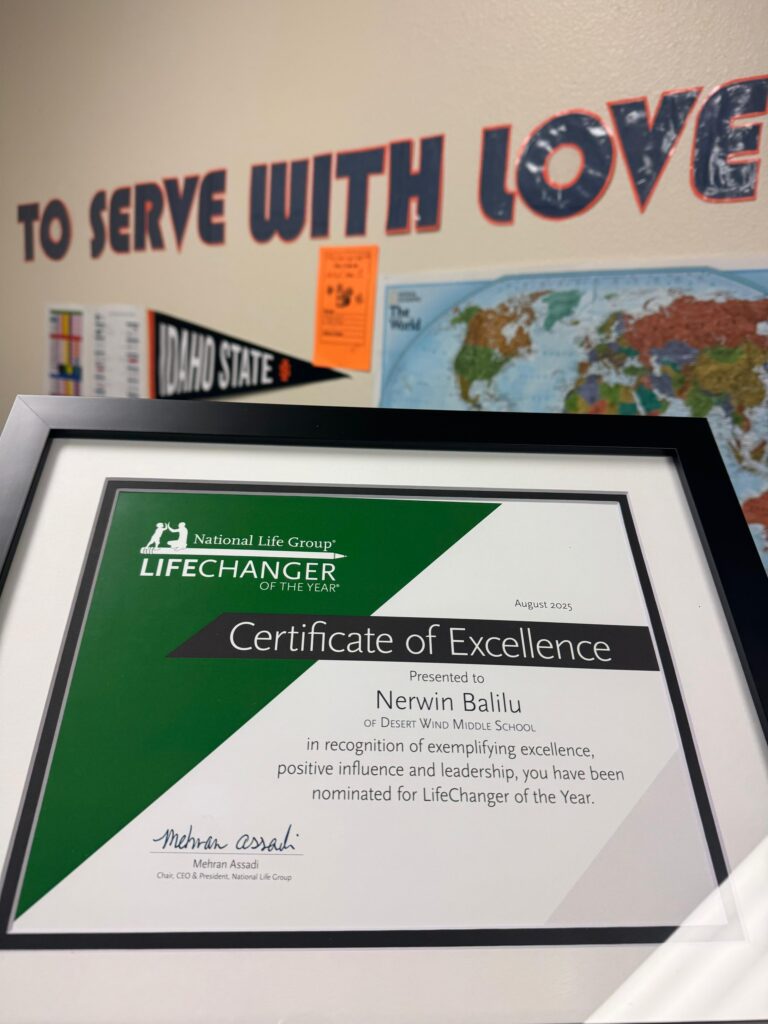
“Whenever I receive an award, my first thought isn’t about the achievement itself; it’s about the work that still needs to be done,” he said. “The higher the award, the louder the voice I am given to advocate for students with learning disabilities.”
The student who learned he was capable
Among the many students Balilu has supported over the years, one story stays with him more than most.
He worked with a young man — whose identity he protects carefully — across all three years of middle school, first as his ELA resource teacher and later as his case manager. In sixth grade, the student was overwhelmed. Writing activities paralyzed him, not from inability, but from fear. On difficult days, the only thing that helped him begin was hearing Balilu say, quietly, you can do it.
When the student struggled in other classes, teachers would call Balilu to come in. When state testing triggered anxiety too heavy to manage alone, administrators would reach out. Each time, Balilu’s presence — his voice — was enough to get the student moving again.
“I realized that what he needed most wasn’t pressure — it was safety,” Balilu said. “Somehow, he felt seen, protected, and believed in. And that trust became the bridge that allowed learning to happen.”
The student is now in 11th grade. He has exited his IEP services. He still messages his former teacher to say thank you. His parents and grandparents send cards during the holidays.
“Those messages mean more to me than any data point or score,” Balilu said, “because they remind me that sometimes the most powerful thing a teacher can give a student is belief.”
The life behind the legend
He is also, quietly, a bridge-builder. One of the goals closest to his heart is helping other Filipino teachers find pathways to work in the United States — not as a recruitment exercise, but as a mission rooted in his own experience. “Helping other teachers isn’t just about professional recruitment,” he said. “It’s about changing the trajectory of entire families, just as I have done for mine. I believe that great teachers deserve a better life, and I am not just climbing the ladder — I am reaching back to pull others up with me.”
At the end of every school quarter, his classroom smells of Filipino food he has prepared himself. His students eat, watch documentaries about life in the Philippines, and hear stories about children who walk kilometers to school, sometimes barefoot, because the alternative is not going at all.
He does not share these stories to induce guilt. He shares them because he believes gratitude — real, informed gratitude — changes how a person shows up. And showing up, fully, is what he has staked his career on.
“Representing the Philippines as an international teacher in the U.S. has been an incredible journey,” Balilu said. “My goal has always been to be a voice for my students and to show that with the right support, every child — regardless of their learning disability — can reach their full potential.”
The man who once cried every night in an Arizona apartment, dreading the next morning, now walks into school as the backbone and heartbeat of his department — his principal’s own words for him. Eleven awards later, he still insists the metric that matters most cannot be framed or mounted.
It is the moment a child who was once silent finally finds their voice. And realizes they always had it.
