



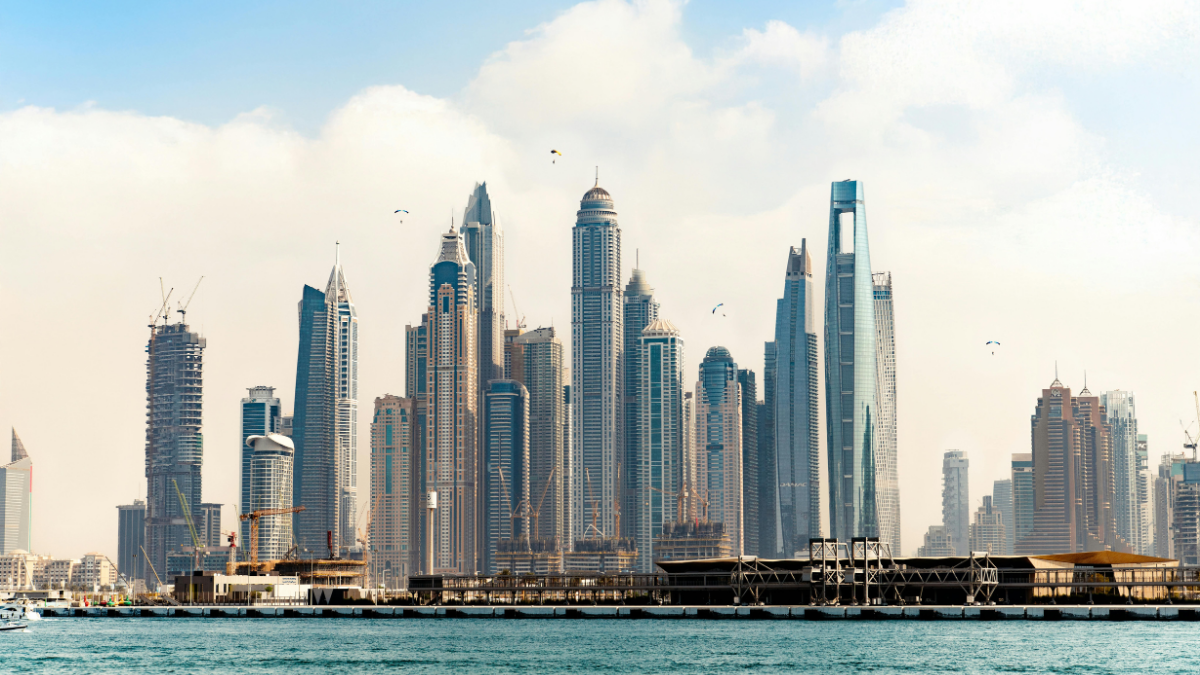

Grade A office space is proving the resilient corner of the UAE property market even as homes and rentals soften, according to a second-quarter assessment from Colliers. On Abu Dhabi’s Al Maryah Island, the Abu Dhabi Global Market was fully occupied and maintaining a waiting list, a sign that firms are still competing for premium workspace. Colliers singled out the office segment in Dubai as the market’s strongest, pointing to off-plan Grade A projects that kept pushing prices up in multiple locations.

The residential picture told a different story. Across Dubai and Abu Dhabi, buyers and renters found conditions loosening between the first and second quarters, which Colliers read as movement toward equilibrium following years of rapid appreciation.
Dubai’s sale prices for apartments and villas each slipped 3 per cent against the prior quarter. Rental rates gave way as well, with apartments down 4 per cent and villas down 2 per cent. Colliers tied the softer tenant demand to several factors at once: growing rental supply, a steady migration from leasing into ownership, and cost considerations that are steering household decisions about location.
Supply continued to build in the emirate. Developers handed over roughly 11,650 units in the quarter, split between 9,200 apartments and 2,450 villas, with a further 56,600 residences slated to finish by year’s end. On the leasing side, the Dubai Land Department rolled out its Flexi Rent program, which lets participating landlords structure payments on monthly, quarterly, or semi-annual schedules.

Abu Dhabi tracked a comparable quarterly cooling. Apartment sale prices there eased 3 per cent and villa prices edged down 1 per cent. The annual comparison remained far stronger, however: apartments held 19 per cent above their year-earlier level and villas 10 per cent higher. Deal activity totaled about 7,200 transactions, an 8 per cent drop from the first quarter but an 83 per cent jump from twelve months prior, with off-plan units making up close to 84 per cent of the total.
Rents in the capital retreated too, following the sharp climb recorded through 2025 and into early 2026. Apartments fell 2 per cent quarter-on-quarter and villas 3 per cent, though year-over-year they remained up 7 per cent and 5 per cent respectively. Roughly 2,200 homes were completed during the quarter, with another 3,200 anticipated before the year closes.
The Northern Emirates registered its own pullback. Apartment rents dropped about 2 per cent on average, with Sharjah posting the steepest quarterly move at roughly 4 per cent. Apartment sale prices fell 3 per cent in Sharjah and 2 per cent in Ras Al Khaimah. Even so, Sharjah led on new construction, with some 4,600 units announced over the quarter. Completions across the Northern Emirates are projected at around 7,450 for 2026, comprising 5,450 in Sharjah, 1,400 in Ras Al Khaimah, and 600 in Ajman.
Al Ain, by contrast, held comparatively firm. Apartment rents there ran 7 per cent above the prior year and villa rents 4 per cent higher, while office and retail rents climbed 3 per cent and 5 per cent respectively.
