



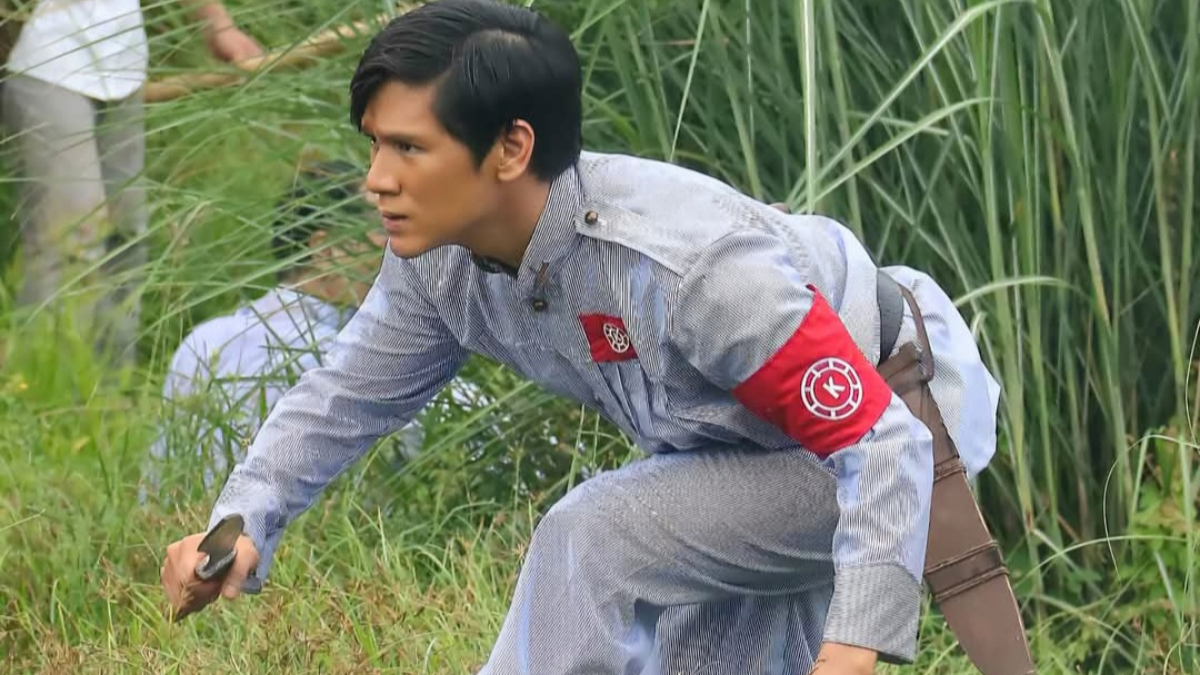

Gerald Santos becomes Emilio Jacinto in an ambitious historical epic directed by Antonino Rommel Ramilo, surrounded by a stellar ensemble of Filipino artists who bring a defining chapter of Philippine history to life.

There are films that tell us what happened. And then there are films that make us feel as though we were there.
‘Liwanag at Dilim: Heneral Emilio Jacinto’ promises to be the latter.
At its heart is Gerald Santos, taking on the formidable role of Emilio Jacinto, the brilliant young revolutionary remembered as the ‘Brains of the Katipunan”, author of the Kartilya ng Katipunan, writer and editor of Kalayaan, and one of the most intellectually compelling figures of the Philippine Revolution.
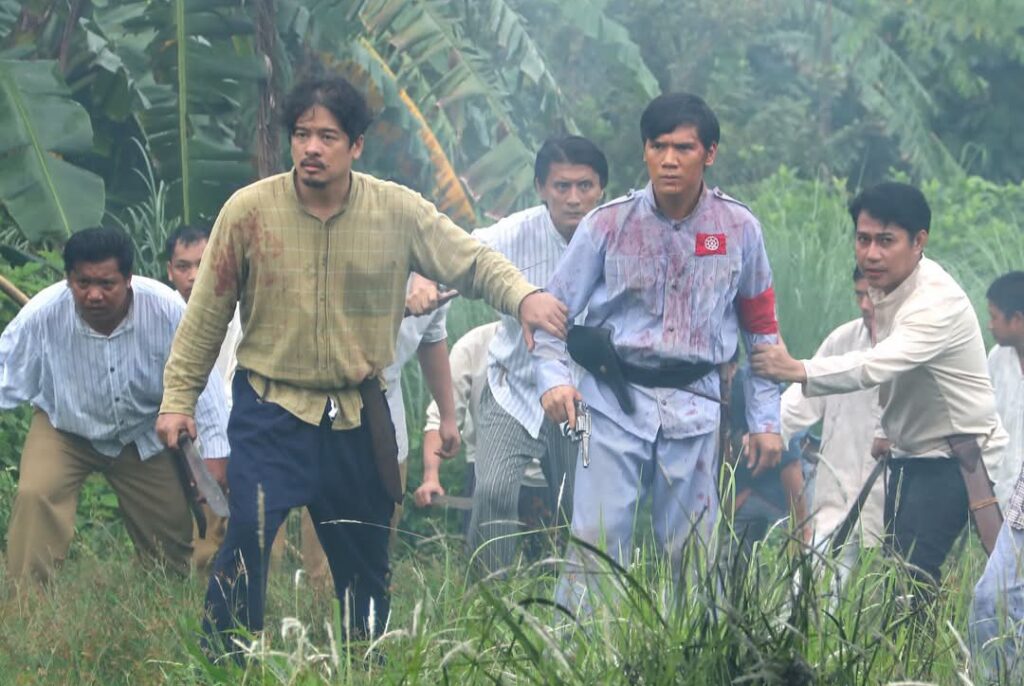


But this is far from a one-man story.
Surrounding Santos is an exceptional ensemble: Alden Richards as Jose Rizal, Sid Lucero as Andres Bonifacio, Aicelle Santos as Gregoria de Jesus, Alexa Miro as Catalina de Jesus, Aljur Abrenica as General Miguel Malvar, Angel Aquino, Mercedes Cabral, Ima Castro, Isay Alvarez, Robert Seña, Nikko Natividad, Jayson Gainza, Alex Medina, John Achaval, and other distinguished Filipino performers.
Behind the camera is Antonino Rommel Ramilo, who serves as writer-director, bringing his vision to his feature-film directorial debut.
Together, they are attempting something more meaningful than simply recreating the past.
They are bringing a forgotten hero back into the Filipino imagination.
GERALD SANTOS: THE MAN BEHIND THE HERO
For Gerald Santos, portraying Jacinto is more than another acting assignment. It is an extraordinary responsibility.
Jacinto was only 23 when he died. Yet by that age, he had already become a revolutionary, writer, thinker, military figure, trusted confidant of Andres Bonifacio, and author of works that would survive generations.
Santos understood that portraying such a man required more than historical costume or physical resemblance. It required immersion.
The actor conducted extensive research into Jacinto’s life and writings and went as far as seeking out and meeting Jacinto’s descendants as part of his preparation. Santos has said that his goal was to portray the revolutionary with the truth and sincerity he deserves.
It is an approach that could make his performance particularly powerful.
Because Santos is not merely playing the ‘Brains of the Katipunan’.
He is playing a young man. A thinker.
A revolutionary. A husband. A friend.
A Filipino who dreamed of freedom without knowing whether he would live long enough to see it.
That humanity may become the soul of his performance.
A STELLAR CAST FOR A STORIED REVOLUTION

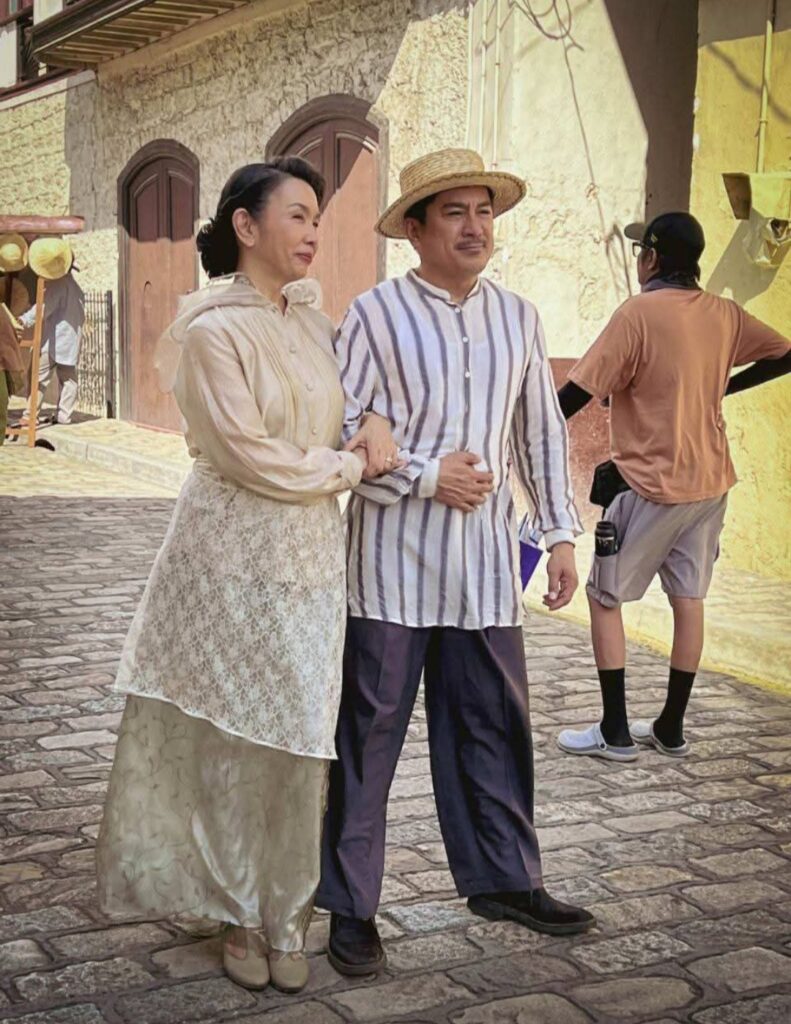

If Santos is the film’s emotional center, its ensemble gives the story its extraordinary breadth.
Alden Richards as Jose Rizal is perhaps one of the most intriguing choices. More than a decade after portraying Rizal in GMA’s ‘Ilustrado’, Richards returns to the role, this time on the big screen. His presence opposite Santos’ Jacinto brings together two towering intellectual forces of Philippine nationalism.
Then there is Sid Lucero as Andres Bonifacio, bringing his intensity to the role of the revolutionary leader whose relationship with Jacinto is central to the story.
Jacinto and Bonifacio were more than comrades. They were brothers in a revolution built on trust, sacrifice and a shared dream of freedom.
Aicelle Santos as Gregoria de Jesus and Alexa Miro as Catalina de Jesus bring another essential dimension to the story, the women whose lives and loves were intertwined with the revolution.
Catalina is especially important to the film’s emotional arc. The story is framed around Jacinto’s final weeks in Majayjay, Laguna, where he battled malaria and was cared for by his wife.
Aljur Abrenica as General Miguel Malvar further expands the film’s revolutionary landscape.
Joining them are respected performers including Angel Aquino, Mercedes Cabral, Ima Castro, Isay Alvarez, Robert Seña, Nikko Natividad, Jayson Gainza, Alex Medina and John Achaval.
The result is not merely a cast.
It is a generation of Filipino talent gathered to tell the story of another generation of Filipinos who changed history.
ANTONINO ROMMEL RAMILO: A DIRECTOR WITH A MISSION
At the helm is Antonino Rommel Ramilo, who makes his feature directorial debut with ‘Liwanag at Dilim’ while also serving as the film’s screenwriter.
Ramilo’s connection with Santos goes back years, having previously directed concerts and events featuring the actor. That familiarity gives the collaboration an intriguing creative dimension, the director already understands the performer he is entrusting with the most demanding role in the film.
But Ramilo’s challenge extends far beyond staging battle scenes.
Jacinto was not simply a revolutionary who fought.
He was a revolutionary who thought.
His writings wrestled with freedom, morality, government and the responsibilities of citizens, ideas that remain remarkably relevant today.
That gives Ramilo the opportunity to create something richer than a conventional historical epic, a film in which action and ideas, public sacrifice and private emotion, history and humanity exist side by side.
And perhaps his most powerful directorial choice is to frame the story around Jacinto’s final days.


Instead of ending with triumph, the film moves toward mortality.
Instead of the grandeur of the battlefield, it eventually brings us into the intimacy of a young man’s final moments.
That contrast could become the film’s greatest emotional strength.
WHEN HISTORY IS TREATED WITH REVERENCE
The filmmakers have also undertaken extensive historical research.

Public historian and academic Michael Charleston “Xiao” Chua has served as historical consultant, with his involvement extending deeply into the screenplay and development of the project. Reporting on the film notes the care taken to distinguish what is historically documented from what must be artistically interpreted.
That commitment matters.
Jacinto’s life contains gaps in the historical record, and any film attempting to recreate it must balance imagination with responsibility.
At the center of that research is Jacinto’s own intellectual legacy.
His ‘Liwanag at Dilim’ is not merely a poetic title. It reflects his thinking about freedom, morality and political authority, ideas that scholars continue to examine today.
This makes the film’s title particularly resonant. Light and darkness.
Knowledge and ignorance.
Freedom and oppression. Hope and despair. Life and death.
The Philippines of Jacinto’s time stood at that threshold.
And Jacinto became one of its brightest young lights.
A YOUNG MAN WHO BECAME A LEGACY
Perhaps the most moving truth about Emilio Jacinto is how young he was.
At an age when most people are still discovering who they are, Jacinto was helping define what a nation could become.
He wrote. He fought. He loved. He sacrificed.
And he died before his 24th birthday.
That is the tragedy at the center of ‘Liwanag at Dilim’.
But it is also its inspiration.
Because Jacinto’s life may have been short, but his ideas were not.
His words survived the revolution.
They survived colonial rule.
They survived generations.
And now they are returning to the screen.
Through Gerald Santos’ deeply researched portrayal.
Through Antonino Rommel Ramilo’s vision and direction.
Through a stellar ensemble led by Alden Richards, Sid Lucero, Aicelle Santos, Alexa Miro and Aljur Abrenica, alongside an accomplished supporting cast.
And through a production determined to treat Philippine history not as a distant memory, but as something alive.
THE LIGHT THAT REFUSES TO DIE
Perhaps that is what makes ‘Liwanag at Dilim’ so compelling.
It is not simply a film about Emilio Jacinto.
It is a film about what remains after a life is gone.
A man’s body can disappear.
A generation can pass.
An empire can fall.
But an idea can survive.
Jacinto’s greatest legacy was not simply that he fought for freedom.
It was that he believed freedom required conscience, responsibility and moral courage.
More than a century later, those questions remain ours.
And so, when Gerald Santos looks through the eyes of Emilio Jacinto, when Sid Lucero’s Bonifacio stands beside him, when Alden Richards returns as Rizal, and when an extraordinary Filipino ensemble gathers around them, the audience is offered something more than a history lesson.
They are offered a chance to remember. To feel. To question.
To see the revolution not as a collection of dates and names, but as the story of young Filipinos who dared to believe that another future was possible.
That may ultimately be the greatest promise of ‘Liwanag at Dilim’.
To take a hero who has stood too long in the pages of history, and bring him back into the light.
And perhaps, in doing so, remind us that the light Emilio Jacinto carried more than a century ago was never truly extinguished.
It was only waiting for us to see it again.
