



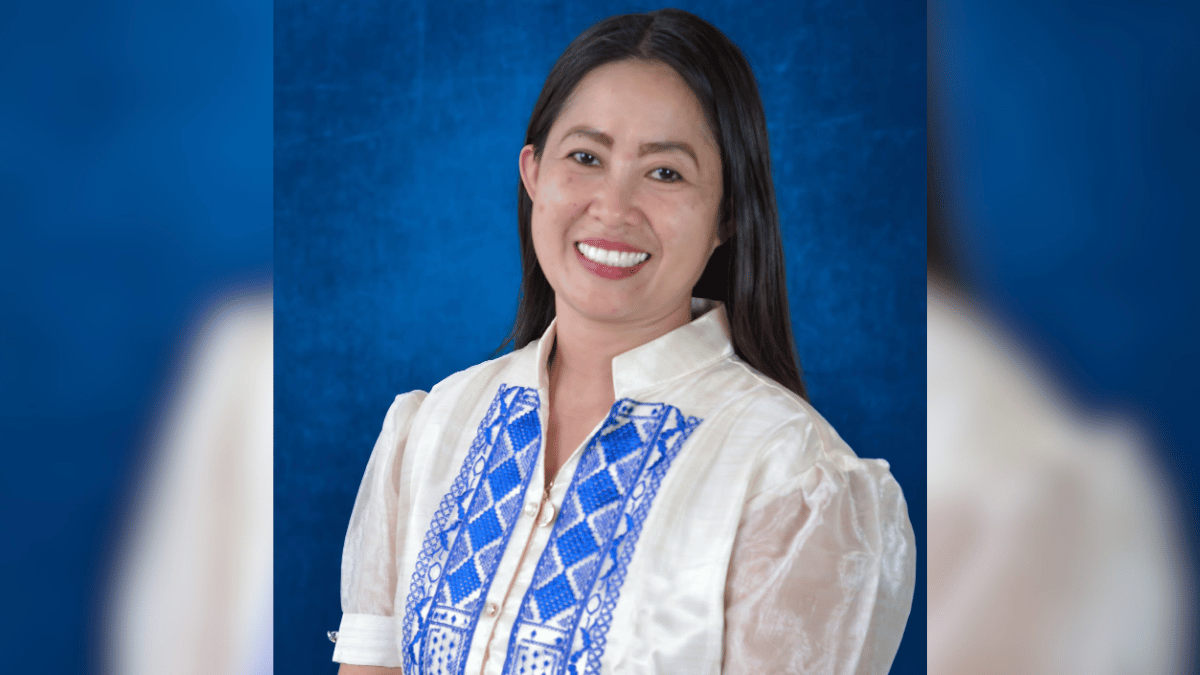

Every year, thousands of Filipino teachers step into classrooms far from home, carrying lesson plans in one hand and a quiet fear in the other. Most people imagine the hard part is the teaching. It isn’t. The hard part is the silence that comes after the school day ends, in an apartment where the language on the television makes no sense and the nearest family member is a time zone and an ocean away. Daisery P. Triviño knows that silence now. She has only lived inside it for a month, but already she can tell you exactly what it demands of a person.

At 42, she is an Assistant Language Teacher at Kanan Junior High School in Osaka Prefecture, placed there through Japan’s JET Programme. On paper, her arrival in July 2026 looks like an ending — the reward at the finish line of a long teaching career. In practice, she describes it as a beginning she is still very much in the middle of. “I am still in the process of adjusting, learning, and understanding my new environment,” she shares with TGFM, and there is no false modesty in it. It is simply where she stands.
A decade before Japan
Before Osaka, there was Laiya. For nearly ten years, the Batangas-born educator taught Social Studies at Laiya Integrated National High School, working with students in Grades 8 through 10. The job was the full weight of what teaching actually is: planning lessons, grading, building materials from scratch, running a classroom, and — the part that rarely fits into a job description — carrying students through the personal and social storms that shape whether they learn at all.
She was good at the human side of it. “One area where I believe I excelled was in creating engaging learning experiences and building positive relationships with my students,” she says. Her method was less about pedagogy and more about connection. She tied lessons to real life. She pushed quiet students to speak. She stayed late for the school programs and collaborative projects that never earned overtime but earned something harder to measure. For most of her career, this was enough. She had a purpose and a place, and she filled both.
And then, somewhere in the ninth year, the question arrived — the one that so many established professionals eventually ask themselves: is this all I am capable of, or have I simply stopped testing the edges?
Her answer was to leave.
The decision to step out
It would be easy to frame the move as ambition, but that misses what she is actually describing. What drove her wasn’t a hunger for status. It was a specific discomfort with the idea that learning could ever be finished — least of all for a teacher.
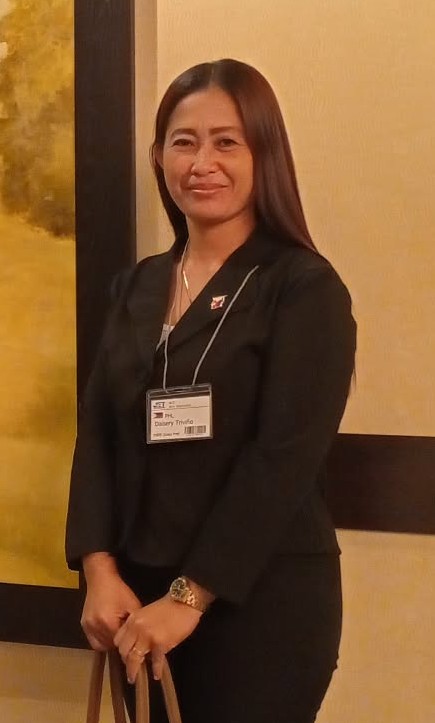
“As an educator, I believe that learning should never stop,” she says. “After almost a decade of teaching in the Philippines, I felt that it was time to step outside my comfort zone and discover what I could achieve in a new environment.” Japan wasn’t a random destination. She had long been drawn to its language, its culture, and the machinery of its education system, and the JET Programme offered a way to fold that curiosity into her actual profession rather than leaving it as a private interest.
There is a version of this story where the subject frames going abroad as an escape from home. She rejects that reading outright. “Working abroad is not about leaving my home country behind,” she says. “It is about expanding my perspective, becoming a more adaptable and confident educator, and building meaningful connections across cultures.” The distinction matters to her, and it recurs in almost everything she says: the point was never the leaving. The point was the growing.
Her contract runs three to five years — an unusually long runway for a first posting, and one she is frank about being fortunate to receive. But the length of the commitment cuts both ways. It is security, and it is also a very long time to be far from everything familiar.
What the first month actually taught her
The teaching itself, she makes clear, is the part that feeds her. At Kanan Junior High, her role shifts from leading a classroom to assisting Japanese teachers in English lessons, coaxing students toward confidence in a language that is not their own. The satisfaction is smaller in scale than what she was used to, and somehow larger in meaning.
“The most satisfying aspect of my work is seeing the small changes in my students,” she says — “the moment they finally understand a lesson, confidently speak in English, participate in an activity, or simply become more willing to try.” After nearly a decade in the profession, she has arrived at a conclusion that has nothing to do with awards or titles. The reward, she says, is “knowing that in some small way, I have helped a student believe in themselves and become a little more prepared for their future.” For her, this is not a sentiment printed on a classroom poster. “Teaching is more than a career. It is a purpose, and every student I meet gives that purpose a new meaning.”

But the classroom was never the thing she had to survive. The apartment was. The grocery store. The workplace conventions that no one hands you in a manual. She is candid about how hard the first weeks have been, and she does not dress it up.
“One of my biggest challenges was communicating in an environment where I could not always express myself comfortably in Japanese,” she says. There were differences in workplace culture, in daily routines, in what people expected of one another. There were misunderstandings. There were moments, she admits, of feeling “nervous and uncertain, especially when I had to handle things independently or make decisions in an unfamiliar environment.”
What she did with that uncertainty is the quiet heart of her story. She did not power through it on bravado. She slowed down. She asked more questions. She watched the culture around her and tried to respect it before judging it. She gave herself permission to be a beginner. “I reminded myself that adapting takes time and that it is perfectly normal to make mistakes while learning,” she says.
And she leaned on the people who anchored her — family back home, colleagues in Osaka, the strangers who became guides. “Having people I could talk to made the experience much easier and reminded me that I was not alone,” she says. If there is a single line that captures how she got through the hardest stretch, it is this one, offered without drama: “I did not overcome every challenge by being fearless. I overcame them by being willing to continue even when I was afraid.”
Carrying it home
For all that she is only beginning, she already knows what she wants the ending to look like — and it is not a suitcase full of souvenirs. She is thinking about what she can bring back to Philippine classrooms once her tenure closes.
“When my journey here in Japan comes to an end, I do not want to simply return with memories,” she says. “I want to return with something meaningful that I can share with others.” Concretely, that means taking Japan’s approaches to teaching, classroom management, and student engagement and folding them into her own practice at home. More broadly, it means advocacy — for quality and inclusive education, and for the kind of cultural exchange that she believes changes people when they are willing to actually listen to one another.
There is a particular audience she has in mind. She wants to reach young people from communities like the ones she came from, the students who quietly assume that certain lives are not available to them. “Coming from the Philippines and building a career abroad has taught me that opportunities can come when we are willing to prepare ourselves, take risks, and believe in our abilities,” she says. She would like to be proof of that, not as a boast, but as a door held open.
Advice from someone still figuring it out
Ask her what she would tell other Filipinos struggling overseas, and she does not offer the polished optimism of someone who has forgotten how it feels. She is a month in. She remembers exactly.
Her first counsel is the simplest and the hardest: “Remember why you started, and never be ashamed to ask for help.” She is blunt about the loneliness — the nights you question your decisions and miss your family — and she names it as normal rather than shameful. On relationships, she urges her kababayan to choose people who respect their boundaries and their sacrifices, and not to let isolation talk them into ignoring red flags. On money, she is practical to the point of sternness: budget, save, avoid needless debt, and never assume that earning abroad is the same thing as being secure. On work, she tells them to know their contracts and their rights, and to speak up through the proper channels rather than suffering in silence.
Underneath all of it runs the same thread. “Protect your peace, your dignity, your finances, and your future,” she says. “Being abroad is an opportunity, but it is also a responsibility.”
She is careful not to pose as someone who has mastered any of this. That honesty is, in the end, what makes her worth listening to. She has not conquered Japan. She has landed in it, stumbled a little, and decided to keep going anyway. “We do not need to have everything figured out before taking the first step,” she says. “Sometimes, we simply need the courage to begin and the humility to keep learning.”
She has been in Osaka for one month. The ocean is still wide, the language still hard, the apartment still quiet at night. But she has already found the sentence she wants to define this chapter of her life — and it reads less like a conclusion than a promise.
“I was brave enough to begin,” she says, “and now I am determined to keep learning, growing, and becoming.”
