



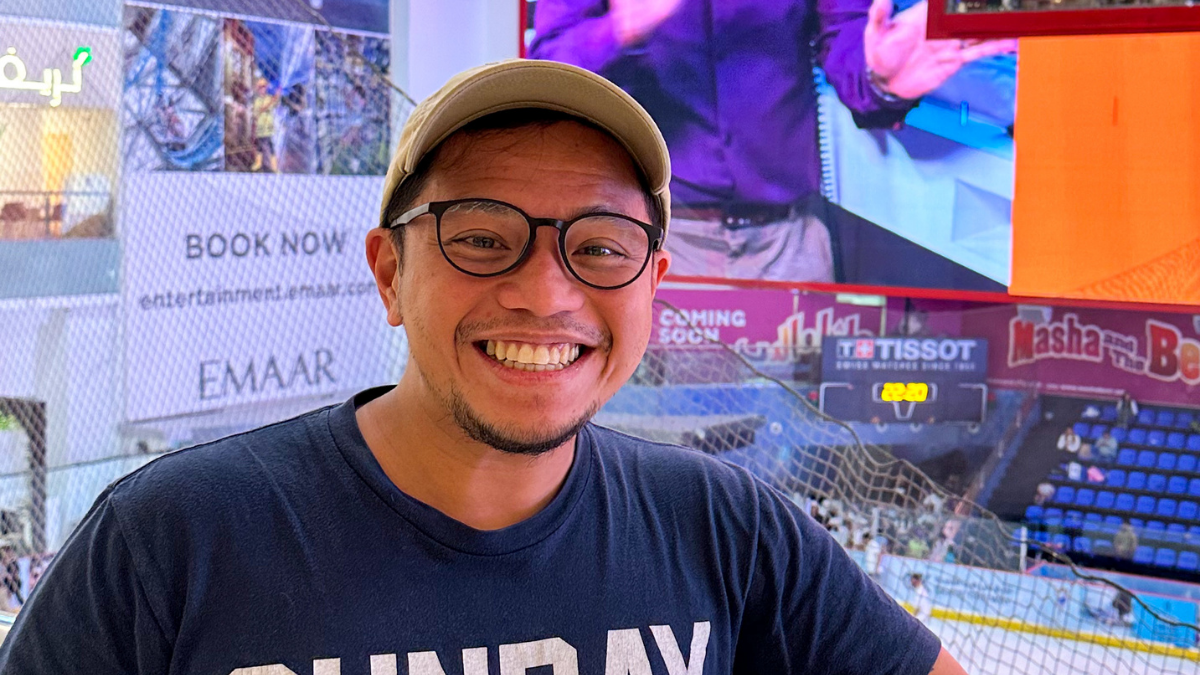

Radio is the one medium that talks back. Not in the metaphorical sense that podcasters like to claim, but literally — a listener calls in, a song request lands, a message scrolls across a screen in the studio, and the whole thing becomes a conversation happening in real time. For Ramuel Derige, better known to thousands of Filipinos across the UAE as Andy Sal, that immediacy is the entire point. When he opens the mic each weekday afternoon for Tag Hali Na on Tag 91.1, he isn’t broadcasting at people. He’s checking in on them.

It’s a role he never trained for and, for most of his career, never imagined. The 40-year-old spent nearly two decades building himself into something else entirely before he found the thing he was actually looking for.
From information security to the sound of home
Ram’s story doesn’t begin in a studio. It begins in an office, in front of a screen, working as an Information Security Analyst for the wireless subsidiary of the Philippines’ largest telecommunications company. On paper, it was a solid, forward-looking career in tech. In practice, it was the wrong fit for a man whose instincts pulled him toward people rather than systems.
“Although I started in the technology sector, I eventually discovered that my strengths and interests extended beyond technical work and into communication, leadership, and connecting with people,” he says.
The move abroad in 2008 wasn’t a career strategy so much as an act of faith. He and his then-girlfriend — now his wife — were mapping out a future together, and their original plan had been Singapore. Her family redirected them toward Dubai, where relatives could help her settle. So Ram made the harder call: he left the career he was building in Manila and followed her.
“It was a leap of faith that changed my life,” the radio presenter recalls. “What I thought would simply be a career move became a journey of personal growth. Living overseas taught me resilience, independence, and the importance of adapting to change.”
What followed was roughly fifteen years in the media-solutions industry, working for a distributor of creative-media brands. He climbed steadily — Sales and Procurement Executive first, then Service Manager, then Marketing Manager — accumulating the kind of experience that, in hindsight, reads like preparation for a job he didn’t know existed yet. Sales taught him persuasion. Marketing taught him audience. Corporate communications taught him how to shape a message. Every rung of that ladder was quietly building the skill set he would eventually carry into a broadcast booth.
Finding the voice
The pivot into radio is the surprising turn in Ram’s story, though he doesn’t frame it dramatically. He frames it as arrival. After years of chasing titles, he stumbled into the one thing that made all the accumulated skills click into place at once.
“Looking back, I realize that every stage of my career has been preparing me for what I do today,” he says. “I’m grateful that my work now allows me to combine communication, creativity, and community building, which are three things I’m truly passionate about.”
What draws him to radio specifically, over the podcasts and digital content he also produces, is that feedback loop. “Unlike podcasts or social media, radio offers immediate feedback,” he explains. “It’s a genuine two-way conversation that allows me to interact with people in real time, making every show feel alive.”
That aliveness is the whole ethos of Tag 91.1, the UAE’s only Filipino radio station, whose flagship shows Tag Gising Na and Tag Pack-Up Na set a template for community-driven broadcasting. Ram absorbed that spirit and built something of his own on top of it.
The barangay that only exists on air
Here is where Ram’s program becomes something more than a daily show. Tag Hali Na is structured around a shared fiction that has taken on a very real life: a virtual barangay, modeled on the smallest and most intimate unit of Filipino society. His listeners aren’t an audience. They’re “Ka-barangays” — neighbors in a community that exists only over the airwaves and yet feels, to the people in it, entirely genuine.

“More than just a radio program, it has become a virtual barangay where our listeners come together to exchange stories, celebrate milestones, voice their opinions, support one another, and simply enjoy each other’s company,” the former marketing manager says.
The imaginative detail of it is what makes it work. Over time, listeners have claimed roles within the barangay the way residents fall into roles in a real neighborhood. Raymond is the official who symbolically “unlocks” the barangay hall at the top of each show, signaling they’re on air. Leonora doubles as resident poet and, on the right day, stand-up comedian, arriving with verses inspired by the program and a supply of one-liners. EJ has become the unofficial IT technician, producing visuals for the show’s social media. Freddie is the roving Kagawad, filing dispatches from wherever he happens to be in the UAE. Others — Wendy, Leslie, Roma, Pinky, Carl, Mariecar, and more — each shape the daily conversation in their own way.
They all started as listeners. Now they’re the reason the show has a pulse.
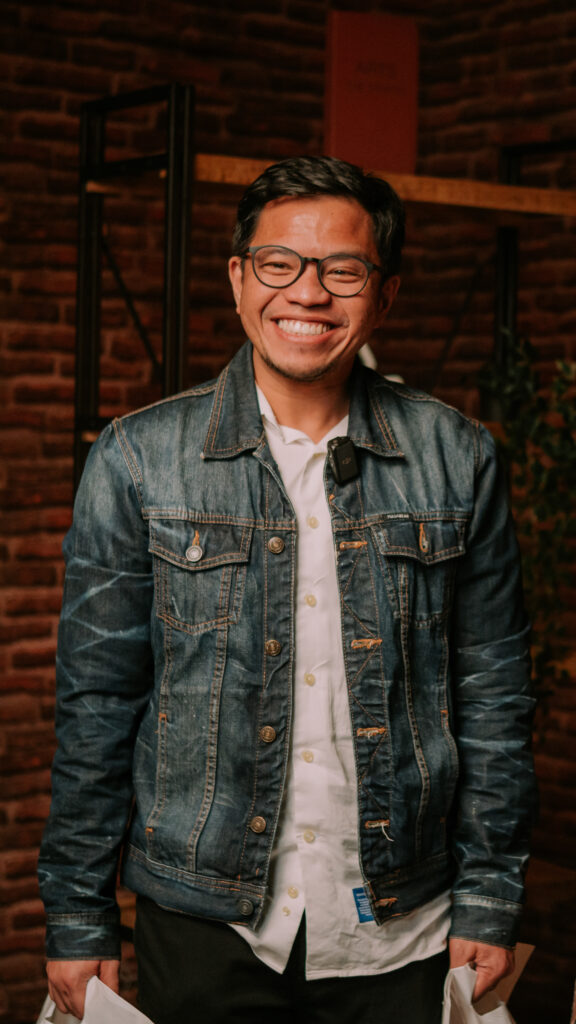
“It’s amazing to see people who have never met in person find a sense of belonging simply because they tune in to the same radio program every day,” he says. For Ram, that’s the actual magic of the medium — not the host at the center of it, but the fact that “the conversations don’t end with the host. They continue among listeners who share stories, opinions, encouragement, and laughter with one another.”
He is unsentimental about why this matters. Every listener is carrying something the host can’t see. “You never really know what someone is going through. Sometimes a song, a story, or even a simple conversation can brighten someone’s day, remind them of home, or make them feel a little less alone.” The most rewarding messages he gets are the quiet ones — from listeners who say the program made them smile after a bad day, or made the distance from home feel a little smaller.
A career measured in connections, not titles
For a man who spent fifteen years climbing a corporate ladder, Ram has arrived at a notably unbothered definition of success. He doesn’t count it in years abroad or job titles.
“I measure it by the connections I build, the fun I have along the way, and the memories I get to create with the people I meet,” he says. “At the end of the day, I want to enjoy the journey just as much as the destination.”
He has taken that philosophy well beyond the studio. He and his wife have treated their years abroad as an invitation rather than a grind, traveling to more than 40 countries, earning scuba diving certifications, and, in 2025, trekking to Everest Base Camp — a climb he describes as reinforcing “the same resilience and perseverance that have guided my life and career as an OFW.” It’s a fitting image for someone whose entire path has been about pushing past the comfortable into the uncertain.
His advice for kabayans still finding their footing abroad carries the weight of someone who has done exactly that. Don’t compare your journey to anyone else’s, he urges, because the successes people post online sit on top of years of rejection and quiet perseverance nobody sees. “Everyone’s timeline is different, so focus on your own progress instead of measuring it against someone else’s.” Take care of your finances, keep learning, surround yourself with people who genuinely want you to win — and never lose sight of the reason you left home in the first place.
And then, characteristically, he lightens it. “Don’t take life too seriously,” he says. “The only way to stay sane is to find the humor in both the struggles and the successes. Learn to laugh at yourself, celebrate the small wins, and enjoy the journey.”
Eighteen years in, the radio presenter is clear about what has actually lasted through the changing jobs and titles. “Your profession may change, your titles may change, but your values should remain the same. Integrity, kindness, humility, and a willingness to keep learning will always matter more than any job title.”
He is openly grateful to the country that gave him a second act — the UAE, which he now calls home, and which handed him a purpose he never went looking for. But the identity underneath all of it doesn’t waver. Whatever platform he’s given, he intends to keep telling Filipino stories “with honesty, dignity, and hope, while honoring both the country that shaped me and the country that raised me.”
Every weekday afternoon, when Raymond unlocks the barangay hall and the show goes live, that’s exactly what he does — one conversation, one song, one slightly-less-homesick listener at a time.
