



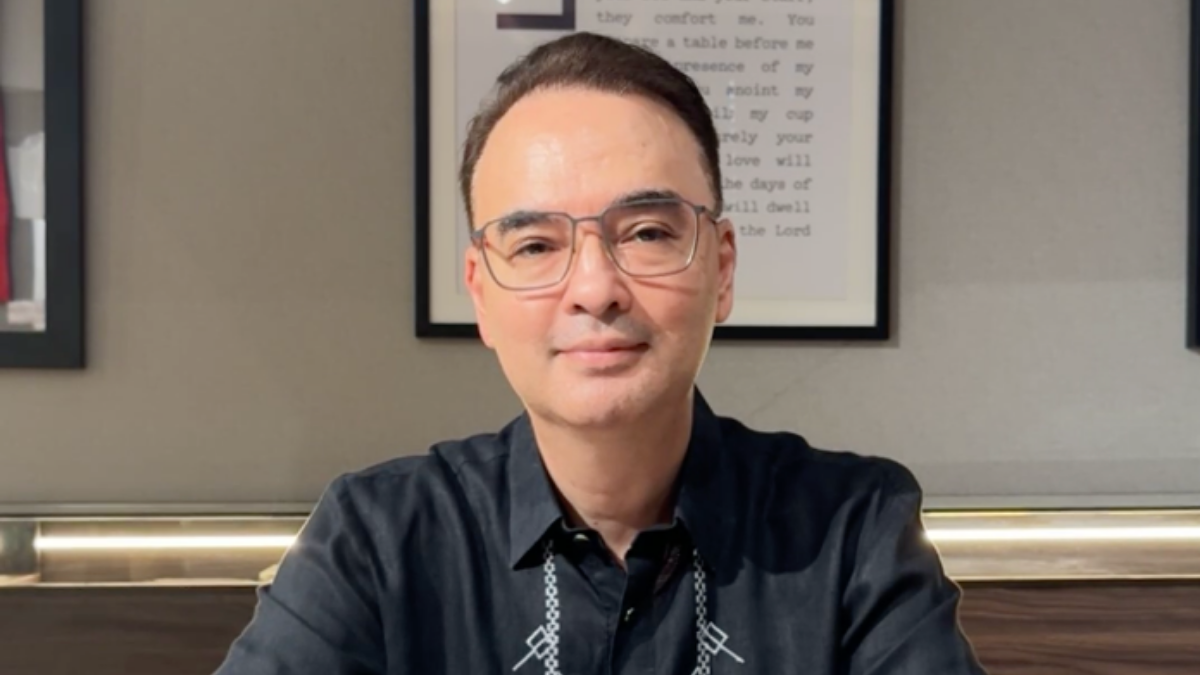

Weeks after using Pokémon trading cards to walk his nephew through the Senate’s turmoil, Senator Alan Peter Cayetano turned to another pop-culture touchstone on Sunday — this time invoking Game of Thrones, only to insist the comparison does not apply.

The Pokémon analogy in late May, which moved from “Mega Dream” to “Perfect Order,” “Ascended Heroes” and finally “Chaos Rising,” had drawn ridicule and accusations of tone-deafness. His latest message kept the storytelling instinct but flipped the device: rather than embracing the fantasy parallel, he used it to reject the premise that the chamber’s upheaval is a struggle for the throne.
“So let me be clear about our stand. We did not take this position to seize power. This is not Game of Thrones. If it were only a contest for the throne, then let thirteen senators choose another Senate President tomorrow — the leadership question could be settled in a single afternoon. But that was never the real issue,” he said in a Facebook statement.
In his telling, the actual stakes lie in whether the alleged flood control scandal will be fully examined, and who benefits if it is not. He cautioned against any move to weaken the committees handling the scrutiny.
“And no committee of the Senate should ever become a place where difficult questions go to die — where investigations are turned into instruments for laundering reputations or burying inconvenient facts beneath procedure and delay,” he said.
He described the chamber’s investigative power as something held on behalf of others. “The power to investigate is not a privilege to be guarded. It is a trust granted by the Filipino people, and it belongs to them,” he added.
Not done with the board-game imagery that has come to mark his recent messaging, Cayetano swapped the fantasy series for chess, casting a political and business elite as the players and ordinary Filipinos as the pieces.

“Because if we are honest about what is happening, there are powerful interests — the kings and queens of this board, some of our political and business elite — who would prefer that the Filipino people remain pieces upon it,” he said.
He argued that the sheer scale of the alleged anomaly is what stirred public attention, and why he believes there is now a push to redirect it. “Every Filipino knows what corruption does. But this flood control scandal was so vast, so brazen, that it woke a sleeping nation. And so the new game is to lull that nation back to sleep — while pointing to a chosen few who can be made to take the fall,” he said.
The fallout, he said, reaches into homes and public services regardless of political affiliation. “This scandal carries grave consequences. The funds meant to hold back the floods became a flood of their own. They flooded our homes and our business districts. They flooded the classrooms we should have built and the hospitals we should have funded,” he stated.
“The victims are not the dilawan or the DDS, not administration or opposition, not one party or another. They are simply Filipinos. The victim is all of us, as a nation.”
Aware that his choice of analogies and online messaging has invited mockery, Cayetano brushed off the criticism as noise at the margins. “What matters now is not who wins an argument online, or on mainstream media — that is a sideshow at the edge of the board. The real game is being played elsewhere. What matters is that we keep up the good fight — that we keep asking the right questions, keep demanding the complete answers, and keep pursuing the truth even when it becomes uncomfortable,” he said.
The statement coincided with a protest by the August Twenty-One Movement, which gathered at the Ninoy Aquino Monument in Makati City to denounce his use of the “Laban” sign — the gesture born of resistance to the Marcos Sr. dictatorship. The group, which traces its roots to the public outcry after the assassination of former Senator Benigno Aquino Jr. on August 21, 1983, said the symbol should not be folded into what it cast as a feud between the Marcos and Duterte wings of the former UniTeam, and demanded accountability on both the Senate crisis and corruption.
For all the imagery, Cayetano’s core claim was that no resolution of the leadership question will settle the matter he says drives it. “Finally, long after the question of Senate leadership is resolved — and it will be resolved — the corruption will remain. The floodwaters will continue to rise when it rains. The missing funds will still have to be accounted for. The Filipino people will still demand answers,” he said.
