



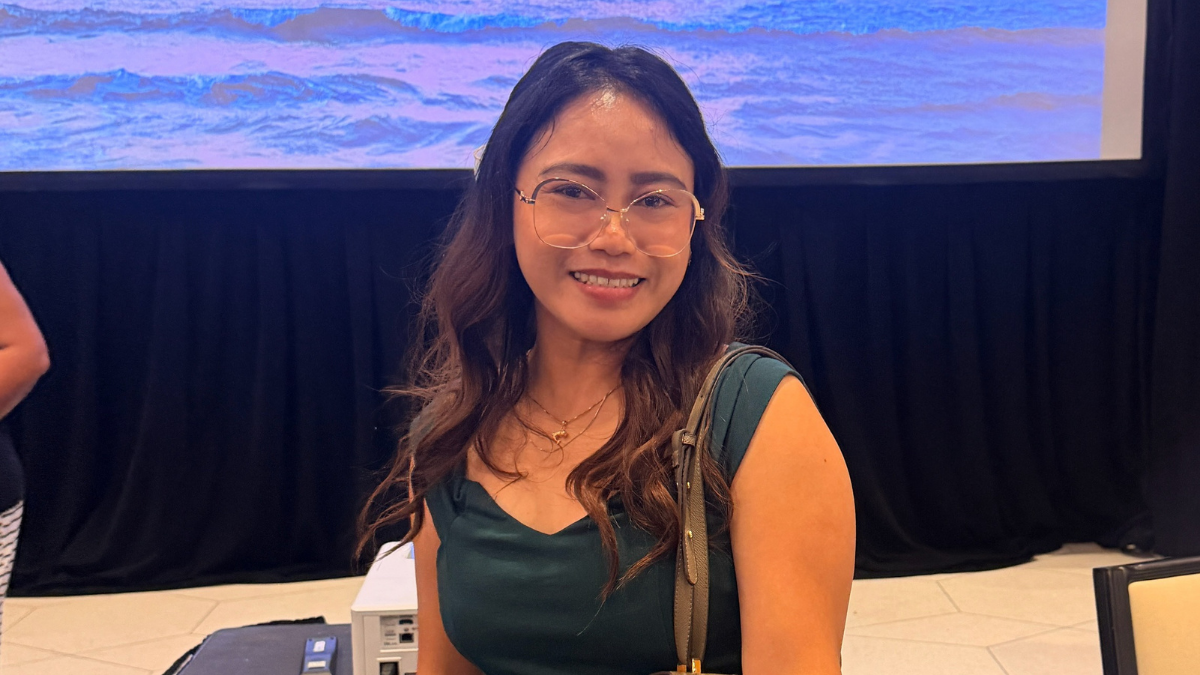

Every Monday for six years, the alarm went off at 3:00 a.m. Before most of her students had stirred, she was already on a bus, then a tricycle, then a boat pushing off a wharf at dawn toward a speck of land in the Visayan Sea. On the mornings the tide ran too low for the boat to reach shore, she waded in along the sand.

Mary Anne C. Garcia does not tell that story to impress anyone. She tells it because it explains everything that came after — including the night she stood in a ballroom at the Hard Rock Hotel in Daytona Beach, Florida, and was named a Teacher of the Year.
The 33-year-old Filipina now teaches Exceptional Student Education at Freedom Elementary School in Florida’s Volusia County School District, working with 2nd and 3rd graders with mild varying exceptionalities. The distance between that classroom and the one-room reality of Matabas Island is the kind of gap that a résumé flattens into a single line. Her story lives in the space between.

The island that taught her how to teach
Mary Anne’s first assignment out of the gate was Matabas Elementary School, on Matabas Island in Barangay Molocaboc, under the Schools Division of Sagay City in Negros Occidental. Getting there was a small expedition. “I traveled by bus to Vito, then rode a tricycle to the wharf, where our boat departed at 6:00 a.m. for the island,” she shares with TGFM. When the ferry wasn’t running, she paid 500 pesos out of pocket to rent a small boat, just to make it to work.
Because the commute was impossible to do daily, she lived on the island from Monday to Friday and went home only on weekends. Fresh water was scarce. “We collected and stored rainwater in large bangas — earthen jars — using it for cooking, washing dishes and clothes, and bathing,” she says. It was a life stripped to essentials, and it rewired how she thought about her work.
“Adapting to island life helped me develop resilience, resourcefulness, and a deeper appreciation for the simple things,” she says. More than that, it hardened a conviction she still carries: that quality education can make a lasting difference regardless of location or circumstance.
She spent six years on Matabas, and not only as a classroom teacher. She served as Teacher-in-Charge, effectively running the school — supporting fellow teachers, coordinating with the community, aspiring to become a Head Teacher even though the promotion never materialized during her time there. When she finally transferred, it wasn’t ambition that moved her but life: pregnant and needing a school closer to home, she moved to Raymundo Tupas Elementary School – SESCO Extension.
By the time she left the Philippines, she had built something the island couldn’t take away — the instinct to adapt, to improvise, and to reach a child in front of her by whatever means the situation allowed.
Becoming the breadwinner at 23
There is a harder chapter beneath the professional one, and Mary Anne does not soften it.
Both of her parents died when she was 23. Overnight, she became the breadwinner for her siblings. “It was one of the lowest points of my life. I cried every single day, and even now, I still have moments where I do,” she admits. She and her brother pulled together and worked to keep the family afloat — and, remarkably, to put their two younger sisters through college. Both have since graduated and are employed, a fact she states with unmistakable pride.
That grief could have closed the door on any dream of working abroad. Instead, a support system opened it. Her mother’s cousins, the Daniel family, helped carry the household through its hardest stretches. Her Aunt Bambi lent her the money that made the move to the United States possible. Her husband stood by her and her siblings throughout.
What held her together, though, was something she returns to again and again. “Even when I felt like I couldn’t go on, I believe I was carried through it,” she says. Faith wasn’t a comfort she reached for occasionally; it became the floor she stood on. And she frames her survival not as a private victory but as evidence meant for someone else: “If I can still stand after everything I’ve been through, it shows that you can find strength to keep going too.”

A new country, a new system, and a principal’s magic
Mary Anne began teaching in the United States in September 2023 — her first position abroad, and a full immersion into an unfamiliar country, culture, and educational system. The move was driven by the reasons many Filipino educators recognize: professional growth, yes, but also the honest pursuit of a more stable future for her family. “Working abroad offers a greener pasture, where dedication, hard work, and commitment are recognized and rewarded,” she says.
She didn’t arrive empty-handed. She brought the resourcefulness of the island and the resilience forged by loss, and she found a school ready to meet her. From her first day at Freedom Elementary, she says, administrators and colleagues welcomed her and trusted her with her students — a trust she credits for much of what followed.
In her role as an ESE teacher, she designs individualized instruction for children with exceptionalities, coordinating with general education teachers, specialists, administrators, and families so each student gets the accommodations they need. The work is demanding and often invisible from the outside. The results, apparently, are not.
Her principal once paid her a compliment she has never forgotten. “You work with magic,” he told her. “Every time we place a new student in your class, you transform them.” She holds onto the line not out of vanity but because of what it represents — the relationships she builds and her stubborn belief in each child’s potential. “Every child deserves to be seen, understood, and given the opportunity to succeed regardless of their challenges,” she says. Watching a student master a skill or reach a goal they once thought impossible is, for her, the whole point.
The night in Daytona Beach
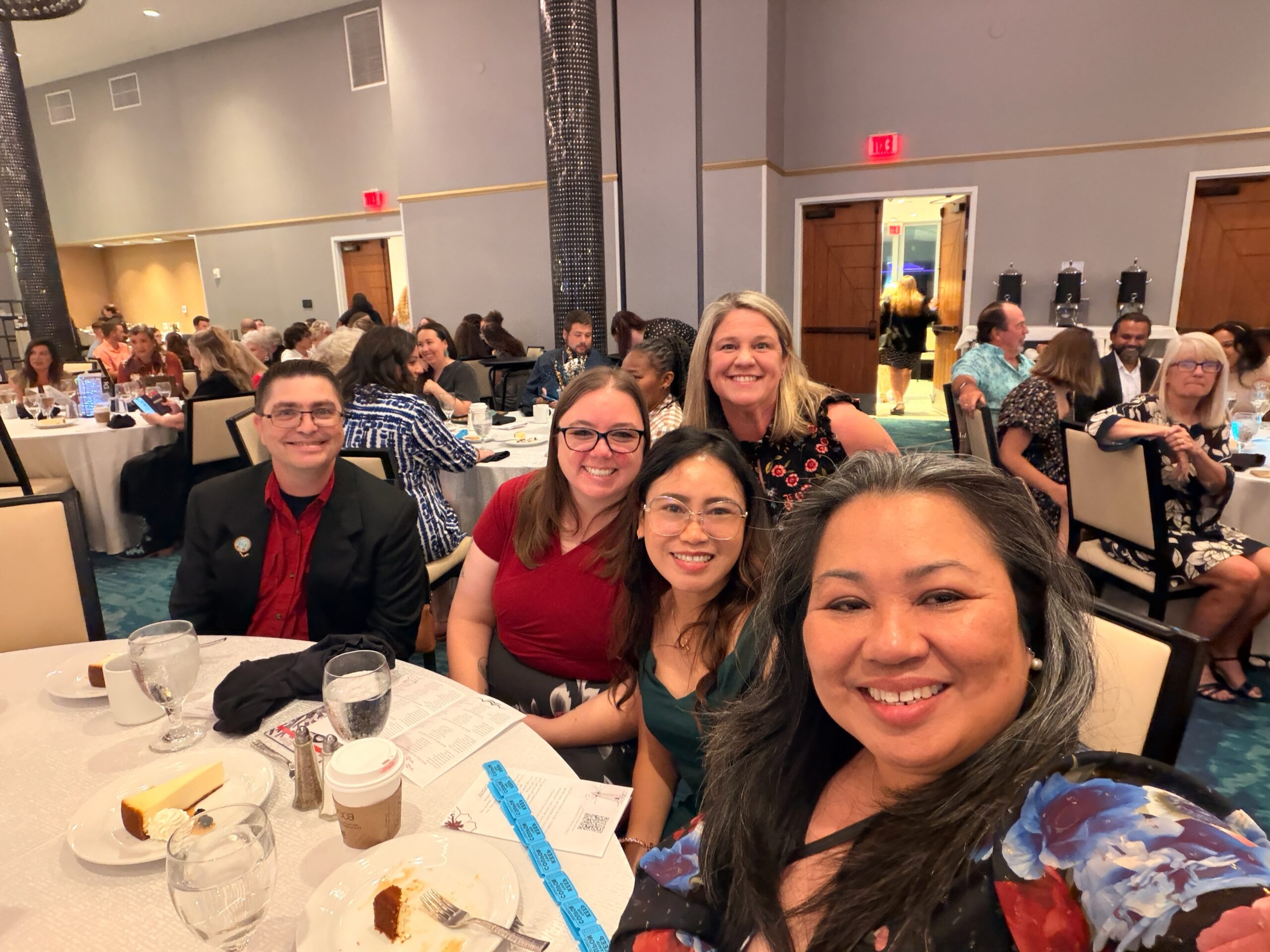
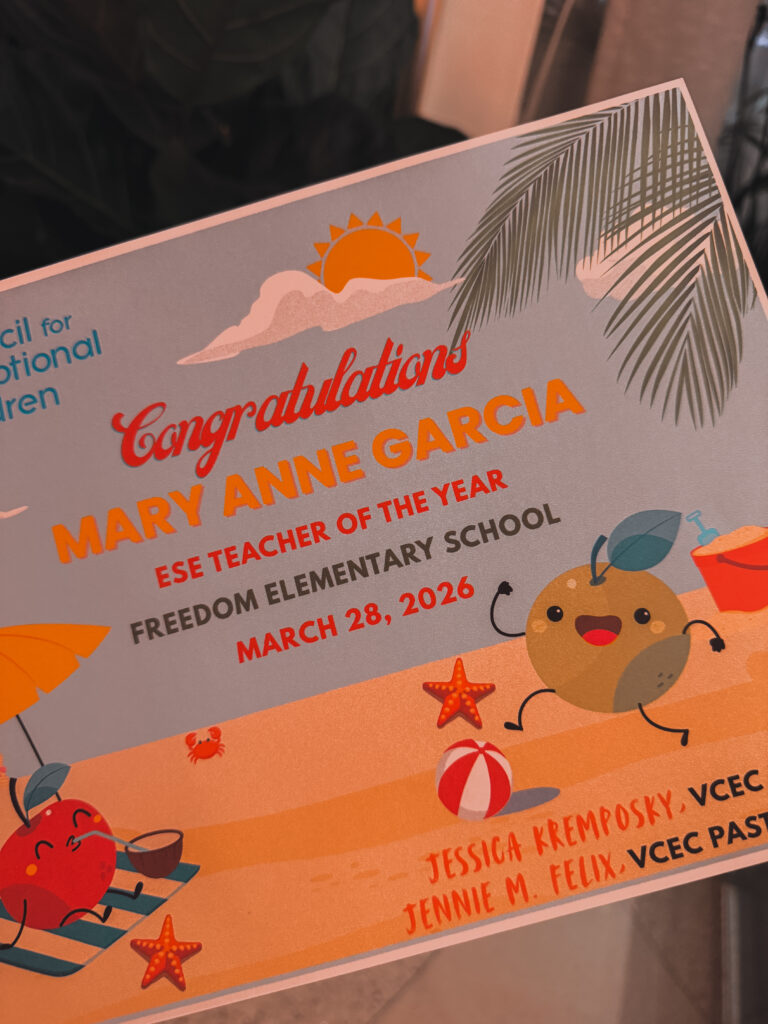
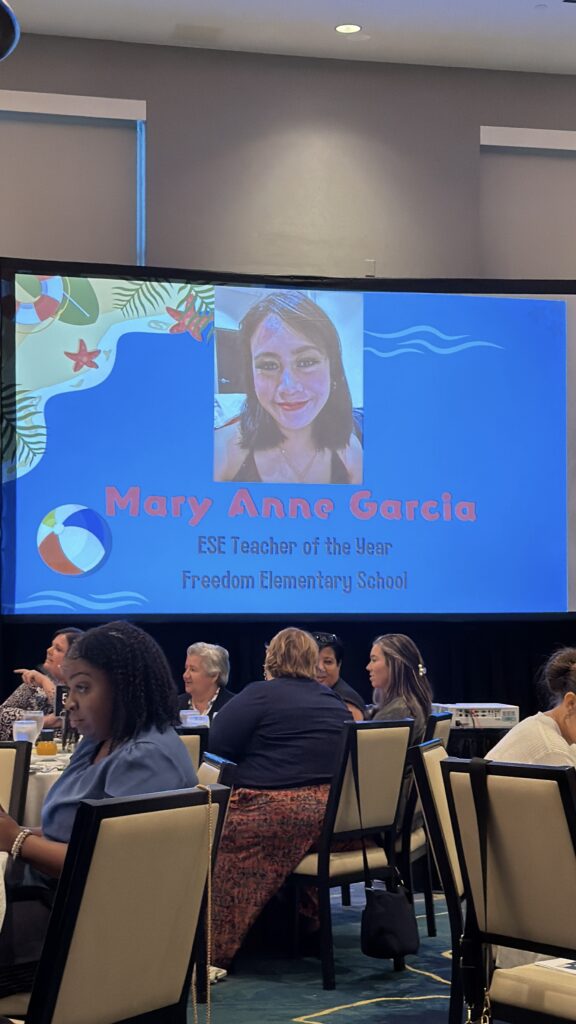
On February 14, 2026, Freedom Elementary named her its Exceptional Student Education Teacher of the Year, then selected her as the school’s nominee for district-level recognition. Six weeks later, on March 28, she attended the 2026 Volusia Council for Exceptional Children Awards Banquet at the Hard Rock Hotel in Daytona Beach, where she formally received the honor.
For an international teacher not yet three full years into her American career, the moment carried a weight beyond the plaque. “This milestone is especially meaningful as an international teacher, affirming that passion, perseverance, and a commitment to student success transcend cultural and geographical boundaries,” she says. The girl who once rented a boat to get to work was now being celebrated in a beachfront ballroom, half a world from where she began.
What she plans to do with it
Mary Anne is clear that the award is not a finish line. She intends to return to the Philippines and pour her experience back into the system that shaped her, with a specific focus on strengthening inclusive education — improving how schools support learners with diverse needs, advocating for equitable access and individualized accommodations, and mentoring fellow teachers through training and shared, evidence-based practice.
Her advice to kababayans struggling abroad reflects the same discipline that got her through her own low points. Pray, but don’t treat faith as a box to check, she says. Let it shape your priorities and your sense of who you’re becoming. And keep learning: “The more you learn, the more equipped you become to handle challenges and recognize better opportunities.” Stay focused, stay humble, move forward step by step.
If there’s a single thread running from Matabas Island to that Daytona ballroom, it’s a refusal to let circumstance dictate outcome — a conviction she has tested more thoroughly than most. “Challenges don’t break you,” she says. “They shape you.”
The tide, after all, always came back in.
